Sitharaman meets Scotland's John Swinney, eyes fintech and renewable energy ties
Synopsis
Three months after the India-UK FTA took force, Finance Minister Sitharaman's meeting with Scotland's First Minister Swinney signals a push to unlock Scotland-specific opportunities — from fintech to offshore wind — on top of a deal already moving $2 billion a month in bilateral goods trade and targeting $115 billion by 2030.
Key Takeaways
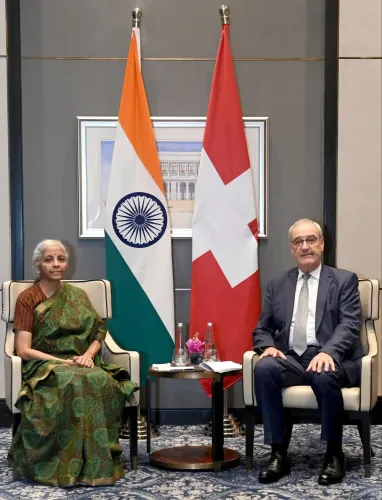
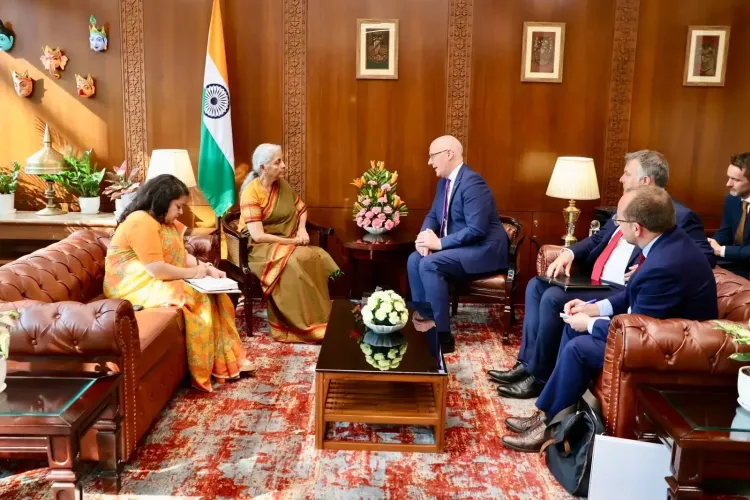
Finance Minister Nirmala Sitharaman met Scotland's First Minister John Swinney in New Delhi on 21 October 2026 .
Talks covered cooperation in financial services , renewable energy , higher education, and bilateral tourism.
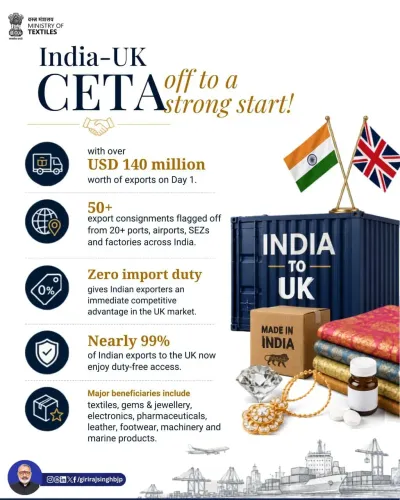
The India-UK FTA entered into force on 15 July 2026 ; on day one, Indian exporters shipped over 50 consignments worth ~$140 million duty-free.
Bilateral goods trade rose nearly 15 per cent year-on-year to nearly $2 billion in August 2026.
An Assocham study projects the FTA could grow India-UK trade from $58 billion to $115 billion by 2030 , generating 7-10 lakh jobs .
Bakkafrost Scotland completed the first Scottish salmon shipment to India after removal of a 33 per cent import tariff.
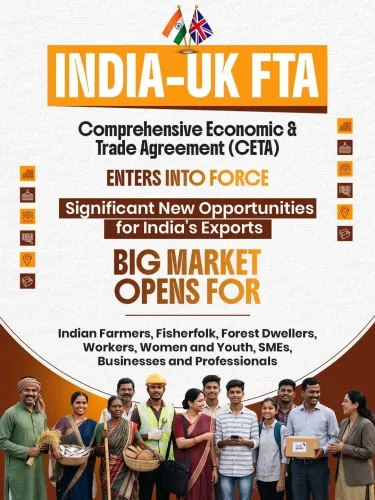
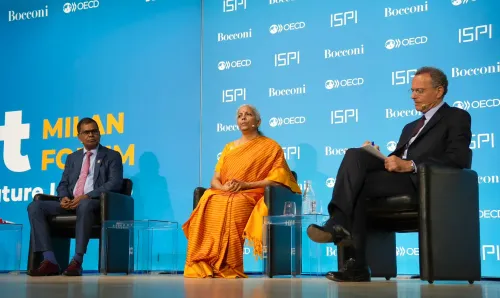
Finance Minister Nirmala Sitharaman on Wednesday, 21 October 2026, met Scotland's First Minister John Swinney in New Delhi to explore expanded bilateral cooperation across financial services, renewable energy, higher education, and tourism. The meeting comes roughly three months after the landmark India-UK Comprehensive Economic and Trade Agreement (CETA) entered into force, underscoring the momentum building across the broader UK-India relationship.
Key Areas of Discussion
The two leaders discussed a range of sectors with mutual growth potential, according to a Finance Ministry post on X. Financial services cooperation featured prominently, with both sides recognising Scotland's standing as a global fintech and asset-management hub. Renewable energy, the establishment of higher educational institutions, and bilateral tourism were also on the agenda, signalling an intent to move beyond trade goods into people-to-people and knowledge partnerships.
How the India-UK FTA Is Already Reshaping Ties
The India-UK Free Trade Agreement (FTA) officially entered into force on 15 July 2026, and its commercial impact was visible almost immediately. On the first day of implementation, Indian exporters shipped over 50 consignments worth approximately $140 million under zero-duty terms. In August 2026, bilateral goods trade rose nearly 15 per cent year-on-year to nearly $2 billion, with Indian exports up about 10 per cent and UK imports into India rising faster at 24 per cent.
Scotland's own exporters moved quickly to capitalise. Bakkafrost Scotland completed the first significant shipment of Scottish salmon to India following the removal of a 33 per cent import tariff, with the consignment flown through Heathrow Airport to Sashimi Foods in Bengaluru. Tariff-free Scotch whisky also began clearing at the new reduced rate, and the first cars under the automotive tariff-rate quota entered Indian ports.
Long-Term Trade Potential
According to a recent study by industry body Assocham, the India-UK FTA could help expand bilateral trade from $58 billion in 2025-26 to $115 billion by 2030, alongside the potential creation of 7-10 lakh new jobs. The study highlighted labour-intensive sectors such as textiles, leather, engineering goods, pharmaceuticals, and automotive components as the primary beneficiaries of deeper market access. It cautioned, however, that sustained competitiveness would be crucial for India to fully realise this potential.
Broader Strategic Context
The Sitharaman-Swinney meeting reflects an emerging pattern where sub-national governments within the UK — Scotland in particular — are independently deepening economic engagement with India, especially in sectors where they hold a competitive edge. This comes amid growing interest from Indian financial institutions in expanding their European and UK footprints, and Scotland's ongoing push to attract foreign investment into its clean energy transition. Notably, Scotland hosts some of Europe's largest offshore wind resources, making it a natural partner for India's ambitious renewable energy targets.
Further details on specific agreements or memoranda of understanding from the meeting had not been officially confirmed at the time of publication.
Point of View
Particularly in fintech and offshore wind. That granularity matters: the FTA is a national-level instrument, but the sectors where Scotland excels — asset management, clean energy, premium food and drink — require sub-national engagement to unlock. What remains unclear is whether these discussions will translate into concrete MoUs or remain in the goodwill phase. With bilateral trade already trending sharply upward, the window to institutionalise Scotland-India ties is open — but institutional follow-through, not just headline meetings, will determine whether $115 billion by 2030 is achievable.
NationPress
21 Oct 2026
Frequently Asked Questions
What did Finance Minister Sitharaman and Scotland's First Minister Swinney discuss?
Finance Minister Nirmala Sitharaman and Scotland's First Minister John Swinney met in New Delhi on 21 October 2026 to discuss cooperation in financial services, renewable energy, higher education, and bilateral tourism. The meeting followed the entry into force of the India-UK Comprehensive Economic and Trade Agreement (CETA) in July 2026.
When did the India-UK Free Trade Agreement come into effect?
The India-UK Free Trade Agreement (FTA) entered into force on 15 July 2026. On its first day, Indian exporters shipped over 50 consignments worth approximately $140 million under zero-duty terms.
How has the India-UK FTA impacted bilateral trade?
Bilateral goods trade rose nearly 15 per cent year-on-year to nearly $2 billion in August 2026, with Indian exports up about 10 per cent and UK imports into India rising 24 per cent. An Assocham study projects trade could grow from $58 billion to $115 billion by 2030.
What is the significance of Scotland's participation in India-UK economic ties?
Scotland holds competitive strengths in financial services, offshore wind energy, and premium exports like salmon and Scotch whisky — all sectors directly affected by the FTA. The Sitharaman-Swinney meeting signals an intent to leverage these sector-specific advantages through direct Scotland-India engagement.
How many jobs could the India-UK FTA create?
According to an Assocham study, the India-UK FTA could generate 7-10 lakh new employment opportunities in India, primarily in labour-intensive sectors such as textiles, leather, engineering goods, pharmaceuticals, and automotive components.