Sitharaman at India-Canada Dialogue: Stable economies key to global growth
Synopsis
India and Canada have launched their first-ever Economic and Financial Dialogue in Toronto, with Finance Minister Nirmala Sitharaman framing both nations as stabilisers of global growth amid geopolitical turbulence. The dialogue, rooted in a diplomatic reset after the Modi-Carney meeting, signals a formal institutional turn in a relationship that was severely strained just two years ago.
Key Takeaways
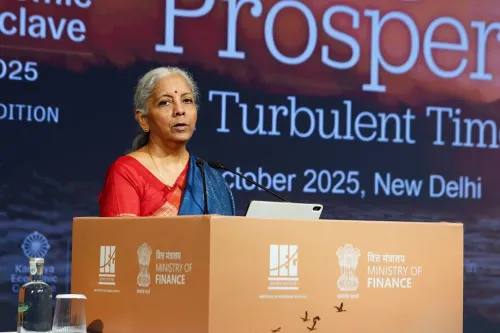
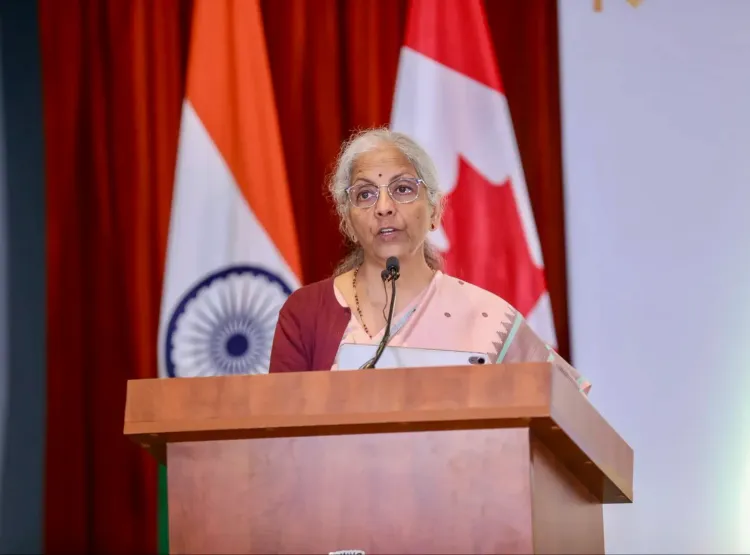
Finance Minister Nirmala Sitharaman addressed the inaugural India-Canada Economic and Financial Dialogue in Toronto on 27 August .
She said economies like India and Canada can provide predictability and certainty to global growth amid geopolitical tensions.
Priority cooperation areas identified: food security , energy security , and critical minerals .
The Canadian side was led by Finance and National Revenue Minister Francois-Philippe Champagne .
The dialogue follows a diplomatic reset triggered by the meeting between PM Modi and Canadian PM Mark Carney .
Business leaders from firms including xatoms , The Hi-Tech Gears , and Universities Canada participated in a parallel Business Roundtable.
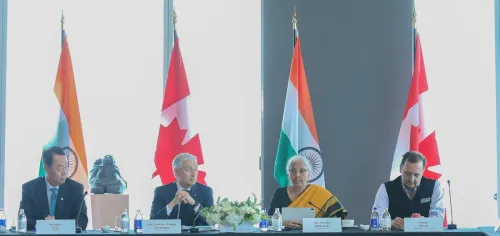
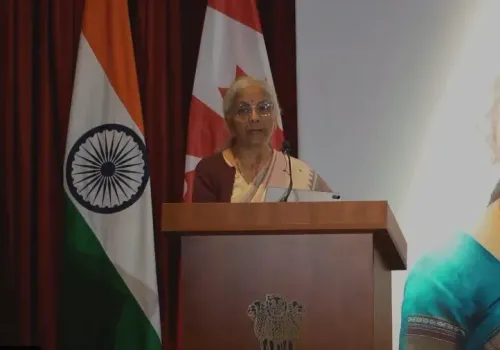
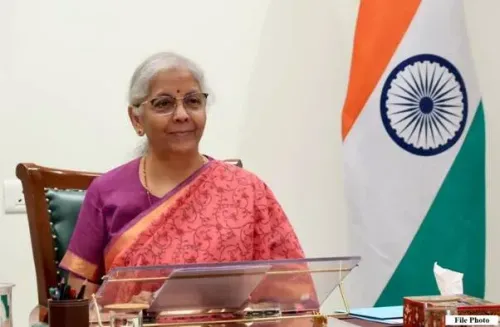
Finance Minister Nirmala Sitharaman on 27 August said that economies like India and Canada are uniquely positioned to inject predictability and certainty into global growth at a time of deepening geopolitical tensions. She made the remarks in Toronto while addressing the inaugural India-Canada Economic and Financial Dialogue, marking a significant milestone in the bilateral relationship following a diplomatic reset earlier this year.
A Relationship Reset and a First Dialogue
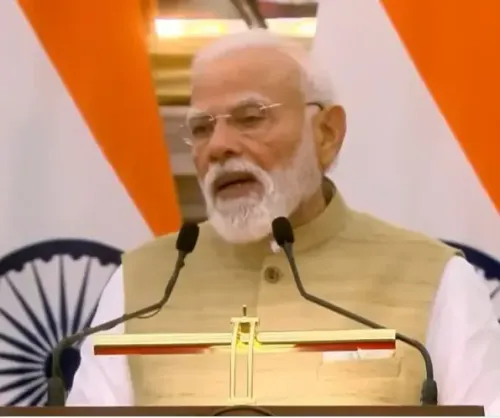
Sitharaman described the current moment as an opportune juncture for India and Canada to deepen economic ties. She pointed to the high-level engagement that followed the meeting between Prime Minister Narendra Modi and Canadian Prime Minister Mark Carney as the foundation for this renewed engagement.
'After the reset that happened when PM Narendra Modi and PM Mark Carney met, there have been several high-level interactions between the Indian leadership and the Canadian leadership. We are now having the first Economic and Financial Dialogue,' she said.
The Indian delegation was led by Sitharaman, while the Canadian side was represented by Finance and National Revenue Minister Francois-Philippe Champagne.
Food Security, Energy, and Critical Minerals on the Agenda
Sitharaman outlined specific areas where the two nations could build a complementary partnership. She highlighted food security, energy security, and critical minerals as priority sectors where deeper India-Canada cooperation could strengthen purchasing power for citizens of both countries and reduce vulnerability to global supply chain disruptions.
'There can be such a relationship between Canada and India that will go to the strengthening of our people's purchasing power, ability to face supply chain disruptions, and there will be a conscious effort to address the concentration risks in global sourcing of important commodities,' she said.
The focus on concentration risk in commodity sourcing reflects a broader global concern — particularly after pandemic-era disruptions exposed the fragility of single-source supply chains across sectors from semiconductors to fertilisers.
Business Community Responds Positively
The dialogue was preceded by a high-level Business Roundtable in Toronto, where investors and entrepreneurs met with the Finance Minister. Diana Virgovicova, CEO and Founder of xatoms, said the interaction offered clarity on pathways for Canadian technology firms to establish operations in India.
'We've also learned about how India can support our expansion, the steps necessary in order to set up our businesses in India, and we are super positive about building our technology in India as well, as it's a huge growing market,' Virgovicova said, adding that her company plans to visit India in the coming months.
Pranav Kapuria, Managing Director of The Hi-Tech Gears — a firm with manufacturing facilities in both countries — called it 'a very candid conversation' and said India and Canada are 'extremely complementary economies.' He expressed confidence in the potential for a deeper bilateral relationship driven by shared industrial strengths.
Gabriel Miller, President and CEO of Universities Canada, called the moment 'really inspiring,' noting that Sitharaman's presence signalled serious intent at the highest levels of Indian government to build opportunity for both nations.
Why This Dialogue Matters Now
The inaugural Economic and Financial Dialogue arrives against a backdrop of considerable global uncertainty — from trade fragmentation triggered by tariff disputes to energy market volatility following geopolitical conflicts. For India, which is among the world's fastest-growing major economies, and Canada, a G7 member with vast natural resources, the partnership offers structural complementarity that few bilateral arrangements can match.
Notably, India-Canada relations had seen a prolonged chill following diplomatic tensions in 2023. The reset signalled by the Modi-Carney meeting earlier this year has now translated into formal institutional architecture, with this dialogue expected to become a recurring mechanism for economic coordination.
How quickly the two governments can convert the goodwill of this first dialogue into binding agreements on trade, investment, and critical mineral supply chains will determine whether this reset delivers lasting economic dividends.
Point of View
With a structured agenda spanning critical minerals, energy, and food security, suggests both governments are moving with unusual speed to institutionalise the reset. The real question is sequencing: critical mineral agreements require regulatory alignment, and trade negotiations between the two countries have a history of stalling. Sitharaman's framing of India and Canada as 'anchors of global growth certainty' is diplomatically astute, but the test will be whether this dialogue produces binding frameworks or remains a goodwill exercise dressed in institutional language.
NationPress
12 Oct 2026
Frequently Asked Questions
What is the India-Canada Economic and Financial Dialogue launched in Toronto?
It is the first-ever formal bilateral economic dialogue between India and Canada, launched on 27 August in Toronto. Finance Minister Nirmala Sitharaman led the Indian side, and Canadian Finance and National Revenue Minister Francois-Philippe Champagne led the Canadian side, with discussions centred on global growth stability, critical minerals, energy, and food security.
Why was the India-Canada dialogue launched now?
The dialogue follows a diplomatic reset in India-Canada relations after Prime Minister Narendra Modi and Canadian Prime Minister Mark Carney met earlier this year, ending a prolonged period of bilateral tension. Sitharaman described this as the best time to begin structured economic engagement given current global uncertainties.
What sectors did Sitharaman identify for India-Canada cooperation?
Sitharaman specifically highlighted food security, energy security, and critical minerals as priority areas. She said cooperation in these sectors could strengthen citizens' purchasing power in both countries and reduce risks from supply chain concentration in global commodity sourcing.
Who participated in the Business Roundtable alongside the dialogue?
Business leaders including Diana Virgovicova, CEO and Founder of xatoms, Pranav Kapuria, Managing Director of The Hi-Tech Gears, and Gabriel Miller, President and CEO of Universities Canada, participated in a high-level Business Roundtable with Sitharaman in Toronto.
What was the state of India-Canada relations before this reset?
India-Canada relations experienced a significant diplomatic chill in 2023 following a public dispute between the two governments. The meeting between PM Modi and PM Carney marked a formal reset, which has since translated into several high-level interactions, culminating in this inaugural Economic and Financial Dialogue.