Youth Co:Lab 2026: Six startups win NITI Aayog-backed innovation challenge

Synopsis
Six youth-led startups have won India's premier sustainability-focused innovation challenge, backed by NITI Aayog, UNDP India, and Citi Foundation — with over 40% of winners being women-led ventures. The programme's Program Director issued a pointed warning: India's real startup crisis is one of distribution, not ideas.
Key Takeaways
Six startups won the 8th Youth Co:Lab National Innovation Challenge 2026 , announced on 24 June 2026 .
Three winners received ₹3.5 lakh each ; three runners-up received ₹2.2 lakh each in seed grants.
The challenge drew over 350 applications from 28 states , with 50 startups completing a three-month National Springboard Program .
More than 40% of selected ventures are women-led , according to UNDP India .
The programme is co-led by UNDP India and Citi Foundation , in partnership with Atal Innovation Mission and implemented by T-Hub Foundation .
Focus areas: circular economy innovations, sustainable textiles and fashion, and sustainable food systems and water conservation.
Six youth-led startups from across India have been named winners of the 8th Youth Co:Lab National Innovation Challenge 2026, receiving seed grants and capacity-building support, the government announced on Wednesday, 24 June 2026. The initiative, backed by NITI Aayog's Atal Innovation Mission (AIM) and co-led by the United Nations Development Programme (UNDP) India and Citi Foundation, drew over 350 applications from 28 states.
Winners and Prize Money
The challenge recognised solutions across three sustainability themes: circular economy innovations, sustainable textiles and fashion, and sustainable food systems and water conservation. The three winners each received ₹3.5 lakh in seed funding along with capacity-building opportunities and ecosystem access. The three runners-up were each awarded ₹2.2 lakh, according to an official statement from NITI Aayog.
Notably, more than 40 per cent of the selected ventures are women-led. Dr. Angela Lusigi, Resident Representative of UNDP India, said this 'demonstrates the diversity of talent driving India's innovation ecosystem.'
The Selection Process
From the initial pool of over 350 applicants, 50 high-potential startups were enrolled in a three-month National Springboard Program — a virtual capacity-building journey supported by 16 industry mentors and domain specialists. All 50 startups pitched before a distinguished jury at the National Innovation Dialogue, after which the top 20 startups advanced to a Regional Immersion Bootcamp hosted at T-Hub, Hyderabad.
The five-day immersive bootcamp brought together ecosystem leaders, sustainability experts, investors, government stakeholders, and entrepreneurs through masterclasses, mentorship sessions, site visits, and peer learning opportunities.
What Government and Partners Said
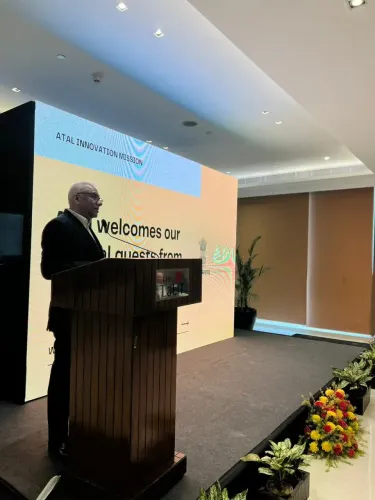
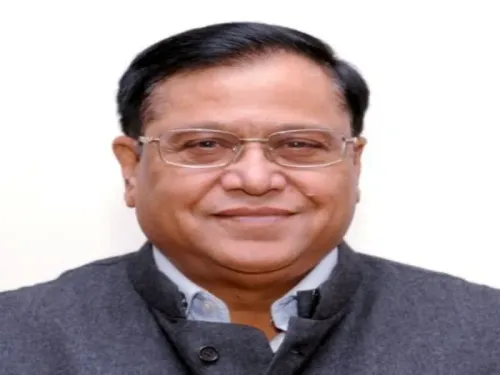
Prateek Deshmukh, Program Director of Atal Innovation Mission, NITI Aayog, used the occasion to highlight structural inequities in India's startup landscape. 'India does not have a startup problem. India has a distribution problem. A distribution of capital is too concentrated in Bangalore and Delhi. A distribution of mentorship — too thin in Tier 3 and the North-East. A distribution of opportunity — too narrow for women, persons with disabilities, and founders from socially disadvantaged backgrounds,' he said.
Meraj Faheem, CEO of the Telangana Innovation Cell (TGIC), Government of Telangana, added: 'Initiatives like Youth Co:Lab reinforce the power of innovation, collaboration, and youth leadership in addressing some of our most pressing challenges.'
Broader Context and What Comes Next
The challenge was implemented by T-Hub Foundation, which also hosted the bootcamp in Hyderabad. This is the eighth edition of the Youth Co:Lab challenge in India, reflecting sustained institutional commitment to youth-driven entrepreneurship in the sustainability space. With capital and mentorship distribution cited as key gaps, the programme's geographic spread — spanning 28 states — signals an intent to move beyond metro-centric startup ecosystems. The selected startups are expected to leverage their seed funding and mentor networks to scale impact over the coming months.
Point of View
But the most revealing moment was not the prize distribution — it was Prateek Deshmukh's diagnosis that India has a distribution problem, not a startup problem. Capital clustering in Bengaluru and Delhi, thin mentorship in Tier 3 cities and the North-East, and narrow opportunity for women and marginalised founders are structural failures that a single annual challenge cannot fix. The 28-state reach and 40%-plus women-led cohort are steps in the right direction, but without sustained, decentralised funding pipelines, these interventions risk being high-visibility events with limited systemic impact.
NationPress
22 Sept 2026
Frequently Asked Questions
What is the Youth Co:Lab National Innovation Challenge 2026?
The Youth Co:Lab National Innovation Challenge 2026 is the eighth edition of a national startup competition co-led by UNDP India and Citi Foundation, in partnership with NITI Aayog's Atal Innovation Mission and implemented by T-Hub Foundation. It identifies and supports youth-led startups working on sustainability solutions across areas such as circular economy, sustainable textiles, and food and water conservation.
How much prize money did the winners receive?
The three winning startups each received ₹3.5 lakh in seed grants, along with capacity-building support and ecosystem access. The three runners-up were each awarded ₹2.2 lakh, according to the official NITI Aayog statement.
How were the winning startups selected?
Over 350 applications from 28 states were received, from which 50 startups were enrolled in a three-month virtual National Springboard Program. All 50 pitched at the National Innovation Dialogue, and the top 20 advanced to a five-day Regional Immersion Bootcamp at T-Hub in Hyderabad, where the final six winners were chosen.
What share of winning startups are women-led?
More than 40 per cent of the selected ventures are women-led, according to Dr. Angela Lusigi, Resident Representative of UNDP India, who cited this as evidence of the diversity within India's innovation ecosystem.
Why did NITI Aayog's Atal Innovation Mission highlight a 'distribution problem' in Indian startups?
Prateek Deshmukh, Program Director of Atal Innovation Mission at NITI Aayog, said capital is too concentrated in Bengaluru and Delhi, mentorship is too thin in Tier 3 cities and the North-East, and opportunity is too narrow for women, persons with disabilities, and founders from socially disadvantaged backgrounds. He made the remarks while underlining the importance of programmes like Youth Co:Lab in addressing these gaps.