UPI small charge could make digital payments self-sustaining: NITI Aayog
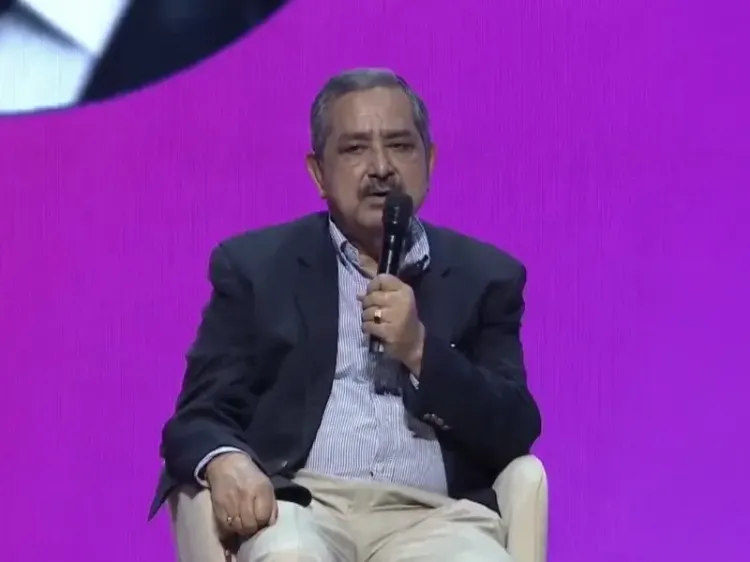
Synopsis
NITI Aayog's Vice Chairman has openly backed a UPI levy for the first time, arguing the world's largest real-time payments network cannot survive indefinitely without a revenue model. With 500 million users and India accounting for over half of global retail digital transactions, the stakes of getting the pricing right — too high and adoption stalls, too low and the ecosystem stays loss-making — could not be greater.
Key Takeaways
NITI Aayog Vice Chairman Ashok Kumar Lahiri on 16 September 2026 backed a small levy on select UPI transactions to make the ecosystem self-sustaining.
The proposed charge would apply only to transactions above ₹2,000 ; consumers and small-value merchant payments would be exempt.
Concessional rates are proposed for utility bills, government tax payments, insurance, and fuel purchases.
BillDesk co-founder Srinivasu MN suggested a portion of the MDR be directed to a dedicated fund for UPI expansion among small merchants.
India has crossed 500 million UPI users and accounts for more than half of global retail digital transactions.
The government scrapped MDR on UPI in 2020 , leaving banks absorbing infrastructure costs without recovery.
NITI Aayog Vice Chairman Ashok Kumar Lahiri on Wednesday, 16 September said a small levy on select UPI transactions could render India's digital payments ecosystem financially self-sustaining, provided the charge is kept as low as possible to protect consumers. His remarks, made in New Delhi, reignite a long-running debate over whether UPI — the world's most-used real-time payments rail — can continue to operate without a revenue model.
The Case for a UPI Levy
Lahiri invoked the 'user-pays principle', arguing that businesses derive substantial value from digital payments by avoiding the cost and inconvenience of depositing cheques and handling cash. He urged policymakers to introduce a levy, however small, to put UPI on a commercially viable footing.
'Try to make it as little as possible, but please levy it so that UPI becomes a self-sustaining business,' Lahiri said when asked whether charging for UPI payments above ₹2,000 could dampen digital payment adoption in India.
Industry Perspective: Consumers and Small Merchants Exempt
BillDesk Director and Co-founder Srinivasu MN offered critical design detail: the proposed charge would not apply to consumers or low-value merchant transactions. According to him, the levy would target only a limited set of transactions exceeding ₹2,000, with concessional rates carved out for routine payments such as utility bills, government tax payments, insurance premiums, and fuel purchases.
Srinivasu also proposed that a portion of the merchant discount rate (MDR) be channelled into a dedicated fund to support UPI expansion, particularly among small merchants who remain the most price-sensitive segment of the ecosystem.
India's UPI Scale — and the Gap That Remains
India has crossed 500 million UPI users, and the country already accounts for more than half of the world's retail digital transactions, making it a global leader in the space. Yet Srinivasu noted that significant headroom remains: the existing user base represents a fraction of India's total population, and further investment in fraud protection and consumer education will be needed as the system scales.
This comes amid growing pressure on banks and payment service providers, who have long absorbed UPI infrastructure costs without a recovery mechanism since the government abolished MDR on UPI transactions in 2020.
Export Diversification: A Parallel Call to Industry
Separately, Lahiri urged Indian businesses to proactively identify viable export markets as the country seeks to diversify trade amid uncertainty in key destinations such as the United States. He said the private sector — not the government — should determine where Indian products can find demand, citing opportunities across Africa, Latin America, East Asia, and Australia.
'The world is large,' Lahiri remarked, while acknowledging he did not have a prescriptive answer on which markets businesses should target. With both the UPI monetisation debate and export strategy discussions gaining momentum, the pressure on India's policy establishment to deliver durable frameworks on both fronts is mounting.
Point of View
Undoing a decade of financial inclusion gains. The proposal to exempt consumers and small merchants is directionally correct, but the devil will be in the thresholds and enforcement. India cannot afford to get this wrong — its digital payments lead over China, the US, and Europe is real, but it is built on subsidised infrastructure that no private actor will sustain indefinitely without a return path.
NationPress
16 Sept 2026
Frequently Asked Questions
What is the proposed UPI charge being discussed by NITI Aayog?
NITI Aayog Vice Chairman Ashok Kumar Lahiri has proposed a small levy on UPI transactions above ₹2,000 to make the digital payments ecosystem financially self-sustaining. The charge would not apply to consumers or small-value merchant transactions, and concessional rates are proposed for utility bills, taxes, insurance, and fuel payments.
Who would actually pay the proposed UPI charge?
According to BillDesk co-founder Srinivasu MN, the levy would fall on a limited set of transactions above ₹2,000, explicitly exempting individual consumers and small merchants. Routine payments such as utility bills, government tax payments, insurance premiums, and fuel purchases would attract concessional rates.
Why is a UPI charge being considered now?
The government abolished the merchant discount rate on UPI transactions in 2020, leaving banks and payment service providers absorbing infrastructure costs without a revenue recovery mechanism. As UPI scales beyond 500 million users and requires heavier investment in fraud protection and consumer education, the ecosystem's financial sustainability has become a pressing concern.
How large is India's UPI ecosystem today?
India has crossed 500 million UPI users and accounts for more than half of the world's retail digital transactions, making it the global leader in real-time digital payments. Significant headroom for further growth remains, particularly among rural and small-merchant segments.
What did NITI Aayog say about India's export strategy?
Vice Chairman Lahiri separately urged Indian businesses to self-identify viable export markets rather than waiting for government direction, pointing to opportunities in Africa, Latin America, East Asia, and Australia. He said private sector initiative — not government prescription — should drive export diversification amid uncertainty in key markets such as the United States.