South Korea consumer sentiment falls to 103.1 in November

Synopsis
South Korean consumer sentiment fell for a second straight month to 103.1 in November, even as optimists continued to outnumber pessimists. The central bank cited a stock market correction and rising lending rates.
Key Takeaways
South Korea's composite consumer sentiment index fell 2.3 points to 103.1 in November .
The Bank of Korea cited a stock market correction and rising lending rates as factors weighing on sentiment.
The current economic conditions subindex fell 4 points to 78 , while the future outlook declined 2 points to 86 .
The KOSPI fell 15% in the first three weeks of November .
The survey covered 2,500 households from 9 to 16 November .
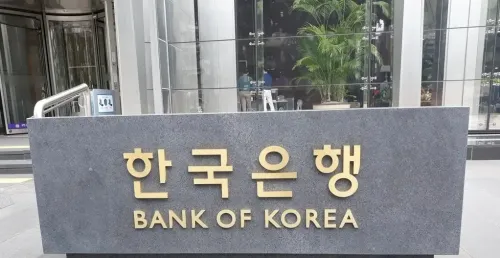
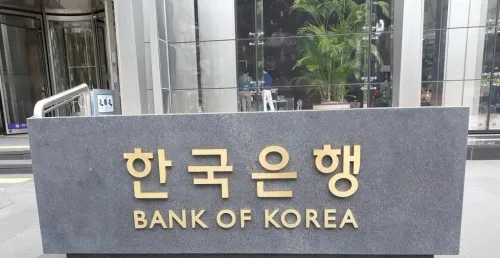
South Korea consumer sentiment fell for a second consecutive month in November, as a stock market correction and higher lending rates weighed on households, the Bank of Korea said on 24 November. Its composite consumer sentiment index dropped 2.3 points from October to 103.1, although optimists still outnumbered pessimists.
The central bank's survey covered 2,500 households from 9 to 16 November. The decline followed a 1.2-point fall in October, when sentiment was also affected by a stock market correction and prolonged tensions in the Middle East.
November sentiment figures
The composite consumer sentiment index, or CCSI, remained above the 100 threshold that separates an overall balance of optimists from pessimists. Its fall from 105.4 in October nevertheless indicates that the balance became less positive.
The Bank of Korea (BOK) said: “Pessimistic outlooks increased as the stock market correction and rising lending rates weighed heavily on consumer sentiment.” The survey measures sentiment rather than actual household spending.
The headline reading also masks weaker assessments of economic conditions. While the composite index stayed above 100, both the current-conditions measure and the future-conditions measure stood below that level in November.
Current and future outlook weaken
The subindex measuring people's assessment of current economic conditions fell 4 points to 78 in November. That followed a 1-point decline to 82 in October.
Households' outlook for future economic conditions also deteriorated, with that subindex slipping 2 points to 86. It had fallen by the same amount to 88 in the preceding month.
The consecutive declines show that a weaker assessment was not confined to the headline measure. Both views of present conditions and expectations for the future became less favourable over the two-month period covered by the reported figures.
Stock market and lending pressures
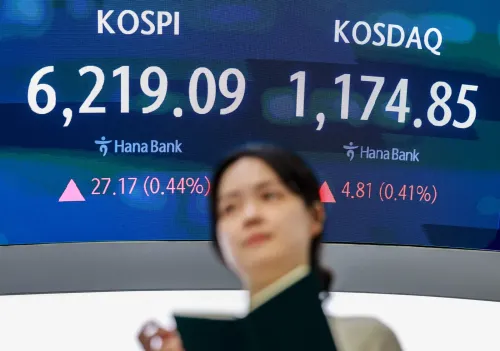
The benchmark Korea Composite Stock Price Index (KOSPI) fell 15% in the first three weeks of November. The decline came amid escalating concerns about the profitability of large-scale artificial intelligence infrastructure investment after the US midterm elections.
The central bank identified the market correction and rising lending rates as the main factors weighing on sentiment in November. In October, it had pointed instead to the market correction alongside extended military tensions in the Middle East.
Those explanations show that the stock market correction featured in both months, while the other pressure identified by the bank changed. The survey does not establish how much each factor contributed to the decline.
What the survey means
Consumer sentiment provides a snapshot of household attitudes, including assessments of the economy now and expectations for the future. A reading above 100 means optimists outnumber pessimists on the composite measure; it does not mean every household or subindex is optimistic.
The reported November survey covered 2,500 households, with responses collected over 9–16 November. Later survey readings will show whether confidence stabilises after the two consecutive monthly declines.
Point of View
But that should not obscure the weaker readings on both current and future economic conditions. The recurring role of the stock market correction, alongside rising lending rates, makes household confidence worth watching beyond the market itself. The next test is whether the deterioration in sentiment persists and is reflected in household spending; the survey alone cannot establish that outcome.
NationPress
24 Nov 2026
Frequently Asked Questions
What happened to South Korea consumer sentiment in November?
South Korea's composite consumer sentiment index fell 2.3 points to 103.1 in November, its second consecutive monthly decline. The Bank of Korea cited a stock market correction and rising lending rates.
Why does a consumer sentiment reading of 103.1 matter?
A reading of 103.1 means optimists still outnumber pessimists on the composite measure. The decline from 105.4 in October shows that the overall balance became less positive.
How did South Korean households view economic conditions?
The current economic conditions subindex fell 4 points to 78 in November. The future economic outlook subindex dropped 2 points to 86.
How did South Korea's stock market perform in November?
The KOSPI fell 15% in the first three weeks of November. The decline came amid concerns about the profitability of large-scale artificial intelligence infrastructure investment after the US midterm elections.
Who was covered by the Bank of Korea survey?
The Bank of Korea surveyed 2,500 households from 9 to 16 November. Later readings will indicate whether the decline in confidence continues.