South Korea business sentiment dips in June for first time in 3 months: BOK
Synopsis
South Korea's headline business sentiment index snapped a two-month recovery in June, dragged down by construction and travel, even as manufacturers logged their best reading since August 2022. Meanwhile, a separate BOK report showed Korean financial assets in the US crossed $1 trillion for the first time — a near-fivefold jump in US stock holdings that reveals where Korean confidence is actually flowing.
Key Takeaways
South Korea's CBSI fell 1.2 points to 97.7 in June 2025 — the first month-on-month decline since March .
The manufacturing sub-index rose to 101.2 , its highest since August 2022 , staying above 100 for a second straight month.
The non-manufacturing sub-index dropped 2.1 points to 95.4 , weighed by construction and travel sector weakness.
The July outlook index fell further to 95.2 , down 2.4 points from the prior month's projection.
South Korean financial assets in the US hit a record US$1.15 trillion , with US stock investments surging to $802.8 billion .
The BOK survey covered 3,184 companies , including 1,780 manufacturing firms .
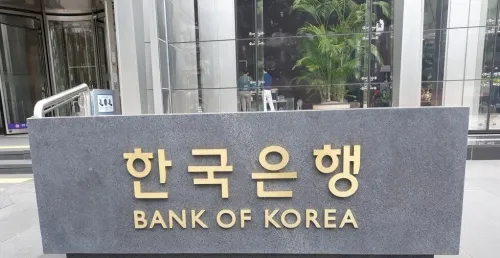
South Korea's Composite Business Sentiment Index (CBSI) fell for the first time in three months in June 2025, slipping 1.2 points to 97.7 from a 3½-year high of 98.9 in May, according to a survey released by the Bank of Korea (BOK) on Thursday, 25 June. The retreat was driven by weakening confidence in the construction and travel sectors, even as manufacturers posted their strongest reading since August 2022.
Key Developments
The June reading marked the first month-on-month decline since March. The CBSI measures corporate outlooks on overall business conditions, with any reading below 100 indicating that pessimists outnumber optimists — placing the all-industry index firmly in negative territory.
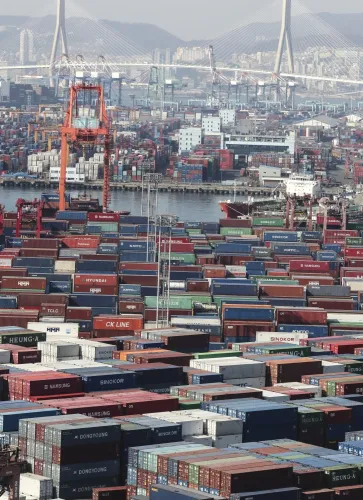
The manufacturing sub-index bucked the overall trend, rising 0.4 points to 101.2 — the highest since August 2022, when it stood at 102.9. This was the second consecutive month that the manufacturing index held above the 100 threshold, having crossed it in May for the first time since August 2022.
Non-Manufacturers and Services Drag
The non-manufacturing sub-index fell 2.1 points to 95.4, pulled down by low confidence among construction and travel-related companies. The divergence between manufacturers and service-sector firms reflects a broader pattern seen across several Asian economies, where export-driven industrial recovery has outpaced domestic consumption and services.
The Economic Sentiment Index (ESI) — which captures sentiment among both consumers and businesses — also edged down 0.7 points to 96.8 for June, signalling that households share some of the caution felt by non-manufacturing firms.
July Outlook Weakens Further
Forward-looking indicators offer limited comfort. The July outlook index dropped 2.4 points to 95.2, down from the previous month's projection of 97.6. The BOK survey, conducted earlier in June, covered 3,184 companies, including 1,780 manufacturing firms.
South Korean Financial Assets in the US Hit Record
Separately, a BOK report released on the same day revealed that South Korea's financial assets held in the United States reached a fresh record of US$1.15 trillion at the end of last year — surpassing the $1 trillion mark for the first time and breaking yearly records for the third consecutive year since 2023. The figure rose $204.2 billion from a year earlier, accounting for 47.1% of South Korea's total overseas financial assets.
The surge was driven by South Korean individuals sharply increasing their exposure to US equities during a bullish run on Wall Street. Investments in US stocks alone totalled $802.8 billion, up from a previous high of $178.6 billion reported a year ago — a near-fivefold jump that underscores the depth of Korean retail appetite for American markets.
With the July sentiment outlook already in contraction territory and non-manufacturing confidence continuing to slide, analysts will be watching whether the manufacturing sector's resilience is enough to anchor broader economic confidence through the second half of the year.
Point of View
But the services and construction sectors are telling a different story — one of sluggish domestic demand and cautious consumers. The near-fivefold jump in US stock holdings is a striking subplot; Korean retail money is chasing Wall Street returns rather than betting on the home economy. If that capital rotation continues and domestic services sentiment stays below 100 into the third quarter, the BOK may face pressure to reassess its rate trajectory sooner than markets currently expect.
NationPress
23 Sept 2026
Frequently Asked Questions
What is the Composite Business Sentiment Index (CBSI) and what did it show for June 2025?
The CBSI is a Bank of Korea survey measuring corporate outlooks on overall business conditions, where a reading below 100 means pessimists outnumber optimists. In June 2025, it fell 1.2 points to 97.7 — the first month-on-month decline since March — pulled down by weak confidence in construction and travel sectors.
Why did South Korea's business sentiment fall in June despite strong manufacturing?
The overall CBSI declined because the non-manufacturing sub-index dropped 2.1 points to 95.4, dragged by low sentiment among construction and travel-related companies. Manufacturing, by contrast, rose to 101.2 — its best reading since August 2022 — but was not enough to offset the services-sector weakness.
What is the July 2025 business outlook for South Korea?
The July outlook index fell 2.4 points to 95.2, down from the prior month's projection of 97.6, according to the BOK survey. A reading below 100 indicates that more companies expect conditions to worsen than improve.
How large are South Korea's financial assets in the United States?
South Korean individuals and companies held US$1.15 trillion in US financial assets at the end of last year — crossing the $1 trillion mark for the first time and breaking yearly records for the third consecutive year since 2023. US stocks alone accounted for $802.8 billion of that total.
How many companies were covered in the BOK business sentiment survey?
The Bank of Korea survey, conducted earlier in June 2025, covered 3,184 companies in total, including 1,780 manufacturing firms.