How Will South Korea Enhance Economic Growth with AI and Semiconductors in 2026?
Click to start listening
Synopsis
As South Korea grapples with a challenging economic landscape, experts suggest that the country can harness its semiconductor industry and the burgeoning AI market to foster growth. With revised forecasts indicating a modest economic recovery, South Korea's strategic investments may pave the way for a resilient future amid global uncertainties.
Key Takeaways
- South Korea's economy is projected to grow by 1.8% in 2026.
- The semiconductor sector is vital for economic resilience.
- Exports reached a record high of $640.2 billion from January to November 2023.
- Challenges include foreign exchange volatility and competition from China.
- The government is focusing on long-term productivity improvements.
Seoul, Dec 26 (NationPress) Amid ongoing global economic uncertainties that are predicted to continue impacting Asia's fourth-largest economy in 2026, South Korea aims to tackle these hurdles by capitalizing on its semiconductor sector during the worldwide artificial intelligence (AI) surge, according to experts on Friday.
This year, South Korea's economy experienced notable turbulence following U.S. President Donald Trump's introduction of various protectionist policies, including tariffs aimed at long-standing economic partners, as reported by Yonhap news agency.
Following extensive negotiations, Seoul and Washington in November published a fact sheet confirming the U.S. commitment to reduce its reciprocal tariffs on South Korean goods from 25 percent to 15 percent. This agreement also included South Korea's pledge to invest US$350 billion in the United States and other commitments.
Considering these developments, the Bank of Korea has raised its growth forecast for 2026 to 1.8 percent from an earlier estimate of 1.6 percent, citing a robust recovery in the global semiconductor market.
The ASEAN+3 Macroeconomic Research Office (AMRO) has projected that South Korea's economy will grow by 1.9 percent next year, driven by strong export performance.
In November, South Korea's exports surged by 8.4 percent year-on-year, exceeding $61 billion, marking the sixth consecutive month of growth.
For the January-November period, total exports reached $640.2 billion, a record for the first 11 months of any year, raising hopes that annual exports may surpass $700 billion for the first time in history.
Despite this optimistic outlook, experts warn that South Korea is faced with numerous challenges, such as foreign exchange volatility, fierce competition from Chinese rivals in key industries, and a slowdown in domestic growth.
“The anticipated economic growth of 1.8 percent for South Korea is not due to improved conditions next year but because this year has been exceptionally difficult,” said Joo Won, an economist at Hyundai Research Institute, in comments to Yonhap News Agency.
Joo also highlighted that South Korea's construction sector, which contributes over 10 percent to its gross domestic product (GDP), is likely to continue exerting pressure on the economy.
Regarding the weak Korean won, Joo mentioned that while the situation is expected to progressively improve, the U.S. dollar will likely remain strong in early 2026.
As of Tuesday, the won was trading at 1,483.6 won per dollar, close to its weakest level since April 9, when it closed at 1,484.1 won, the lowest since March 12, 2009.
“The foreign exchange market is expected to remain unstable in the first quarter,” Joo explained, noting that many foreign firms operating in South Korea typically repatriate funds in March or April after the fiscal year ends. “However, stability is anticipated starting in the second quarter.”
Choe Byung-ho, an economics professor at Pusan National University, stated that export-driven economies like South Korea will face heightened challenges in 2026 due to a global economic slowdown that could hinder outbound shipments.
“Domestic demand is weak, and inflation remains unpredictable,” Choe remarked to Yonhap News Agency. “Short-term solutions won't suffice; the government must focus on enhancing overall productivity with a long-term vision.”
Choe also indicated that South Korea has the opportunity to leverage the global AI boom and increase investments in this sector.
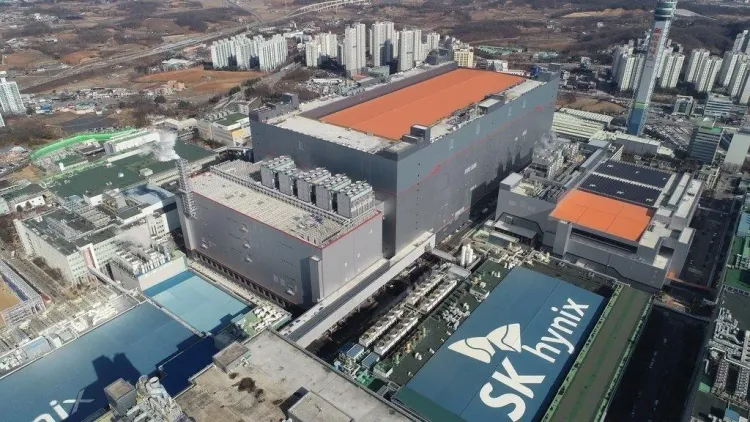
Park Jea-gun, a renowned professor of electronic engineering at Hanyang University, noted that South Korea's semiconductor industry is expected to remain resilient throughout 2026, supported by strong demand for advanced chips, including high bandwidth memory (HBM), from the AI sector.
“While early 2024 predictions suggested a downturn in the memory sector, demand from the AI segment has surged unexpectedly,” Park told Yonhap.
Point of View
The outlook for South Korea's economy remains cautiously optimistic. While challenges persist, particularly in foreign exchange and competition, the potential for growth through AI and semiconductors is promising. The government’s commitment to strategic investments indicates a proactive approach to ensure long-term stability and prosperity for the nation.
NationPress
26/12/2025
Frequently Asked Questions
What is the expected economic growth rate for South Korea in 2026?
The Bank of Korea has revised its growth forecast for 2026 to 1.8 percent.
What factors are impacting South Korea's economy?
Key factors include foreign exchange volatility, competition from Chinese industries, and sluggish domestic growth.
How are exports performing in South Korea?
South Korea's exports saw an increase of 8.4 percent in November, reaching over $61 billion.
What role does the semiconductor industry play in South Korea's economy?
The semiconductor industry is expected to remain strong due to rising demand for advanced chips, particularly from the AI sector.
What is the government's strategy for addressing economic challenges?
The government aims to improve overall productivity and leverage the global AI boom through increased investments.