South Korea's Trade Ministers Engage with U.S. to Tackle Tariff Challenges
Synopsis
In a significant diplomatic move, South Korea's industry and trade ministers have headed to the U.S. to address pressing tariff issues and strengthen trade agreements. Amid rising tensions globally, this visit reflects the ongoing commitment to ensure stable trade relations.
Key Takeaways
South Korea's ministers are addressing tariff issues with U.S. counterparts.
Supreme Court ruling has prompted concerns over tariff policies.
Strategic investment cooperation is a key focus of discussions.
Fuel prices in Seoul have increased significantly.
Efforts to prevent price collusion in the oil market are ongoing.
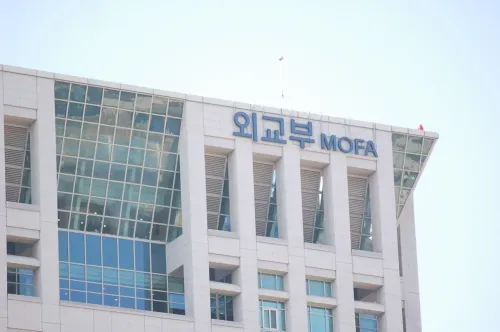
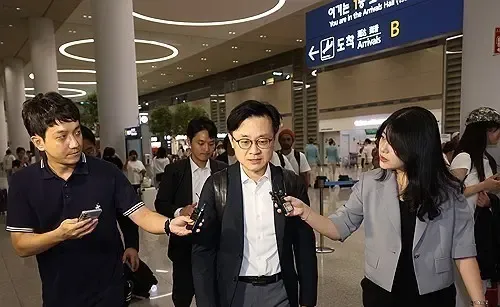
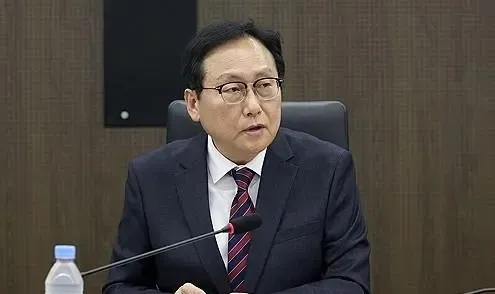
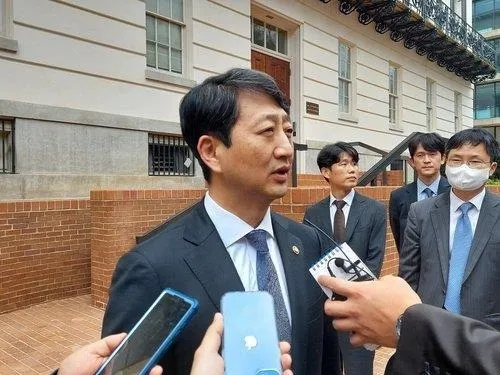
Seoul, March 7 (NationPress) - South Korea's Industry Minister Kim Jung-kwan and Trade Minister Yeo Han-koo traveled to the United States this week to align strategies regarding tariff challenges and other pending trade issues between Seoul and Washington, as reported by the industry ministry on Saturday.
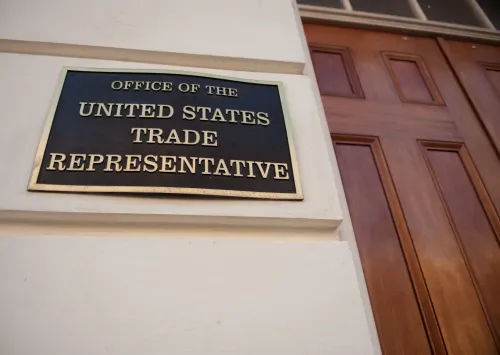
On Friday (U.S. time), the ministers had individual meetings with U.S. Commerce Secretary Howard Lutnick and U.S. Trade Representative Jamieson Greer to deliberate on outstanding bilateral trade matters.
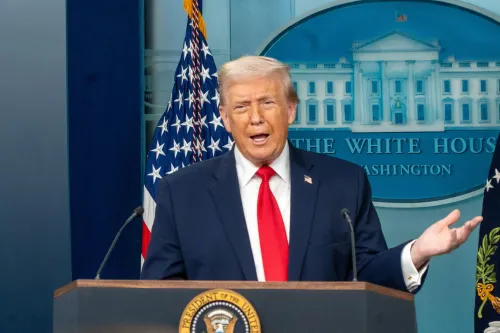
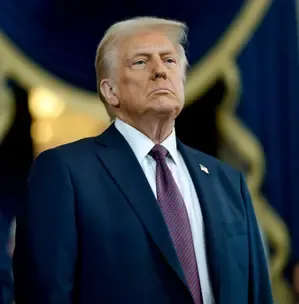
This visit aimed to mitigate uncertainties surrounding tariff regulations following a recent ruling by the U.S. Supreme Court that invalidated reciprocal tariffs set by the former administration of President Donald Trump. Additionally, it sought to facilitate the implementation of a bilateral trade agreement, according to the ministry, as reported by Yonhap news agency.
In his discussion with Lutnick, Kim highlighted Seoul's advancements in executing the trade agreement, including the passage of a special law aimed at fostering investments in the United States, and explored opportunities to enhance strategic investment collaboration.
Kim emphasized that previously established tariff arrangements between both nations must be reliably upheld, as Washington continues to implement tariff strategies under provisions like Section 122 of the Trade Act and Section 232 of the Trade Expansion Act following the Supreme Court's decision.
Conversely, Yeo and Greer examined the execution of non-tariff measures as outlined in a joint fact sheet released by the leaders of both nations and agreed to convene a joint committee meeting regarding the South Korea-U.S. free trade agreement at a suitable time.
Yeo reiterated Seoul's stance that a petition lodged by U.S. investors in Coupang Inc., calling for a Section 301 investigation, should not adversely impact bilateral trade relations.
In the meantime, average gasoline and diesel prices in Seoul have surpassed 1,900 won (approximately US$1.29) per liter amid rising tensions in the Middle East, according to government data. The government has also continued to warn against illegal practices, including price collusion.
On social media platform X (formerly known as Twitter), President Lee Jae Myung issued a new alert to domestic oil refiners regarding possible collusion in raising fuel prices, while directing officials to contemplate a price cap during a recent Cabinet meeting.
Point of View
This visit by South Korea's trade ministers signifies a proactive approach to maintaining robust economic ties with the United States, particularly in light of recent judicial decisions that could affect tariff dynamics. The emphasis on securing previously agreed-upon arrangements reflects a commitment to bilateral cooperation.
NationPress
14 Oct 2026
Frequently Asked Questions
Why did South Korea's trade ministers visit the U.S.?
The ministers aimed to address tariff issues and strengthen trade agreements in light of recent U.S. Supreme Court rulings affecting tariff policies.
What is the significance of the bilateral trade agreement?
The bilateral trade agreement is crucial for ensuring stable trade relations and facilitating investment opportunities between South Korea and the U.S.
How have fuel prices in Seoul been affected recently?
Average gasoline and diesel prices in Seoul have risen above 1,900 won per liter, influenced by escalating tensions in the Middle East.
What are the implications of the Section 301 investigation?
A Section 301 investigation involves U.S. scrutiny of foreign trade practices, and South Korea's officials believe it should not negatively impact bilateral relations.
What measures are being taken against price collusion?
The South Korean government is actively warning against illegal practices such as price collusion in the fuel market amid rising prices.