TCS to match AI agents with human workforce within 3 years: Chandrasekaran
Synopsis
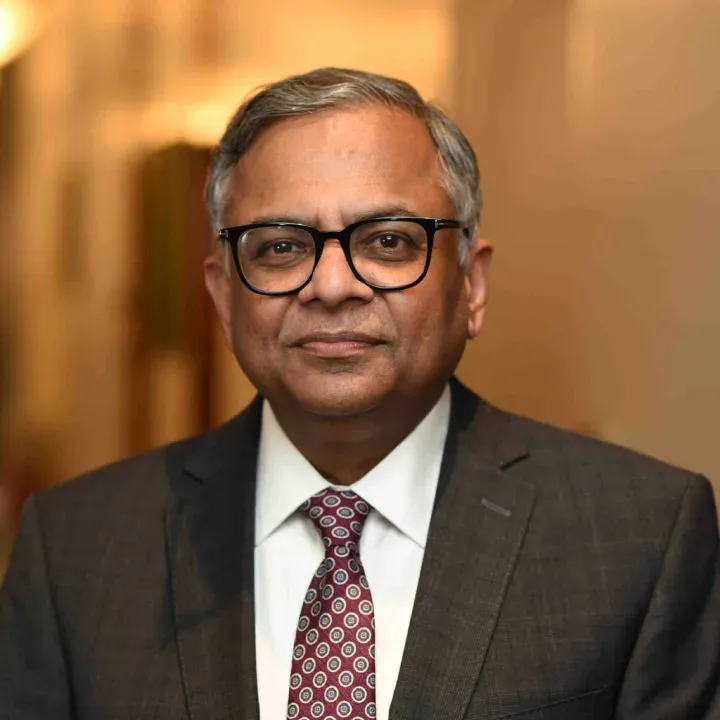
TCS Chairman N Chandrasekaran told shareholders that AI agents could numerically match the company's human workforce within three years — a striking claim from the leader of a firm with over 600,000 employees. With $2.4 billion in annualised AI revenue already on the books and growing at 22.4% quarterly, TCS is betting that AI expands enterprise IT budgets rather than cannibalises them.
Key Takeaways
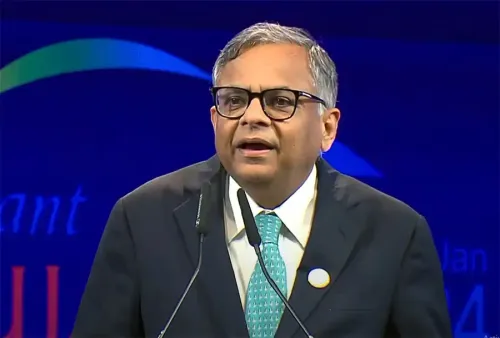
TCS Chairman N Chandrasekaran said the company could have as many AI agents as human employees within three years , speaking at the 31st Annual General Meeting in Mumbai .
TCS recorded an annualised AI revenue of $2.4 billion in the last quarter of FY26 , growing at a 22.4% compound quarterly growth rate .
Chandrasekaran argued AI is 'the most significant opportunity yet for enterprise IT', not a threat to the services model.
Nearly three-quarters of enterprises globally expect technology spending to rise over the next two years, largely due to AI adoption, according to Chandrasekaran.
He flagged AI's coming expansion into physical infrastructure — factories, warehouses, energy networks, and supply chains — as a new demand frontier for TCS.
Tata Consultancy Services (TCS) Chairman N Chandrasekaran on Tuesday said the company could have as many AI agents as human employees within the next three years, signalling a sweeping transformation in how one of India's largest IT firms operates. The remarks came at TCS's 31st Annual General Meeting in Mumbai.
AI as Opportunity, Not Threat
Chandrasekaran pushed back firmly against the narrative that artificial intelligence poses an existential risk to the IT services model. 'Some say AI poses a fundamental threat to that model. I see it differently: far from being a mortal threat, AI is the most significant opportunity yet for enterprise IT,' he said. He framed the current phase as 'the most consequential work' in TCS's history, arguing that enterprises globally are accelerating — not cutting — technology investment on the back of AI adoption.
According to Chandrasekaran, nearly three-quarters of enterprises worldwide expect their technology spending to rise over the next two years, driven largely by AI. This, he argued, positions TCS to capture a larger share of a growing pie rather than defend a shrinking one.
TCS AI Revenue: $2.4 Billion Annualised
Chandrasekaran pointed to concrete momentum behind the company's AI pivot. In the last quarter of FY26, TCS recorded an annualised AI revenue of $2.4 billion, growing at a compound quarterly growth rate of 22.4%. He noted that the company's fundamentals remain intact — stable margins, rising revenues, and a strong deal pipeline — despite recent pressure on the broader IT sector and investor concerns about AI disruption.
AI Moving Into the Physical World
Looking ahead, Chandrasekaran outlined a vision that extends well beyond software. 'Today, AI primarily exists in the world of software and computers, but soon it will make inroads into the physical world: stores, factories, warehouses, energy networks, vehicles and supply chains,' he said. He added that this shift would require professionals who can bridge IT, AI, and physical infrastructure — a convergence that he sees as a new and durable demand driver for TCS's talent base.
The Jobs Question
Chandrasekaran directly addressed concerns about AI displacing workers in the IT services industry, acknowledging that a central question has emerged: if AI can perform much of the work, what happens to a sector built around delivering those services? He argued that the fear rests on a misreading of how AI interacts with complex enterprise systems, suggesting that human oversight, integration expertise, and domain knowledge remain irreplaceable — at least for the foreseeable future. Notably, this comes as several global IT firms have begun trimming headcount or slowing hiring in anticipation of AI-driven productivity gains, making Chandrasekaran's equanimity a notable counterpoint.
What This Means for TCS and the Sector
A parity between AI agents and human employees at a firm that employs over 600,000 people would represent one of the largest workforce transformations in Indian corporate history. Industry observers will watch whether TCS's bullish AI revenue trajectory translates into net hiring growth or a structural shift in the employee mix. The next few quarterly results will be a key barometer.
Point of View
000 people; a numerical AI-agent parity would be a structural rupture, not a gradual shift. The $2.4 billion annualised AI revenue is real and growing fast, but it still represents a fraction of TCS's overall revenue base, and the company has not detailed how 'AI agent' is defined or counted. The harder question mainstream coverage is not asking: if AI agents do match human employees, what happens to utilisation rates, billing models, and the offshore arbitrage that built TCS in the first place?
NationPress
21 Sept 2026
Frequently Asked Questions
What did TCS Chairman N Chandrasekaran say about AI agents at the AGM?
Chandrasekaran said TCS could have as many AI agents as human employees within three years, describing it as a major shift in how work is done at the company. He made the remarks at TCS's 31st Annual General Meeting in Mumbai on Tuesday.
What is TCS's current AI revenue?
TCS recorded an annualised AI revenue of $2.4 billion in the last quarter of FY26, growing at a compound quarterly growth rate of 22.4%. Chandrasekaran cited this as evidence of strong momentum in the company's AI business.
Does TCS see AI as a threat to IT jobs?
Chandrasekaran argued that AI is not a threat but 'the most significant opportunity yet for enterprise IT.' He said fears about AI replacing IT services work are based on a misunderstanding of how AI interacts with complex enterprise systems.
How will AI expand beyond software, according to TCS?
Chandrasekaran said AI will soon move into the physical world — stores, factories, warehouses, energy networks, vehicles, and supply chains. He argued this will create demand for professionals who can integrate IT, AI, and physical infrastructure.
Why are global enterprises increasing technology spending?
According to Chandrasekaran, nearly three-quarters of enterprises worldwide expect their technology budgets to rise over the next two years, driven primarily by AI adoption. He said this trend underpins TCS's optimistic outlook despite broader IT sector pressures.