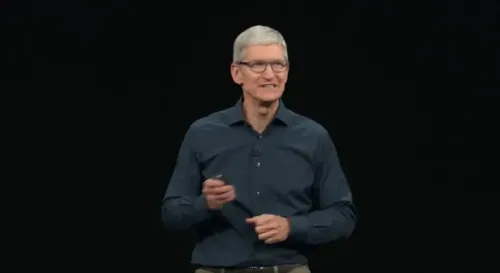
Tim Cook's 15 years at Apple: $350 billion to $4 trillion and counting
Synopsis
Tim Cook took Apple from a $350 billion company to a $4 trillion titan in 15 years — a nearly 25-fold stock surge, a $100 billion-plus services engine, and two new product categories that redefined consumer electronics. The unanswered question is AI, and it now falls to successor John Ternus to prove Apple's measured bet was wisdom, not hesitation.
Key Takeaways
Tim Cook has led Apple for 15 years since taking over from Steve Jobs in August 2011 .
Apple's market capitalisation grew from roughly $350 billion to approximately $4 trillion under Cook.
Apple shares rose 2,359.2% — from about $13 to $319.70 — during his tenure.
Annual revenue expanded from $108 billion in 2011 to more than $400 billion ; the services segment alone exceeds $100 billion annually.
Notable setbacks include Apple Maps (2012), the Vision Pro headset's limited adoption, and the cancellation of Project Titan .
Cook's successor, John Ternus , will inherit the unresolved challenge of competing in the AI race against Microsoft , Google , and OpenAI .
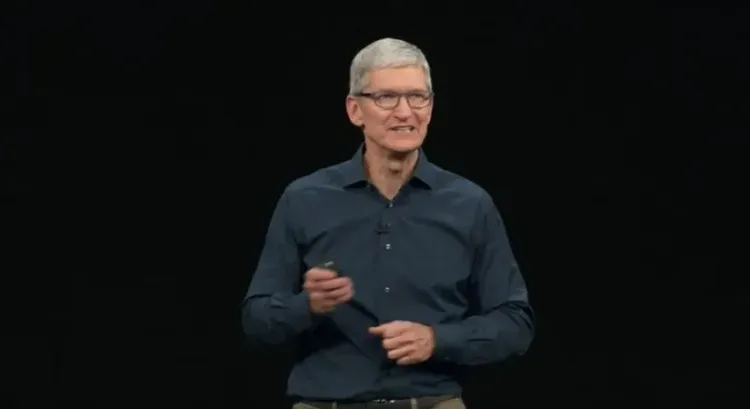
Tim Cook marks 15 years as chief executive of Apple in August 2026, having inherited the company from Steve Jobs in August 2011 at a market capitalisation of roughly $350 billion — and leaving it today valued at approximately $4 trillion. The transformation is among the most remarkable in corporate history, driven by a disciplined expansion of hardware, services, and supply-chain mastery that few analysts predicted when Cook stepped up.
The Numbers Behind the Ascent
When Cook assumed the top role, Apple shares traded at around $13. They have since risen 2,359.2% to $319.70 at the latest close — a nearly 25-fold increase. Annual revenue has grown from approximately $108 billion in 2011 to more than $400 billion, underpinned by resilient iPhone demand and a rapidly expanding services portfolio. The scale of this growth places Apple in a category occupied by very few companies in global business history.
Services and Silicon: Cook's Strategic Bets
One of Cook's most consequential decisions was steering Apple beyond hardware dependency. The services segment — encompassing the App Store, Apple Music, and Apple Pay, among others — now generates more than $100 billion annually and carries higher margins than the device business. This shift has made Apple's revenue base significantly more resilient to hardware upgrade cycles.
Cook also oversaw a landmark transition in chip architecture. Apple moved away from Intel processors and began designing its own silicon under the Apple Silicon platform for Mac computers. The move gave the company tighter control over performance, power efficiency, and the hardware-software ecosystem — a structural advantage rivals have struggled to replicate.
New Categories That Reshaped Markets
Apple Watch, launched in 2015, established Apple as a serious player in health and fitness technology. The following year, AirPods effectively created the mass-market wireless earbud category, generating a substantial new revenue stream. Both products have since become defining consumer electronics of the decade.
Where Cook's Record Falls Short
Cook's tenure has not been without notable stumbles. Apple Maps, launched in 2012, drew widespread criticism for inaccurate and incomplete data in its early years. The Vision Pro mixed-reality headset, introduced in 2023, has reportedly struggled to achieve broad consumer adoption, with its high price cited as a primary barrier. Apple also eventually wound down Project Titan, its ambitious electric and autonomous vehicle programme, after years of development and mounting costs failed to yield a viable commercial path.
The AI Question and What Comes Next
Perhaps the defining challenge of the post-Cook era will be artificial intelligence. While Microsoft, Google, and OpenAI have moved aggressively to embed AI into consumer and enterprise products, Apple has taken a more measured approach, prioritising privacy, on-device computing, and deep software integration. That strategy will fall to Cook's designated successor, John Ternus, to either vindicate or recalibrate. The company has made progress integrating AI into its ecosystem, but faces intensifying pressure to match the pace of rivals in a technology race reshaping the global industry.
Cook's fifteen-year record is ultimately a study in contrasts: extraordinary financial scale-up, successful new product categories, and a services business that rivals entire tech companies — set against ventures that did not deliver and an AI posture whose payoff remains unproven.
Point of View
Not capability, and timing bets can go badly wrong. The Vision Pro and Project Titan both showed that Apple's product discipline has limits when it ventures outside its core loop. Meanwhile, Microsoft and Google are rewiring enterprise and consumer behaviour with AI at a pace that on-device privacy framing may not match. Ternus inherits a $4 trillion balance sheet and a technology gap whose true width will only become clear in the next two to three years.
NationPress
30 Aug 2026
Frequently Asked Questions
How much did Apple's market cap grow under Tim Cook?
Apple's market capitalisation grew from roughly $350 billion when Tim Cook took over in August 2011 to approximately $4 trillion by August 2026 — a more than tenfold increase. The company's stock rose 2,359.2% over the same period.
What is Apple's services business and how big is it?
Apple's services segment includes the App Store, Apple Music, Apple Pay, and related offerings. It now generates more than $100 billion annually and carries higher profit margins than Apple's hardware products, making it a critical growth engine.
What were Tim Cook's biggest failures at Apple?
Cook's tenure included several high-profile setbacks: Apple Maps drew sharp criticism for inaccurate data after its 2012 launch; the Vision Pro headset, introduced in 2023, reportedly struggled with consumer adoption due to its high price; and Project Titan, Apple's electric and autonomous vehicle programme, was eventually cancelled after years of development.
Who is Tim Cook's successor at Apple?
John Ternus has been identified as Cook's successor at Apple. He will inherit both the company's $4 trillion valuation and the challenge of defining Apple's competitive position in artificial intelligence against rivals including Microsoft, Google, and OpenAI.
How did Apple's chip strategy change under Tim Cook?
Under Cook, Apple transitioned away from Intel processors and began designing its own chips under the Apple Silicon platform for Mac computers. The move gave Apple greater control over performance, power efficiency, and its hardware-software ecosystem.