IST made mandatory: Govt notifies 'One Nation, One Time' rules for 2026

Synopsis
India has formally legislated a single time standard. The Legal Metrology (IST) Rules, 2026 — backed by NavIC satellite signals and a White Rabbit Technology network already live in Bengaluru — will make IST the mandatory reference for banking, power grids, telecom, and courts within 180 days. The deeper story is sovereignty: India is building its own timing backbone to cut dependence on foreign satellites.
Key Takeaways
The Department of Consumer Affairs notified the Legal Metrology (Indian Standard Time) Rules, 2026 on 27 August 2026 .
IST will become the mandatory time reference for all legal, commercial, administrative, and official purposes across India.
Rules take effect 180 days after gazette publication, giving stakeholders time to update systems.
India's NavIC satellite navigation system is authorised as a timing source, reducing reliance on foreign satellites.
A White Rabbit Technology-based IST Dissemination Network was commissioned at RRSL Bengaluru in July 2026 .
Secure IST dissemination has been demonstrated between RRSL Bengaluru and NSE Chennai in collaboration with CSIR-NPL , ISRO , SEBI , NSE , and BSNL .
The Department of Consumer Affairs has notified the Legal Metrology (Indian Standard Time) Rules, 2026, formally establishing Indian Standard Time (IST) as the single, legally recognised time reference for all official, commercial, administrative, and legal purposes across India. The rules were published in the Official Gazette on 27 August 2026 and will come into force 180 days after notification, giving stakeholders a structured window to prepare for compliance.
What the Rules Mandate
Under the new framework, IST will serve as the common time reference for banking and digital payment transactions, railways, airports, telecommunications networks, power grids, government records, and emergency services. The rules form the legislative backbone of the government's broader 'One Nation, One Time' initiative, which aims to establish a secure, uniform, and indigenously anchored time-distribution system across the country.
Notably, the rules also authorise the use of NavIC — India's own satellite navigation system — alongside other approved Indian timing sources for time dissemination, marking a deliberate shift away from dependence on foreign satellite-based infrastructure.
Infrastructure Already Being Built
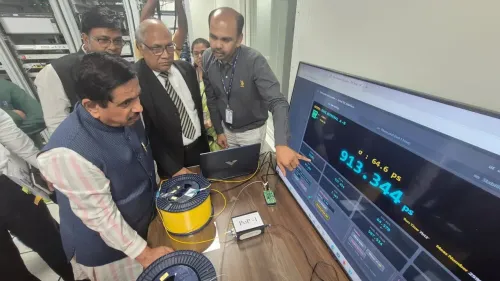
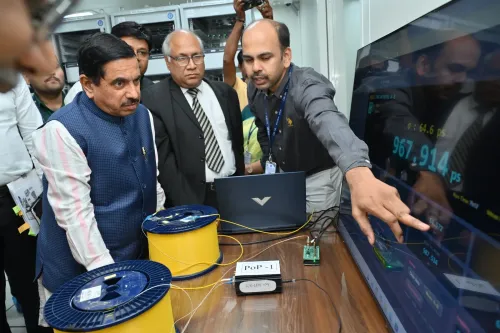
The government has been developing the underlying technical architecture in parallel. A White Rabbit Technology-based IST Dissemination Demonstration Network was commissioned at the Regional Reference Standard Laboratory (RRSL) in Bengaluru in July 2026. The system has already demonstrated IST dissemination across banking, telecommunications, power, transportation, and digital governance sectors.
A further milestone was the secure dissemination of IST between RRSL Bengaluru and NSE Chennai, carried out in collaboration with CSIR-NPL, ISRO, SEBI, NSE, BSNL, and other stakeholders. The exercise demonstrated that critical financial infrastructure can receive verified IST through a domestic network rather than relying on external sources.
Why Synchronised Time Matters
The push for a unified time standard is driven by the growing complexity of India's digital economy. Banking systems, digital payment rails, telecom networks, and power grids all depend on precise, consistent timestamps to function reliably. Discrepancies — even of milliseconds — can cause transaction failures, audit gaps, and coordination breakdowns across interconnected systems.
At present, several critical systems source their timing from foreign satellite-based signals, a dependency that carries both reliability and sovereignty risks. The new rules and the indigenous dissemination infrastructure are intended to provide a domestic alternative for these systems.
Transition Timeline and Next Steps
The 180-day transition period is designed to allow government departments, businesses, institutions, and other organisations to audit their existing systems, carry out necessary technical modifications, and achieve compliance before the rules take effect. Legal Metrology laboratories across India are expected to play a central role in the dissemination network as the rollout progresses.
With the rules now notified, the focus shifts to execution — ensuring that the infrastructure reaches sufficient scale and that compliance mechanisms are in place well before the deadline arrives.
Point of View
A quiet but real vulnerability. By legislating IST as the sole reference and backing it with NavIC and White Rabbit networks, the government is attempting to close that gap. The 180-day window is tight for legacy systems in banking and telecom; compliance depth, not just notification, will determine whether 'One Nation, One Time' is a genuine infrastructure upgrade or another well-intentioned mandate that outpaces ground-level readiness.
NationPress
14 Oct 2026
Frequently Asked Questions
What are the Legal Metrology (Indian Standard Time) Rules, 2026?
They are rules notified by the Department of Consumer Affairs on 27 August 2026 that formally make Indian Standard Time (IST) the single mandatory time reference for all legal, commercial, administrative, and official purposes in India. The rules come into force 180 days after gazette publication.
When will the new IST rules take effect?
The rules will take effect 180 days after their publication in the Official Gazette on 27 August 2026. The transition period is intended to allow government bodies, businesses, and institutions to update their systems and achieve compliance.
What is the 'One Nation, One Time' initiative?
It is a government initiative aimed at establishing a secure, uniform time-distribution system across India using indigenous sources such as NavIC and Legal Metrology laboratories. The Legal Metrology (IST) Rules, 2026 form its legislative foundation.
Why is India moving away from foreign satellite-based timing?
Several critical systems — including banking, telecom, and power grids — currently rely on foreign satellite signals for precise timestamps, creating dependency and sovereignty risks. The new rules and indigenous infrastructure, including NavIC-based dissemination, are designed to provide a domestic alternative.
Which sectors are affected by the new IST rules?
Banking and digital payments, telecommunications, railways, airports, power networks, government and legal records, and emergency services are all covered. These sectors are expected to synchronise their timestamp infrastructure to the mandated IST reference within the 180-day transition window.