India commissions IST dissemination network using White Rabbit Technology
Synopsis
India has quietly commissioned one of its most consequential pieces of digital infrastructure — a sovereign, GPS-independent time dissemination network built on White Rabbit Technology. With a successful Bengaluru-to-Chennai corridor test already completed with NSE, the 'One Nation, One Time' initiative is no longer a policy slogan but an operational reality with direct implications for financial markets, telecom, and national cybersecurity.
Key Takeaways
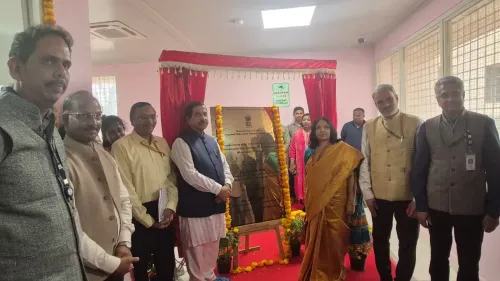
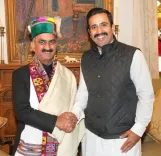
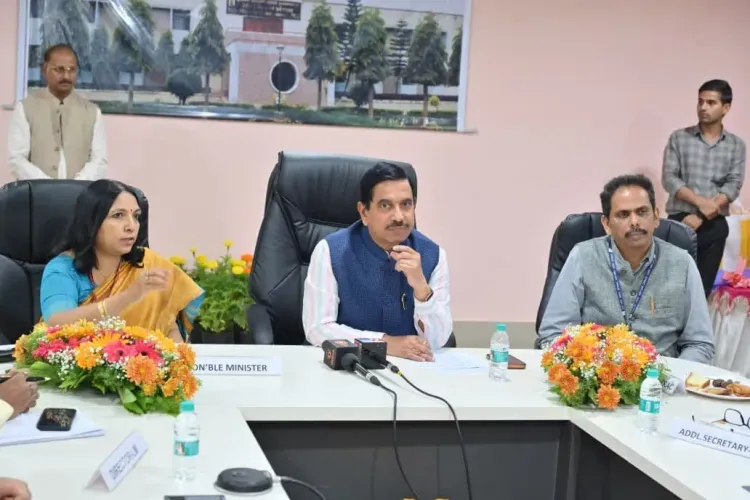
Union Minister Pralhad Joshi commissioned the White Rabbit Technology -based Indian Standard Time dissemination network at RRSL Bengaluru on 19 July 2025 .
The network was jointly developed by the Department of Consumer Affairs , CSIR–NPL , and ISRO .
Secure IST dissemination between RRSL Bengaluru and NSE Chennai has already been successfully verified, involving SEBI , NSE , and BSNL .
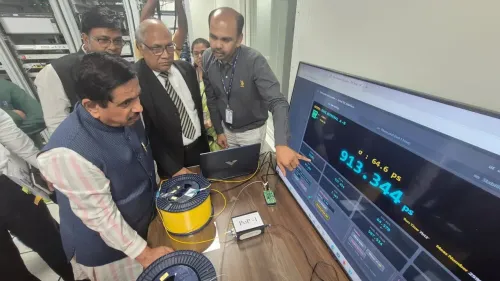
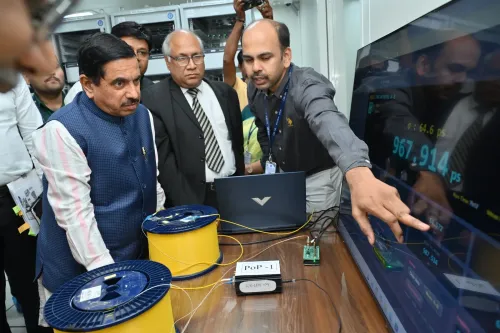
The system uses Precision Time Protocol (PTP) -based White Rabbit technology to provide UTC (NPLI) -traceable time to critical sectors.
The project supports the government's 'One Nation, One Time' initiative, aimed at building a sovereign, tamper-resistant national time infrastructure.
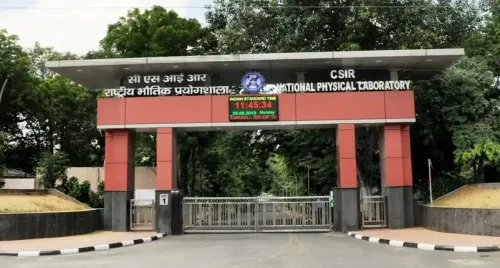
Union Minister Pralhad Joshi on 19 July 2025 commissioned a White Rabbit Technology-based Indian Standard Time (IST) dissemination demonstration network at the Regional Reference Standard Laboratory (RRSL) in Bengaluru, marking a significant step toward building a sovereign, tamper-resistant national time infrastructure. The network, developed jointly by the Department of Consumer Affairs, CSIR–National Physical Laboratory (CSIR–NPL), and the Indian Space Research Organisation (ISRO), is designed to serve critical sectors ranging from banking to digital governance.
What the Network Does
The demonstration network enables secure dissemination of UTC (NPLI)-traceable Indian Standard Time using Precision Time Protocol (PTP)-based White Rabbit technology. According to an official statement from the Ministry of Consumer Affairs, Food & Public Distribution, the system provides highly accurate, secure, and resilient time synchronisation for sectors including banking and financial markets, telecommunications, power systems, transportation, and digital governance.
Notably, the Department of Consumer Affairs, in collaboration with CSIR–NPL, ISRO, SEBI, the National Stock Exchange (NSE), and BSNL, has already completed a successful verification of secure IST dissemination between RRSL Bengaluru and NSE Chennai — demonstrating real-world readiness for financial market integration.
What the Government Said
Minister Joshi stated that accurate and secure dissemination of Indian Standard Time is emerging as an important digital public infrastructure for the country. He added that a trusted national time source would strengthen consumer protection, support fair trade, enhance cyber resilience, and improve the reliability of financial markets and digital governance.
Joshi also visited ISRO's Bengaluru facility to review progress on the broader Indian Standard Time Dissemination Project, interacting with scientists and engineers involved in the programme. He acknowledged ISRO's contribution to developing an indigenous, secure, and resilient time dissemination infrastructure.
'One Nation, One Time' Initiative
The minister linked the network to the government's 'One Nation, One Time' initiative, which aims to establish a single, authoritative national time standard accessible to all critical infrastructure operators. This comes amid growing global concerns over GPS-dependent time systems being vulnerable to spoofing and jamming — risks that a ground-based, indigenous network is designed to mitigate.
India joins a select group of nations developing sovereign time dissemination infrastructure independent of foreign satellite systems, a move that carries strategic as well as economic implications.
Impact on Critical Infrastructure
Precise time synchronisation underpins a wide range of systems that citizens interact with daily. In financial markets, even microsecond discrepancies can affect trade settlement and audit trails. In telecommunications, accurate timing ensures network stability. For power grids, synchronised clocks are essential for fault detection and load management.
The successful RRSL Bengaluru–NSE Chennai corridor test suggests the network is already being validated for high-stakes financial applications, with broader rollout expected as the project scales. All eyes are now on the timeline for full national deployment under the 'One Nation, One Time' framework.
Point of View
Which most critical infrastructure silently depends on, is susceptible to spoofing; a ground-based, ISRO-backed sovereign alternative changes that calculus. The Bengaluru-to-Chennai NSE corridor test is the telling detail: financial markets were the first real-world proving ground, signalling where the government sees the highest-stakes risk. The 'One Nation, One Time' framing also has a political logic — it positions this as a digital sovereignty move, consistent with the broader indigenisation push across defence, space, and semiconductors. The question mainstream coverage is missing is the rollout timeline and whether the network can scale to all 29 states before the next general election cycle makes it a political asset rather than a technical milestone.
NationPress
17 Oct 2026
Frequently Asked Questions
What is the Indian Standard Time dissemination network commissioned in Bengaluru?
It is a White Rabbit Technology-based demonstration network that securely disseminates UTC (NPLI)-traceable Indian Standard Time using Precision Time Protocol. Developed jointly by CSIR–NPL, ISRO, and the Department of Consumer Affairs, it provides highly accurate time synchronisation for critical sectors including banking, telecom, and power systems.
What is White Rabbit Technology and why does India need it?
White Rabbit Technology is a high-precision timing protocol that enables sub-nanosecond time synchronisation over fibre-optic networks. India needs it to reduce dependence on GPS-based timing — which is vulnerable to spoofing and jamming — by establishing a sovereign, ground-based national time infrastructure.
Which organisations collaborated on the IST dissemination project?
The project was developed by the Department of Consumer Affairs, CSIR–National Physical Laboratory (CSIR–NPL), and ISRO. SEBI, the National Stock Exchange (NSE), and BSNL also participated in the verification exercise between RRSL Bengaluru and NSE Chennai.
What is the 'One Nation, One Time' initiative?
'One Nation, One Time' is a government initiative to establish a single, authoritative, and sovereign Indian Standard Time source accessible to all critical infrastructure operators across the country. The newly commissioned network is a key component of this programme.
Who is affected by the Indian Standard Time dissemination project?
The project directly affects operators of critical infrastructure — including financial markets, telecom networks, power grids, transportation systems, and digital governance platforms — that rely on precise time synchronisation for safe and reliable operation.