Joshi backs 'One Nation, One Time' as India's tech sovereignty leap

Synopsis
Union Consumer Affairs Minister Pralhad Joshi has backed the Centre's 'One Nation, One Time' initiative, describing the NTP and White Rabbit-powered national time synchronisation drive as a landmark step in India's technological self-reliance under PM Modi's Viksit Bharat vision.
Key Takeaways
Minister Pralhad Joshi publicly endorsed the 'One Nation, One Time' scheme on 18 July 2026 , calling it a symbol of India's technological self-reliance.
The initiative uses Network Time Protocol (NTP) and White Rabbit high-precision technology to synchronise a single time standard across legal, administrative, commercial, and digital systems nationwide.
Joshi framed the scheme as part of PM Modi's Viksit Bharat and Nava Bharat vision, extending the Atmanirbhar Bharat framework announced in 2020 .
Key beneficiaries include financial institutions , defence forces , cybersecurity agencies, and government digital platforms under the Digital India programme.
The move mirrors earlier 'One Nation' standardisation reforms and India's prior push for technology sovereignty via NavIC satellite navigation.
A phased national rollout and potential statutory standards notifications are expected to follow the political endorsement.
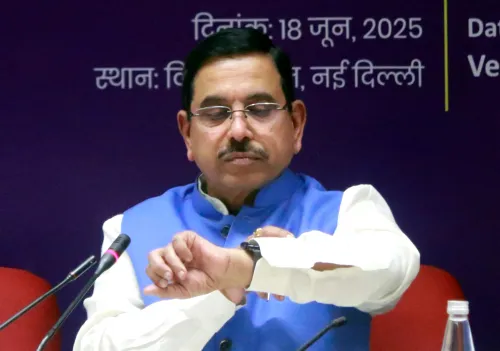
Union Consumer Affairs Minister Pralhad Joshi on Saturday, 18 July 2026, publicly championed the Centre's 'One Nation, One Time' initiative, calling it a proud symbol of India's technological self-reliance and a bold step toward a unified, precise national time standard across all sectors.
Posting in Kannada on X, Joshi thanked a user who had shared a video explaining the scheme, saying the video made a technically complex subject 'very easy to understand.' He framed the initiative as yet another example of Prime Minister Narendra Modi's visionary leadership translating the dreams of 'Viksit Bharat' (Developed India) and 'Nava Bharat' (New India) into ground reality across every sector.
Context
'One Nation, One Time' is a national initiative to synchronise a single, legally recognised and highly precise time standard across India's legal, administrative, commercial, and digital systems. Joshi described the scheme as 'not merely an administrative reform' but a symbol of India's 'Atmanirbharta' (self-reliance) in the technology domain. The minister underlined that India has now taken a decisive step toward technological self-sufficiency.
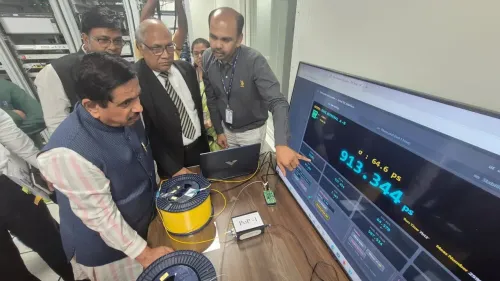
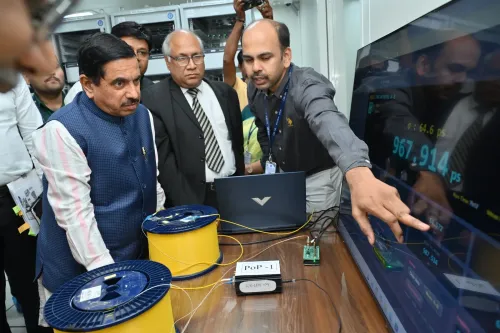
The scheme leverages Network Time Protocol (NTP) and advanced 'White Rabbit' technology to achieve this synchronisation nationwide. White Rabbit is a high-precision timing protocol originally developed at CERN and is capable of sub-nanosecond accuracy over fibre-optic networks, making it suitable for critical national infrastructure.
Policy Backdrop
The initiative sits squarely within the Atmanirbhar Bharat framework announced in 2020, which prioritised indigenous capability-building across strategic sectors — from defence manufacturing to digital infrastructure. India has previously pursued technological sovereignty in navigation through NavIC, its homegrown satellite navigation system, and in secure communications infrastructure.
The 'One Nation, One Time' push also aligns with the broader pattern of standardisation reforms the Modi government has championed — including One Nation One Ration Card and One Nation One Grid — each aimed at eliminating fragmentation and improving systemic efficiency across a diverse federal structure.
Stakeholders and Impact
The beneficiaries of a unified national time standard span a wide cross-section of India's economy and governance architecture. Financial institutions and digital payment platforms stand to gain from timestamped transaction integrity, reducing the risk of fraud and settlement disputes. Defence forces and cybersecurity agencies require precision timing for coordinated operations and network security protocols.
Government agencies operating under Digital India frameworks — from e-courts to GST filing systems — would benefit from a legally harmonised time reference, reducing ambiguities in time-sensitive administrative processes. Joshi specifically noted that this 'technological revolution in timekeeping' would give new strength to the country's security, cyber systems, and digital economy.
What's Next
The phased national rollout of NTP-based synchronisation infrastructure will be the key milestone to watch, along with any formal standards notifications or parliamentary updates that give the initiative statutory backing. Joshi's public endorsement signals that the ministry views the scheme as a flagship deliverable under the broader 'Nava Bharat' agenda, and his appeal for continued public support suggests an awareness campaign may accompany the technical rollout.
As India moves to anchor its digital economy on a sovereign, precision time backbone, the success of 'One Nation, One Time' could serve as a template for further infrastructure sovereignty drives — reinforcing New Delhi's stated ambition to be a self-reliant technology power on the global stage by 2047.
Point of View
One Time' is a deliberate effort to embed a technical infrastructure milestone within the BJP's broader 'Nava Bharat' political narrative ahead of what is likely a formal rollout announcement. By invoking Atmanirbhar Bharat and framing time synchronisation as sovereignty — not just administration — the government is elevating a niche standards reform into a flagship achievement. The choice of White Rabbit technology, with its CERN pedigree, also signals India's intent to adopt globally credible precision standards while claiming indigenous deployment as a national triumph. Politically, it positions the Modi government as the architect of 'invisible infrastructure' — systems citizens rarely see but increasingly depend on.
NationPress
16 Oct 2026
Frequently Asked Questions
What is the One Nation One Time initiative in India?
'One Nation, One Time' is a government initiative to establish a single, legally recognised and highly precise time standard across India using Network Time Protocol (NTP) and White Rabbit technology, ensuring uniform synchronisation in legal, administrative, commercial, and digital systems.
What is White Rabbit technology and why is India using it?
White Rabbit is a high-precision time synchronisation protocol originally developed at CERN capable of sub-nanosecond accuracy over fibre-optic networks. India is deploying it as part of the One Nation One Time scheme to ensure a reliable and precise national time reference for critical infrastructure.
What did Pralhad Joshi say about One Nation One Time?
Minister Pralhad Joshi called the initiative a 'bold step of New India' and a proud symbol of the country's technological self-reliance, linking it to PM Modi's Viksit Bharat vision and the Atmanirbhar Bharat campaign.
How does One Nation One Time benefit India's digital economy?
A unified national time standard strengthens timestamped transaction integrity for digital payments, reduces cybersecurity vulnerabilities, supports coordinated defence operations, and removes time-reference ambiguities in e-governance platforms.
Is One Nation One Time connected to Atmanirbhar Bharat?
Yes. The initiative is framed as part of the Atmanirbhar Bharat self-reliance campaign launched in 2020, which encourages indigenous development and deployment of critical technology infrastructure, similar to India's NavIC navigation satellite system.