ISRO backs 'One Nation, One Time': Pralhad Joshi visits Bengaluru HQ
Synopsis
India's 'One Nation, One Time' initiative crossed a key milestone as ISRO successfully demonstrated Precision Time Protocol technology between Bengaluru and Chennai — signalling that a sovereign, tamper-resistant national timekeeping system may be closer than most realise. Union Minister Pralhad Joshi's visit to ISRO headquarters underscored the Centre's intent to make indigenous time infrastructure a pillar of India's digital economy.
Key Takeaways
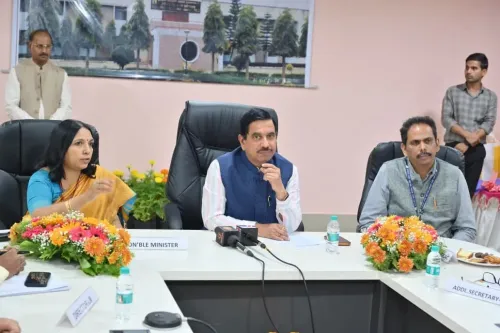
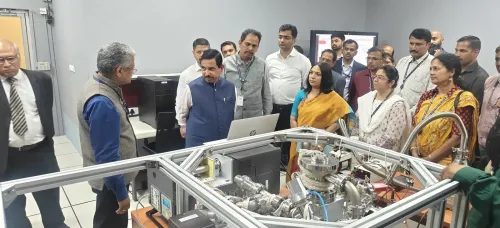
Union Minister Pralhad Joshi visited ISRO headquarters in Bengaluru on 17 July to review progress on the 'One Nation, One Time' initiative.
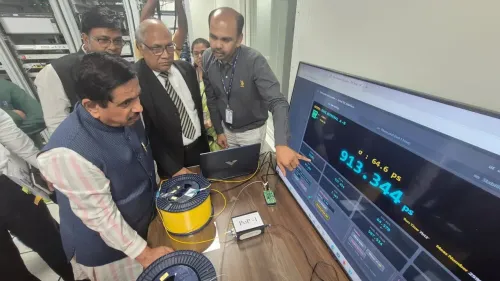
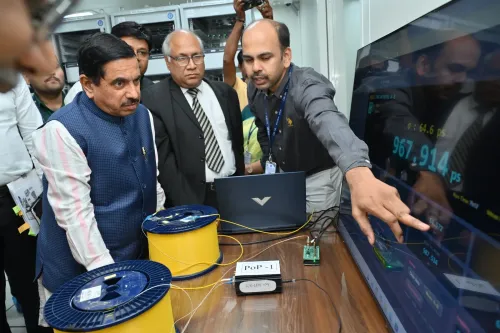
ISRO successfully demonstrated Precision Time Protocol (PTP) technology between RRSL Bengaluru and the National Stock Exchange facility in Chennai .
The initiative is a collaboration between the Department of Consumer Affairs , CSIR-NPL , and ISRO .
The programme aims to build a modern, indigenous, and accurate national time synchronisation system for critical infrastructure and digital networks across India.
Joshi described the PTP demo as a key milestone toward a technologically empowered national timekeeping framework.
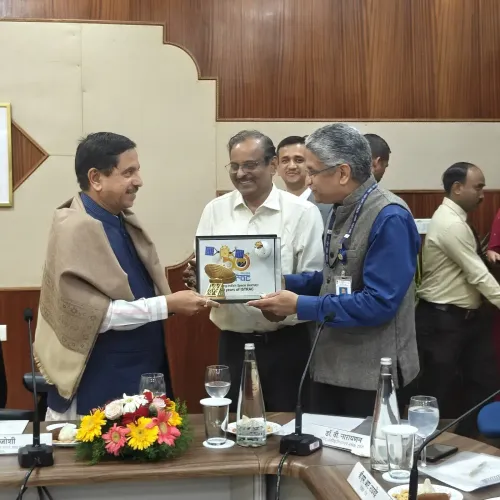
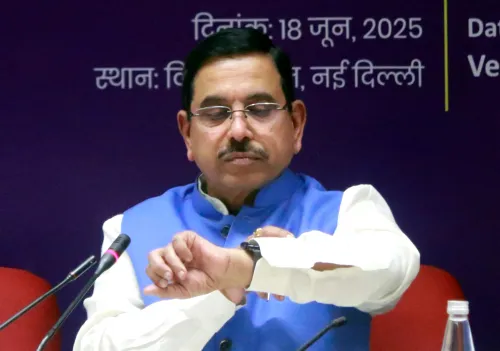
Union Minister Pralhad Joshi on Thursday, 17 July visited the Indian Space Research Organisation (ISRO) headquarters in Bengaluru, praising the agency's pivotal role in advancing the Centre's 'One Nation, One Time' initiative — an ambitious programme to establish a precise, secure, and fully indigenous national time synchronisation system across India.
Key Developments
During the visit, Joshi highlighted a successful proof-of-concept demonstration using Precision Time Protocol (PTP) technology, conducted between the Regional Remote Sensing Centre Laboratory (RRSL) in Bengaluru and the National Stock Exchange facility in Chennai. The minister described the demonstration as an important milestone in building a technologically reliable national timekeeping framework.
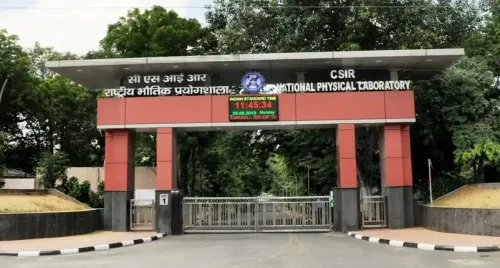
The initiative is a joint effort involving the Department of Consumer Affairs, the Council of Scientific and Industrial Research–National Physical Laboratory (CSIR-NPL), and ISRO. Joshi credited the collaboration as instrumental in pushing the project forward.
What the Minister Said
'Under the visionary leadership of Prime Minister Narendra Modi, ISRO is demonstrating its unwavering commitment to innovation, precision, and self-reliance, reflecting the spirit of a new India,' Joshi said during the visit.
He also congratulated the scientists, engineers, and technical professionals involved: 'ISRO's contribution is strengthening India's journey towards a Viksit Bharat and Atmanirbhar Bharat. I congratulate the scientists, engineers, and technical professionals of ISRO, CSIR-NPL, and all partner institutions for their outstanding efforts.'
Why 'One Nation, One Time' Matters
The initiative aims to replace India's dependence on foreign time-synchronisation infrastructure with a modern, indigenous system capable of serving critical sectors — from financial markets and digital networks to defence and telecommunications. The PTP demonstration linking a space research facility in Bengaluru to a stock exchange node in Chennai signals early-stage readiness for deployment across high-stakes infrastructure.
Notably, accurate time synchronisation underpins everything from stock trade timestamps to GPS navigation and power grid management. A sovereign, tamper-resistant timekeeping system reduces vulnerability to external disruptions — a strategic priority as India deepens its digital economy.
Broader Context
Joshi's visit comes amid the Centre's sustained push to build indigenous technological capabilities across strategic sectors. ISRO, which has logged a series of high-profile successes in recent years, is increasingly being positioned as a backbone institution for civilian infrastructure — not just space exploration. The minister noted that ISRO's work 'continues to inspire the younger generation' and is 'making significant contributions to the global scientific community.'
With guidelines and rollout timelines yet to be formally announced, the next phase will test whether the proof-of-concept can scale into a nationwide deployment across India's complex and varied digital infrastructure landscape.
Point of View
One Time' initiative rarely gets the attention it deserves, yet its implications are far-reaching — accurate, sovereign time synchronisation is the invisible backbone of financial markets, power grids, and defence communications. The PTP demonstration between Bengaluru and Chennai is a proof-of-concept, not a rollout, and the gap between lab validation and nationwide deployment across India's heterogeneous infrastructure is substantial. What is missing from the ministerial messaging is a concrete timeline, a budget allocation, and a clear accountability framework — without which this risks becoming another well-intentioned initiative that stalls between announcement and execution.
NationPress
15 Oct 2026
Frequently Asked Questions
What is the 'One Nation, One Time' initiative?
'One Nation, One Time' is a Centre-led programme to establish a modern, indigenous, and precise national time synchronisation system across India, reducing dependence on foreign timekeeping infrastructure. It is being developed jointly by the Department of Consumer Affairs, CSIR-NPL, and ISRO.
What did ISRO demonstrate under this initiative?
ISRO successfully conducted a proof-of-concept using Precision Time Protocol (PTP) technology between the Regional Remote Sensing Centre Laboratory in Bengaluru and the National Stock Exchange facility in Chennai. The demonstration validated the feasibility of a secure, indigenous time dissemination system.
Why does a national time synchronisation system matter?
Accurate time synchronisation underpins critical infrastructure including stock exchange trade timestamps, GPS navigation, power grid management, and digital communications. A sovereign system reduces vulnerability to external disruptions and supports India's growing digital economy.
Who is involved in the 'One Nation, One Time' project?
The project is a collaboration between the Department of Consumer Affairs, the Council of Scientific and Industrial Research–National Physical Laboratory (CSIR-NPL), and ISRO. Union Minister Pralhad Joshi credited this three-way partnership as key to the initiative's progress.
What is the current status of the initiative?
As of 17 July, the initiative is at the proof-of-concept stage, with a successful PTP demonstration completed between Bengaluru and Chennai. Formal rollout timelines and nationwide deployment guidelines have not yet been announced.