White Rabbit Technology powers India's secure IST network, launched in Bengaluru
Synopsis
India has quietly solved a critical vulnerability in its digital infrastructure: dependence on foreign GPS for national time. The White Rabbit Technology-based IST network, launched in Bengaluru on 16 July, delivers sub-nanosecond precision through an entirely indigenous chain — protecting stock exchanges, power grids, and banking systems from cyber-attacks and data manipulation.
Key Takeaways
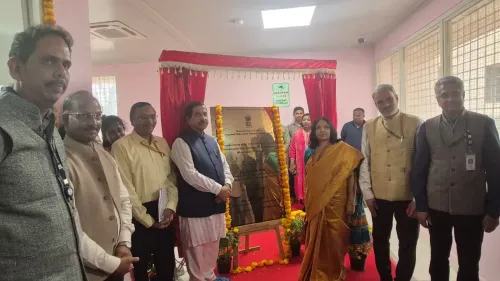
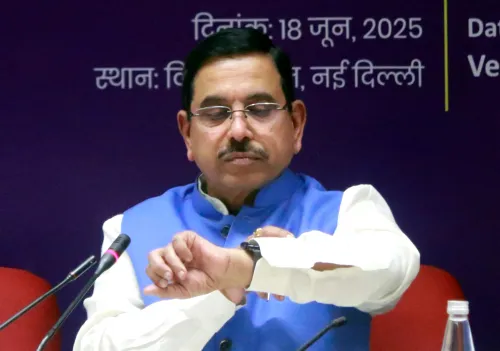
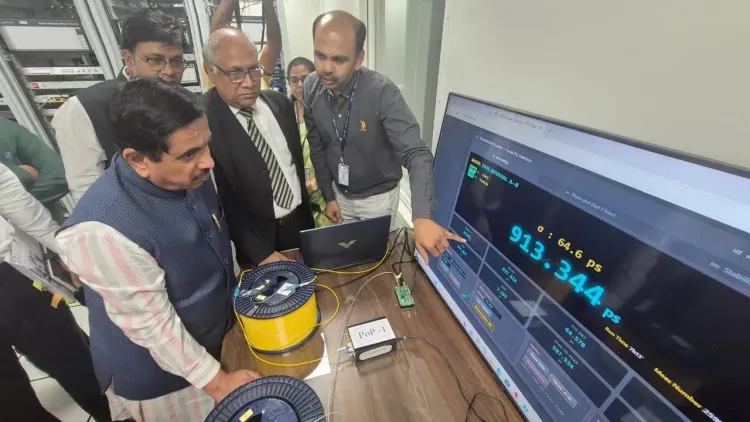
Union Minister Pralhad Joshi inaugurated the White Rabbit Technology -based IST Distribution Demonstration Network on 16 July in Jakkur, Bengaluru .
The system eliminates India's dependence on foreign time sources such as GPS , reducing exposure to cyber-attacks and data manipulation.
Critical sectors covered include financial markets , stock exchanges , digital banking , telecom networks , and national power grids .
The project is a collaboration between NPL , ISRO , BSNL , and SEBI , led by the Legal Metrology Division of the Ministry of Consumer Affairs.
The network complies with global UTC protocols, maintaining international interoperability while strengthening domestic sovereignty.
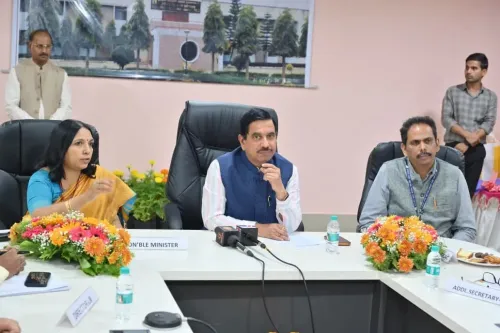
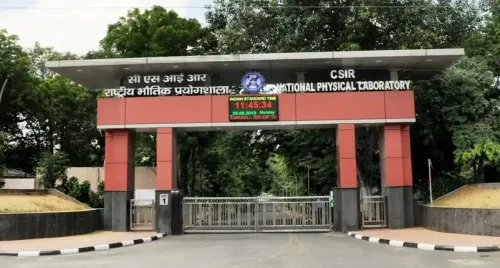
Union Minister Pralhad Joshi on 16 July inaugurated the White Rabbit Technology-based Indian Standard Time (IST) Distribution Demonstration Network at the Regional Reference Standards Laboratory (RRSL) in Jakkur, Bengaluru, marking a significant step in India's push to secure its national time infrastructure. The launch operationalises the government's 'One Nation, One Time' vision, aiming to establish a uniform, high-precision, and tamper-resistant time standard across the country.
What the System Does
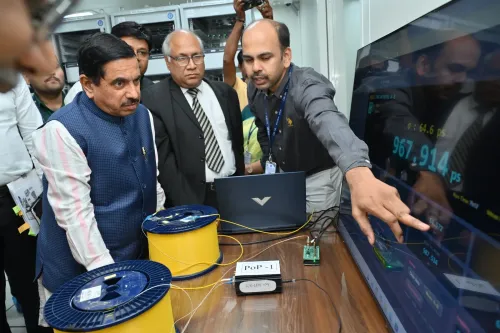
The White Rabbit Technology-based network delivers sub-nanosecond time synchronisation across India's critical infrastructure — entirely through indigenous channels. Crucially, the system eliminates dependence on foreign references such as GPS, which critics and security experts have long flagged as a vulnerability in India's digital backbone.
By removing reliance on external time sources, the network is designed to shield key sectors from risks including cyber-attacks and data manipulation. Minister Joshi underscored that the initiative directly upholds the sovereignty of India's digital infrastructure.
Sectors That Stand to Benefit
High-precision time synchronisation is foundational to a range of mission-critical systems. According to officials, the new network will strengthen the stability and security of financial markets, stock exchanges, digital banking, telecommunications networks, and national power grids. Even microsecond discrepancies in time can trigger cascading failures in these domains — making the upgrade strategically significant.
Who Built It
The project is led by the Legal Metrology Division of the Ministry of Consumer Affairs as the nodal agency. It was realised through collaboration among four institutions: the National Physical Laboratory (NPL), ISRO, BSNL, and the Securities and Exchange Board of India (SEBI). The system operates in compliance with global Coordinated Universal Time (UTC) protocols, ensuring that India's internal precision does not come at the cost of international interoperability.
The Broader Strategic Context
This launch comes amid a wider national push to reduce dependence on foreign technology in critical infrastructure — from semiconductors to satellite navigation. India's own navigation system, NavIC, has been positioned as a GPS alternative; the IST Distribution Network extends that logic into the domain of time. Notably, uniform time protocols are also being framed as a foundational pillar for future digital governance, e-government transparency, and the next generation of public-service delivery.
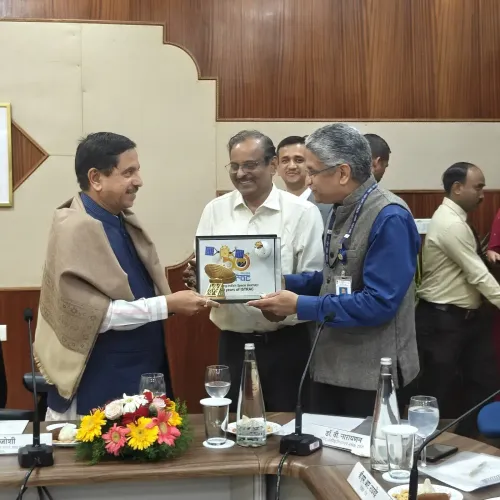
Nidhi Khare, Secretary of the Department of Consumer Affairs; Anupam Mishra, Additional Secretary; and Ashutosh Agarwal, Director of Legal Metrology, were among the senior officials present at the inauguration. The government has indicated that the demonstration network will pave the way for a full national rollout, with timelines to be announced in subsequent phases.
Point of View
In effect, a national security hardening. The real question is execution speed: a demonstration network in Bengaluru is a proof of concept, not a solution. Until the rollout reaches every stock exchange node, telecom tower, and grid substation, the vulnerability remains. The government should publish a firm national rollout timeline rather than leaving it to 'subsequent phases.'
NationPress
15 Oct 2026
Frequently Asked Questions
What is the White Rabbit Technology-based IST Distribution Network?
It is an indigenous, high-precision time synchronisation network launched on 16 July at the RRSL in Jakkur, Bengaluru, designed to distribute Indian Standard Time securely across critical national infrastructure without relying on foreign GPS signals. The system operates in compliance with global UTC standards.
Why does India need its own time distribution network?
India's existing time infrastructure relies partly on GPS, which is controlled by foreign entities and is vulnerable to cyber-attacks and signal manipulation. An indigenous network removes that dependency, protecting financial markets, power grids, and telecom systems from potential disruptions.
Which agencies collaborated on this project?
The project was led by the Legal Metrology Division of the Ministry of Consumer Affairs, with technical collaboration from the National Physical Laboratory (NPL), ISRO, BSNL, and SEBI.
Which sectors will benefit from precise time synchronisation?
Financial markets, stock exchanges, digital banking platforms, telecommunications networks, and national power grids are the primary beneficiaries. Precision timing is critical in these domains because even microsecond discrepancies can trigger system errors or be exploited for fraud.
What happens next after the demonstration network launch?
The Bengaluru launch is a demonstration network. The government has indicated a full national rollout will follow, with detailed timelines to be announced in subsequent phases.