Pralhad Joshi hails Modi as India's longest-serving elected PM
Synopsis
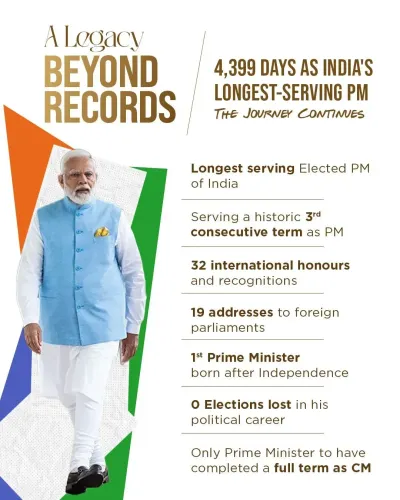
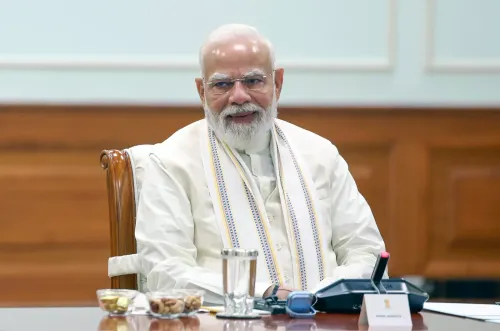
Union Minister Pralhad Joshi celebrated PM Narendra Modi completing 4,399 consecutive days as Prime Minister — a record for any elected PM in Indian history — highlighting achievements in digital transformation, clean energy, infrastructure, and India's rising global stature.
Key Takeaways
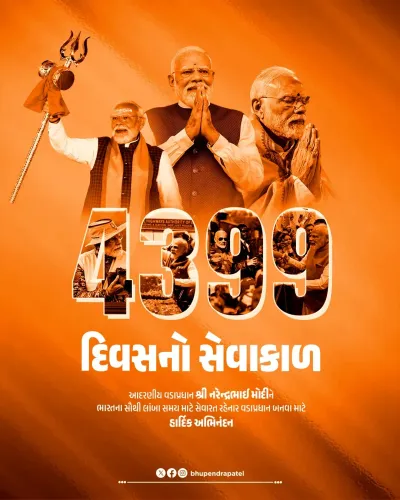
Union Minister Pralhad Joshi declared PM Narendra Modi the longest-serving elected Prime Minister in Indian history, with 4,399 consecutive days in office as of 10 June 2026.
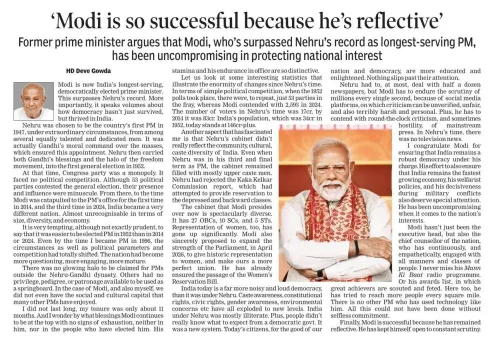
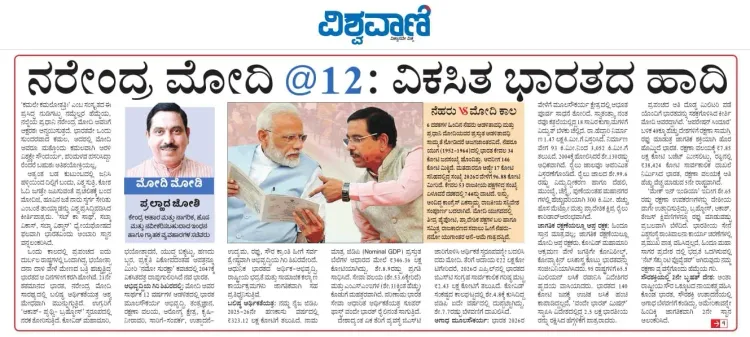
Joshi published a special tribute article simultaneously in three Kannada dailies: Kannada Prabha , Samyukta Karnataka , and Vishwavani .
The post credited Modi's tenure with advancing Ek Bharat Shreshtha Bharat , Digital India , Atmanirbhar Bharat , and clean energy progress.
The #ViksitBharat and #LongestServingElectedPMModi hashtags signal a coordinated BJP communications drive around the milestone.
Modi was first sworn in on 26 May 2014 ; the Viksit Bharat vision targets developed-nation status by 2047 .
Union Consumer Affairs Minister Pralhad Joshi on Wednesday, 10 June 2026 took to X to mark what he described as a historic milestone: Prime Minister Narendra Modi completing 4,399 consecutive days in office, becoming the longest-serving elected Prime Minister in India's history. Joshi also announced that a special article authored by him on Modi's leadership and vision has been published in three prominent Kannada dailies.
Context
Writing in Kannada, Joshi described Modi as a leader who 'came from a village to Delhi and raised India to the pinnacle of global recognition.' He credited the Prime Minister with advancing the vision of 'Ek Bharat, Shreshtha Bharat' — a unified and excellent India — while steering the country toward world-class infrastructure, a digital revolution, clean energy progress, and the Atmanirbhar Bharat self-reliance mission. Joshi's post carried the hashtag #LongestServingElectedPMModi, signalling a coordinated BJP effort to mark the milestone publicly.
The minister noted that under Modi's stewardship, India's confidence, ambition, and the resolve for a #ViksitBharat — a developed India — have received fresh momentum. His special article appeared simultaneously in Kannada Prabha, Samyukta Karnataka, and Vishwavani, three widely read Kannada-language newspapers, reflecting an outreach to the Karnataka readership that is central to Joshi's own political base.
Policy Backdrop
Narendra Modi was first sworn in as Prime Minister on 26 May 2014 following the BJP-led NDA's majority in the Lok Sabha elections that year, and was re-elected in 2019 and again subsequently, enabling the unbroken tenure Joshi references. Early in that tenure, flagship programmes such as Digital India and Swachh Bharat Mission were launched in 2015, establishing a pattern of large-scale, brand-named policy drives.
The Atmanirbhar Bharat package, announced in May 2020 during the COVID-19 lockdown, sought to reduce import dependence and bolster domestic manufacturing and MSMEs. More recently, the Viksit Bharat vision — targeting developed-nation status by 2047, the centenary of Independence — has become the overarching frame for government communications. India's G20 presidency in 2023 was widely cited by the ruling party as evidence of the country's elevated global standing.
Stakeholders and Impact
The post and the accompanying newspaper articles are aimed squarely at the Kannada-speaking electorate, a constituency of significant political weight given Karnataka's 28 Lok Sabha seats. As a senior BJP leader from the state, Joshi's choice to publish in regional-language dailies rather than national platforms underlines the party's strategy of reinforcing Modi's legacy at the grassroots level.
For ordinary citizens, the messaging ties together several tangible policy threads — rural connectivity, digital public services, renewable energy expansion — and presents them as outcomes of continuous, stable leadership. The Ek Bharat, Shreshtha Bharat programme, launched in 2015 to foster inter-state cultural exchange, and the broader Viksit Bharat framework are both invoked to suggest a long-term civilisational project rather than a single-term agenda.
What's Next
The milestone messaging is expected to intensify as the government approaches further anniversaries and budget cycles, with the Viksit Bharat Sankalp Yatra and renewable energy targets likely to feature prominently in upcoming policy announcements. Parliamentary proceedings on the next Union Budget will be closely watched for fresh commitments linked to the developed-India vision. Joshi's own portfolio — spanning consumer affairs and new and renewable energy — positions him as a key communicator of the clean-energy and cost-of-living dimensions of that narrative.
Point of View
Ensuring the message lands with Karnataka's Kannada-speaking electorate ahead of future electoral cycles. By threading together Atmanirbhar Bharat, Digital India, clean energy, and Viksit Bharat into a single celebratory frame, the party reinforces the narrative of unbroken developmental continuity rather than term-by-term governance. The choice of three Kannada newspapers — rather than a single national platform — reflects the ground-level importance of Karnataka to BJP's southern strategy. Such coordinated milestone messaging has become a recurring feature of NDA governance communications, calibrated to deepen loyalty among regional party workers and voters alike.
NationPress
26 Oct 2026
Frequently Asked Questions
How many days has Narendra Modi served as Prime Minister of India?
According to Union Minister Pralhad Joshi's post on 10 June 2026, PM Narendra Modi has served 4,399 consecutive days as Prime Minister, making him the longest-serving elected PM in India's history. Modi was first sworn in on 26 May 2014 .
Who is the longest-serving elected Prime Minister of India?
Narendra Modi is described as India's longest-serving elected Prime Minister, having served continuously since May 2014 across multiple terms following successive NDA electoral victories.
What is Viksit Bharat and why is it significant?
Viksit Bharat is PM Modi's vision for India to become a developed nation by 2047 , the centenary of Independence. It serves as the overarching policy and communications framework for the current government, encompassing economic growth, infrastructure, and social development goals.
What is Pralhad Joshi's role in the Union Cabinet?
Pralhad Joshi is a Union Minister holding the portfolios of Consumer Affairs, Food and Public Distribution and New and Renewable Energy . He is also a senior BJP leader from Karnataka .
What is Atmanirbhar Bharat?
Atmanirbhar Bharat , meaning 'Self-Reliant India', is a campaign launched in May 2020 during the COVID-19 lockdown to promote domestic manufacturing, reduce import dependence, and support MSMEs and local supply chains.