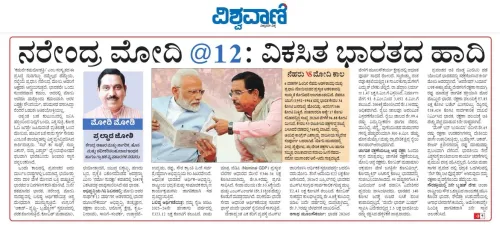
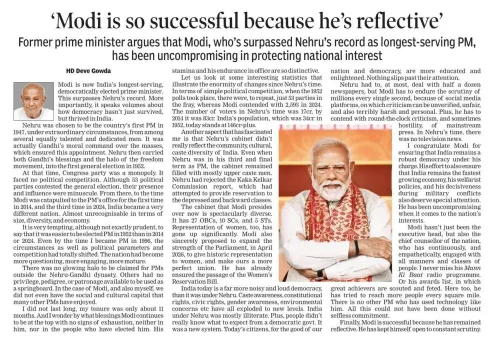
Joshi hails Modi's 4,399 days as India's longest-serving elected PM
Synopsis
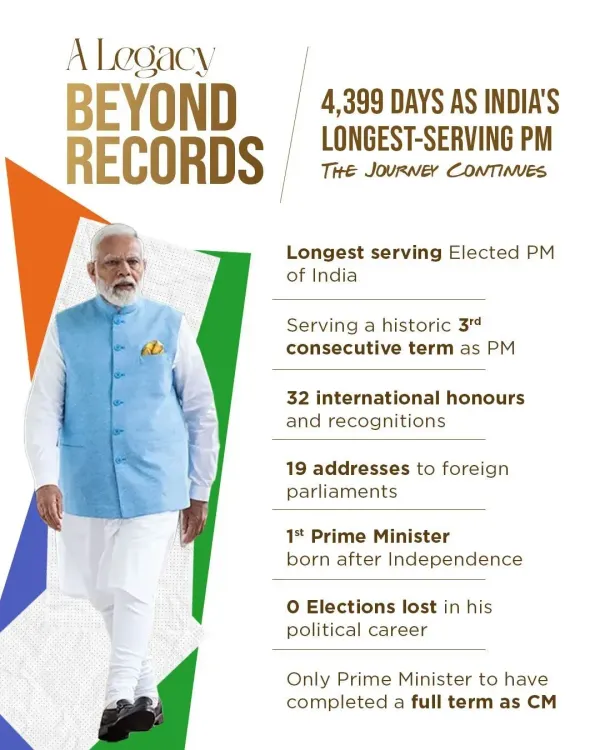
Union Minister Pralhad Joshi on 10 June 2026 marked PM Narendra Modi's 4,399 days in office, calling him India's longest-serving elected Prime Minister and crediting his leadership with unprecedented progress and people-centric development.
Key Takeaways
Pralhad Joshi , Union Consumer Affairs Minister, posted a tribute to PM Modi on 10 June 2026 .
The post cited 4,399 days of continuous service and described Modi as India's longest-serving elected Prime Minister.
Hashtags #LongestServingElectedPMModi and #12YearsOfSeva were used, indicating a coordinated party communication.
Modi was first sworn in on 26 May 2014 and has served three consecutive terms.
The BJP's governance narrative highlights Atmanirbhar Bharat , digital governance, infrastructure, and the G20 presidency as key milestones.
Next general elections are due by 2029 , making such anniversary messaging part of a longer-term political communication arc.
Union Consumer Affairs Minister Pralhad Joshi on Wednesday, 10 June 2026, took to X to mark what he described as 4,399 days of Prime Minister Narendra Modi's continuous service, calling the tenure a legacy built on 'commitment, conviction and transformative governance.'
Context
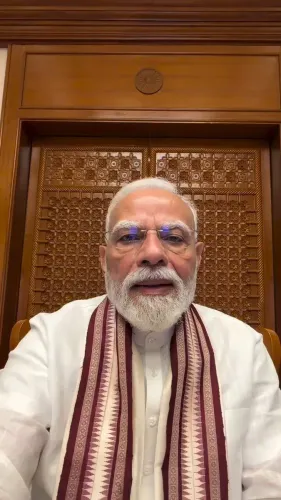
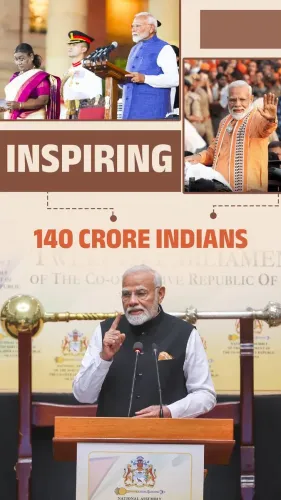
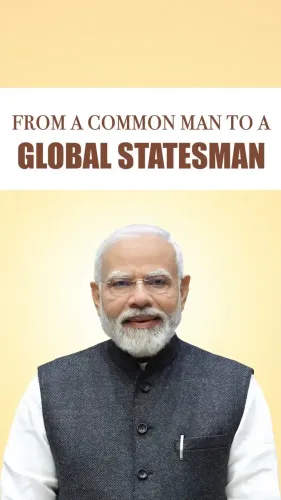
In his post, Minister Joshi described Modi as India's longest-serving elected Prime Minister and credited his leadership with delivering 'unprecedented progress, global recognition and people-centric development.' The post was accompanied by an image and carried the hashtags #LongestServingElectedPMModi and #12YearsOfSeva, signalling a coordinated moment of recognition within the ruling party.
The tribute aligns with the BJP's broader tradition of marking governance milestones publicly, with senior ministers and party functionaries using social media to highlight the Prime Minister's record in office.
Policy Backdrop
Narendra Modi was first sworn in as Prime Minister on 26 May 2014 following the BJP-led National Democratic Alliance's decisive victory in the general elections that year. He was re-elected in May 2019 for a second consecutive term, and again in 2024, making his tenure among the longest unbroken stretches of elected leadership at the Centre in independent India's history.
The period has been marked by flagship initiatives including Atmanirbhar Bharat (self-reliant India), large-scale infrastructure expansion, digital governance programmes, and India's presidency of the G20 in 2023. These policy anchors form the backbone of the BJP's narrative of continuity and transformation that posts like Joshi's seek to reinforce.
Stakeholders and Impact
Pralhad Joshi, a senior BJP leader from Karnataka and a cabinet minister holding the portfolios of Consumer Affairs, Food and Public Distribution, and New and Renewable Energy, is among the party's prominent voices in communicating government achievements. His post reflects the ruling party's effort to consolidate its governance narrative ahead of future electoral cycles.
For ordinary citizens, the milestone is being framed by the party as evidence of stable, long-term governance. BJP supporters and party workers are the primary audience for such anniversary communications, which serve both an internal morale function and an outward-facing message of continuity.
What's Next
With the next general elections due by 2029, the BJP is expected to continue building its communication strategy around Modi's governance record, emphasising scheme delivery, economic indicators, and India's rising global profile. Posts marking service anniversaries are likely to multiply as the party moves toward campaign season, with ministers across portfolios amplifying the central leadership narrative.
Further government communications on ongoing schemes — particularly in consumer affairs, food security, and renewable energy — are expected to carry the same thematic thread of long-term, people-centric development that Joshi's tribute underscores.
Point of View
Converting a calendar moment into a governance narrative. The '4,399 days' framing is deliberate — precise numbers signal accountability and longevity in a way that round-figure claims do not. With the 2029 election cycle beginning to take shape, such posts serve a dual purpose: energising the party base while projecting an image of stable, uninterrupted leadership to a broader electorate. The coordinated hashtag use suggests this was not a solo gesture but part of a wider party communication push.
NationPress
24 Oct 2026
Frequently Asked Questions
How many days has PM Modi served as Prime Minister?
According to Minister Pralhad Joshi's post on 10 June 2026, PM Narendra Modi has served 4,399 days as Prime Minister, making him India's longest-serving elected Prime Minister.
When did Narendra Modi first become Prime Minister of India?
Narendra Modi was first sworn in as Prime Minister on 26 May 2014 following the BJP-led NDA's victory in the general elections that year.
Who is Pralhad Joshi?
Pralhad Joshi is a senior BJP leader from Karnataka and currently serves as Union Minister for Consumer Affairs, Food and Public Distribution, and New and Renewable Energy.
What is the meaning of #12YearsOfSeva?
The hashtag #12YearsOfSeva — meaning '12 years of service' — was used by BJP leaders including Minister Joshi to mark PM Modi's twelve-plus years in continuous office as of June 2026.
What are PM Modi's major governance milestones cited by the BJP?
The BJP frequently highlights Atmanirbhar Bharat , large-scale infrastructure expansion, digital governance initiatives, and India's G20 presidency in 2023 as defining achievements of Modi's tenure.