Used car, commercial vehicle loans drive India's vehicle finance growth in 2026

Synopsis
India's vehicle finance market is no longer a single-speed story. Used-car loans are growing at 26.2% CAGR — outpacing every other segment — while 75% of new originations come from first-time borrowers. Combined with a 17.1% YoY surge in Q1 FY27 originations and deepening reach into smaller cities, the data points to a formalisation wave reshaping who borrows, what they buy, and where lenders are going next.
Key Takeaways
Used-car loans grew at a 26.2% five-year CAGR between June 2021 and June 2026 , the fastest of any vehicle-finance segment.
Commercial vehicle loans recorded a 20.1% five-year CAGR over the same period, making them the market's primary growth engine by volume.
Two-wheeler borrowers rose from 2.3 crore to 3.6 crore between June 2021 and June 2026; 80% are new-to-product borrowers.
Overall vehicle-finance originations grew 17.1% YoY in Q1 FY27 ; average auto-loan ticket size reached ₹8.6 lakh .
Auto loans above ₹15 lakh rose from 27.6% in Q1 FY25 to 29.8% in Q1 FY27, reflecting premiumisation.
BT100 geographies accounted for 53% of two-wheeler loans and 45% of commercial vehicle loans, signalling rapid non-metro expansion.
India's vehicle finance market is undergoing a structural shift, with used-car loans and commercial vehicle lending emerging as the primary growth engines, according to a report released on Wednesday, 19 August 2026 by credit bureau CRIF High Mark. The findings point to deepening formalisation, rising ticket sizes, and expanding credit penetration well beyond major urban centres.
Commercial Vehicles and Used Cars Lead the Charge
Commercial vehicle loans recorded a 20.1 per cent five-year compound annual growth rate (CAGR) between June 2021 and June 2026, making them the market's primary growth engine, according to the report. Used-car loans outpaced even that, growing at a 26.2 per cent five-year CAGR over the same period.
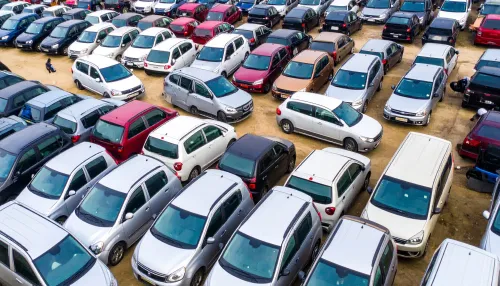
The borrower base for used-car financing expanded 2.4 times in five years, a scale that signals the segment's transition from an informal, unorganised market to a mainstream credit category. Notably, 75 per cent of used-car loan originations in the latest quarter came from new-to-product borrowers — first-time formal credit users entering through the used-vehicle route.
Two-Wheeler Finance: Still the Largest, Still Expanding
Two-wheeler financing remains the single largest borrower segment in vehicle finance. The active borrower base rose from approximately 2.3 crore in June 2021 to 3.6 crore in June 2026, adding over a crore new participants to the formal credit system in five years.
Around 80 per cent of two-wheeler credit borrowers are new-to-product, underscoring the segment's role as a gateway for first-time borrowers. Two-wheeler loans also recorded a 53 per cent share in BT100 geographies — a classification covering smaller cities and towns beyond the top urban markets — reflecting the deepening rural and semi-urban reach of vehicle finance.
Premiumisation Reshapes Auto Loan Profiles
Auto loans are showing clear signs of a premium-led recovery. Average exposure per borrower grew at a 9.2 per cent CAGR between June 2021 and June 2026, while the share of auto loans above ₹15 lakh climbed from 27.6 per cent in Q1 FY25 to 29.8 per cent in Q1 FY27.
Overall vehicle-finance originations grew 17.1 per cent year-on-year in Q1 FY27, driven by higher ticket sizes alongside continued volume growth. The average auto-loan ticket size rose to ₹8.6 lakh. This is consistent with a broader consumer trend toward higher-value personal vehicles, even as entry-level two-wheeler loans continue to onboard new borrowers at the base.
Geographic Expansion Beyond Metro Markets
Vehicle-finance originations are increasingly penetrating BT100 geographies, indicating that demand is no longer concentrated in large cities. Commercial vehicle loans registered a 45 per cent BT100 share, reflecting the logistics and freight sector's expansion into smaller markets — a trend aligned with infrastructure development in tier-2 and tier-3 regions.
This geographic diversification reduces lender concentration risk and broadens the credit ecosystem, though it also brings underwriting complexity in markets with thinner credit histories.
Asset Quality Stabilising, with Some Caution
The overall risk environment is improving, the CRIF High Mark report noted. 'The overall risk environment is stabilizing, with later-stage delinquency improving across vehicle-finance segments,' it stated. Auto loans recorded the strongest asset quality among all segments, while commercial vehicle loans continued to experience comparatively higher early-stage delinquency — a recurring characteristic of the CV segment given its sensitivity to freight rate cycles and fuel costs.
Rising active loans per borrower and a growing multi-loan borrower cohort in certain segments suggest deeper and more sustained lender-borrower relationships, the report added. With origination volumes rising and risk metrics broadly stabilising, India's vehicle finance market appears positioned for continued structural expansion through the rest of FY27.
Point of View
Meanwhile, risks masking sluggish volume growth at the entry level — a distinction that matters for financial inclusion metrics even as average ticket sizes flatter aggregate growth figures.
NationPress
3 Oct 2026
Frequently Asked Questions
Which vehicle-finance segment grew fastest in India between 2021 and 2026?
Used-car loans grew the fastest, recording a 26.2% five-year CAGR between June 2021 and June 2026, according to the CRIF High Mark report. The borrower base for used cars expanded 2.4 times over the same period, reflecting rapid formalisation of the segment.
How much did India's vehicle-finance originations grow in Q1 FY27?
Overall vehicle-finance originations grew 17.1% year-on-year in Q1 FY27, supported by higher ticket sizes and continued volume growth across segments. The average auto-loan ticket size rose to ₹8.6 lakh during the quarter.
What is the significance of BT100 geographies in vehicle finance?
BT100 geographies refer to cities and towns beyond India's largest urban markets. Two-wheeler loans recorded a 53% BT100 share and commercial vehicle loans 45%, indicating that vehicle finance is rapidly expanding into smaller cities and semi-urban areas rather than remaining concentrated in metros.
Are asset quality risks rising in India's vehicle finance market?
The overall risk environment is stabilising, with later-stage delinquency improving across vehicle-finance segments, according to the CRIF High Mark report. Auto loans showed the strongest asset quality, while commercial vehicle loans continued to experience comparatively higher early-stage delinquency.
What does the premiumisation trend mean for auto loans in India?
The share of auto loans above ₹15 lakh increased from 27.6% in Q1 FY25 to 29.8% in Q1 FY27, reflecting a consumer shift toward higher-value vehicles. Average exposure per borrower grew at a 9.2% CAGR between June 2021 and June 2026, indicating that borrowers are taking on larger loans for more expensive cars.