Volkswagen to cut 1 lakh jobs by 2030 in sweeping global restructuring

Synopsis
Volkswagen is axing 1 lakh jobs — 15 per cent of its entire global workforce — and may shut four German factories, making this the largest restructuring the global auto industry has ever seen. With a 75 per cent complexity cut and a China pivot to the Global South, this is not a cost trim; it is a fundamental reinvention of one of the world's most iconic car groups.
Key Takeaways
Volkswagen Group will cut at least 1 lakh jobs by 2030 , equal to roughly 15 per cent of its global workforce.
The cuts combine 50,000 new redundancies with 50,000 previously agreed job reductions.
Up to four production plants in Germany could be shut within the next eight years .
The group plans to halve its model portfolio and cut offering complexity by 75 per cent by 2035 .
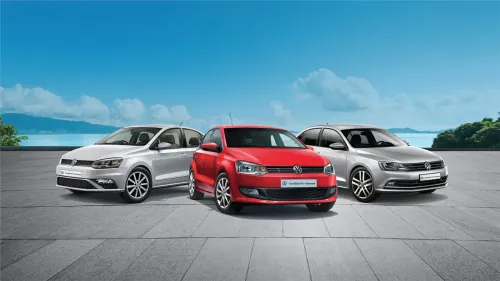
Volkswagen employs over 6.5 lakh people across brands including Audi , Porsche , Bentley , Lamborghini , Skoda , and Seat .
In China , the group is pivoting its export focus toward the Global South amid revised growth expectations.
Volkswagen Group has announced plans to eliminate at least 1 lakh jobs by the end of the decade as part of the most sweeping restructuring in the global automotive industry, the German carmaker confirmed in an official statement. The cuts represent approximately 15 per cent of the group's total workforce of over 6.5 lakh employees across its sprawling brand portfolio.
Scale of the Job Cuts
The latest announcement adds a further reduction of roughly 50,000 positions on top of nearly 50,000 job cuts already agreed upon in earlier rounds of negotiations. The combined figure of 1 lakh redundancies underscores the severity of the financial pressure facing one of the world's largest automakers. Volkswagen's brand family includes Skoda, Seat, Cupra, Audi, Bentley, Porsche, and Lamborghini.
Plant Closures and Model Rationalisation
Beyond headcount reductions, the group is considering shutting down four production plants in Germany within the next eight years. The company also plans to halve the number of car models it produces and reduce offering complexity by around 75 per cent by 2035. “The prioritised models aim to excel in design and technology – and benefit from the focus on fewer variants: Higher volumes per model, lower costs, stronger economies of scale,” the group said in its statement.
What the Company Said
“Given intensifying global competition, shifting demand and technological change in the automotive industry, a consistent alignment of workforce capacity with economic reality is essential,” Volkswagen Group said. The group added that it is tailoring its platforms, electronic architectures, driver assistance systems, and software to the needs of both the Western and Eastern hemispheres. Its portfolio of shareholdings and businesses will be streamlined by around one-third, retaining only those with a clear strategic and financial contribution. “Non-strategic activities will be divested or realigned. The real estate portfolio will also be reviewed. The goal is to have a leaner structure and more effective use of capital,” the statement added.
Regional Strategy Shifts
In North America, Volkswagen will concentrate on its most profitable segments. In China — a market where the group has faced mounting pressure from domestic EV rivals — it is adapting to revised growth expectations and expanding its export business toward the ‘Global South.’ This geographic pivot signals a fundamental rethink of where the group sees its future volume and margin growth. Notably, this restructuring comes amid a broader industry-wide reckoning as legacy automakers scramble to fund EV transitions while managing legacy cost bases.
What Comes Next
Analysts will watch closely whether the model rationalisation delivers the promised economies of scale, or whether cutting complexity at this pace risks ceding market share in key segments. Trade unions in Germany, which have historically wielded significant influence over Volkswagen's workforce decisions, are expected to scrutinise the plant closure timeline. The group's ability to execute this transformation without triggering prolonged industrial action will be a critical test of its management in the years ahead.
Point of View
Sprawling platforms, overlapping brands — is no longer viable in an era of EV disruption and Chinese competition. The real question is whether halving model complexity is a genuine industrial reset or a financial patch that delays harder decisions about brand consolidation. Porsche and Lamborghini generate outsized margins; Seat and Cupra do not. If the group is serious about capital efficiency, brand-level rationalisation, not just model trimming, is the next logical step — one the statement conspicuously avoids.
NationPress
19 Oct 2026
Frequently Asked Questions
How many jobs is Volkswagen cutting and by when?
Volkswagen plans to cut at least 1 lakh jobs by 2030, representing around 15 per cent of its global workforce of over 6.5 lakh employees. The total combines 50,000 newly announced redundancies with nearly 50,000 already agreed in previous rounds.
Why is Volkswagen undertaking this restructuring?
The group cited intensifying global competition, shifting consumer demand, and rapid technological change in the automotive industry as the primary drivers. Pressure from Chinese EV manufacturers and the cost of funding electrification have squeezed margins across its brand portfolio.
Which Volkswagen plants in Germany could close?
Volkswagen is considering shutting four production plants in Germany within the next eight years, though the specific facilities have not been publicly named in the group's statement. German trade unions are expected to play a significant role in negotiations over closures.
How will Volkswagen change its car model lineup?
The group plans to halve the number of models it produces and reduce overall offering complexity by around 75 per cent by 2035. The strategy prioritises higher volumes per remaining model to achieve stronger economies of scale and lower per-unit costs.
Which brands does Volkswagen Group own?
Volkswagen Group's portfolio includes Volkswagen, Audi, Bentley, Porsche, Lamborghini, Skoda, Seat, and Cupra, among others. The group employs over 6.5 lakh people globally across these brands.