Is India Set to Significantly Reduce Import Duties on EU Cars?
Synopsis
India is on the brink of a landmark decision to cut import duties on EU cars, a move that could transform its automobile market. This potential trade agreement, set to be announced soon, signals a shift towards greater openness and competitiveness in the automotive sector.
Key Takeaways
India plans substantial cuts in import duties on EU cars.
Reduction from up to 110% to 40% is proposed.
Initial cuts apply to cars priced over 15,000 euros .
Electric vehicles will not benefit initially.
Announcement coincides with a visit from European Commission President .
New Delhi, Jan 26 (NationPress) India is gearing up to drastically reduce import duties on vehicles from the European Union as part of a long-awaited free trade agreement, which might be unveiled as soon as Tuesday, reports indicate.
Under this proposed agreement, India aims to lower peak import tariffs on cars manufactured in the EU from the current rate of up to 110 percent to 40 percent.
This change marks a significant step towards opening up India's highly protected automobile market.
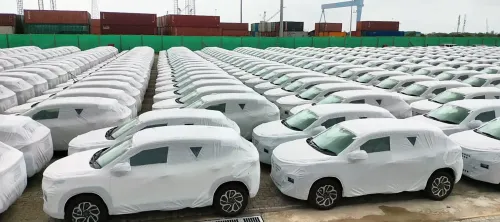
Initially, the reduced duty will apply to a select group of fully assembled cars valued above 15,000 euros, approximately Rs 16.3 lakh.
Over the coming years, these duties are anticipated to decrease further, potentially reaching as low as 10 percent.
This initiative will facilitate European automakers such as Volkswagen, Mercedes-Benz, and BMW in marketing their vehicles in India.
Sources reveal that India has consented to immediately reduce duties on approximately 200,000 internal combustion engine cars each year, although the final figure may vary.
However, electric vehicles will not benefit from these reductions in the initial five years, as the government aims to safeguard investments by local manufacturers. Duty cuts for EVs are expected to follow at a later stage.
India and the European Union are poised to announce the conclusion of negotiations for this comprehensive free trade agreement, bringing an end to years of stalled discussions.
While this announcement will represent a major milestone, the agreement must still be finalized and ratified by both parties before implementation.
Currently, India ranks as the world's third-largest automobile market, following the United States and China, yet it remains one of the most protected.
Import duties on fully assembled cars currently range from 70 percent to 110 percent, a policy that has faced criticism from global automotive companies.
Lower import taxes will enable European car manufacturers to set more competitive prices for their imported models in India.
This will also allow them to trial new vehicles in the Indian market prior to committing to further local manufacturing investments, sources suggest.
The proposed tariff reductions coincide with the four-day visit of European Commission President Ursula von der Leyen to India.
European leaders are expected to engage in summit-level discussions with Prime Minister Narendra Modi.
Point of View
It is evident that India’s potential reduction in import duties on EU cars signals a pivotal moment for the country’s automobile market. This shift not only enhances international trade relations but also positions India as a more attractive market for global car manufacturers. While the move aims to boost competition and lower prices for consumers, it is crucial to balance foreign investment with the protection of domestic manufacturers. A careful approach will ensure a thriving automotive ecosystem that benefits all stakeholders.
NationPress
23 Sept 2026
Frequently Asked Questions
What is the proposed reduction in import duties on EU cars?
India plans to reduce peak import tariffs on EU-made cars from up to 110% to 40%.
When is the announcement expected?
The announcement could be made as early as Tuesday.
Will electric vehicles benefit from these reductions?
No, electric vehicles will not benefit from these reductions in the first five years.
What impact will this have on European car manufacturers?
This will allow European car manufacturers to sell their vehicles more competitively in India and test new models before local production.
Why has this agreement been long-awaited?
The comprehensive free trade agreement has been in negotiation for years, and this announcement marks a significant breakthrough.