Will the India-EU FTA Enhance Market Access for Indian Auto Component Manufacturers?
Synopsis
The proposed India-EU Free Trade Agreement (FTA) is set to transform the landscape for Indian auto component manufacturers, enhancing their access to European markets and boosting price competitiveness. This shift could lead to significant growth opportunities, inviting investments and collaboration in the sector.
Key Takeaways
Improved access to EU markets for Indian manufacturers.
Enhanced price competitiveness under the FTA.
Tariff reductions on EU-origin CBUs.
Potential growth in India's auto exports to the EU.
Opportunities for investments in specialized manufacturing.
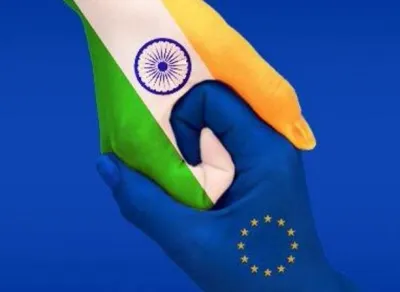
Mumbai, Feb 6 (NationPress) Indian auto component producers are poised to gain greater access to European markets, along with enhanced price competitiveness, thanks to the proposed India-EU Free Trade Agreement (FTA), according to a report released on Friday.
The analysis from ICRA indicates that "tariff rationalization and preferential access are anticipated to boost pricing competitiveness and sourcing opportunities with European original equipment manufacturers (OEMs)."
As the EU stands as a significant automotive production center, improved trade conditions may allow Indian suppliers to strengthen their roles in global supply chains, the report outlined.
This shift could enable local component manufacturers to compete more robustly against suppliers from nations that currently benefit from tariff advantages in the region, the ratings agency observed.
Currently, automobiles and components represent approximately 3% of India’s exports to the EU, indicating potential for growth as trade barriers diminish, the report highlighted.
ICRA pointed out that the FTA entails a gradual reduction in import duties on EU-origin completely built units (CBUs), with tariffs decreasing from around 110% to nearly 10% within designated price thresholds and quotas.
This alteration is expected to primarily impact premium vehicle segments while keeping mass-market passenger vehicles relatively insulated, according to the report.
Furthermore, it mentioned that EV tariffs are likely to remain stable initially, allowing domestic EV supply chains to adapt to changing trade dynamics.
Enhanced market access might also spur investments in precision engineering, electronics integration, and specialized component manufacturing, fostering technology collaborations and product diversification with European manufacturers.
The report noted that "export-oriented mid-sized firms and MSMEs involved in specialized components and aftermarket products could experience better access to European customers as sourcing bases diversify and procurement strategies evolve within global automotive supply chains."
In terms of imports to India, the report stated that tariff reductions are expected to benefit primarily premium internal combustion engine (ICE) vehicles, with smaller or mid-segment cars remaining largely unaffected.
The EU is set to offer India preferential zero-tariff access across 97% of its tariff lines, encompassing 99.5% of India’s export value. India will lower or eliminate tariffs on 92% of its tariff lines.
Point of View
I believe that the proposed India-EU FTA could be a game-changer for India's auto component industry. By facilitating better market access and competitive pricing, this agreement not only supports local manufacturers but also strengthens India's position in global supply chains. It's crucial for our industry to adapt and seize these opportunities as they arise.
NationPress
24 Sept 2026
Frequently Asked Questions
What is the India-EU Free Trade Agreement?
The India-EU Free Trade Agreement (FTA) aims to reduce tariffs and enhance trade relations between India and the European Union, benefiting various sectors including automotive.
How will the FTA affect Indian auto component manufacturers?
The FTA is expected to improve access and pricing competitiveness for Indian auto component manufacturers, allowing them to better compete in European markets.
What percentage of India's exports to the EU come from automobiles and components?
Currently, automobiles and components account for about 3% of India's exports to the EU.
Will the FTA impact tariffs on electric vehicles?
Initially, EV tariffs are likely to remain unchanged, giving domestic supply chains time to adjust.
What are the potential benefits of improved market access?
Improved market access could lead to increased investments, technology collaboration, and diversification of products in the automotive sector.