Is the India-EU FTA a Boon for the Medical Device Sector?
Synopsis
The India-EU Free Trade Agreement marks a pivotal moment for the Indian medical device sector. Experts are optimistic about the potential benefits of this trade deal, highlighting tariff eliminations and increased access to life-saving drugs. Discover how this agreement could revolutionize healthcare in India.
Key Takeaways
India-EU FTA eliminates tariffs on 90% of medical devices.
Access to life-saving drugs will improve for both regions.
Non-tariff barriers need to be addressed for effective market access.
CE certification poses challenges for Indian manufacturers.
Healthcare costs in India are expected to decline due to lower tariffs.
New Delhi, Jan 28 (NationPress) The India-EU Free Trade Agreement (FTA) represents a significant advancement for the Indian medical device industry, according to experts on Wednesday.
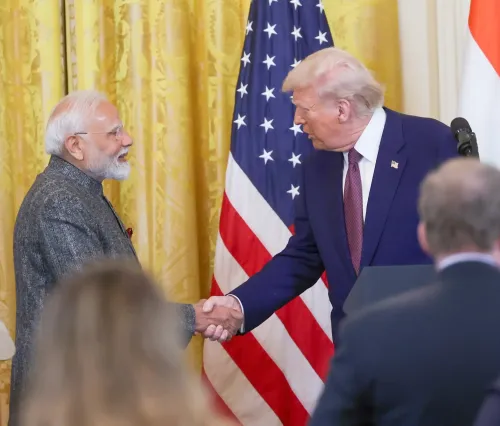
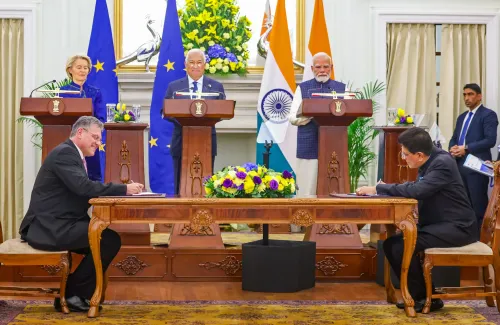
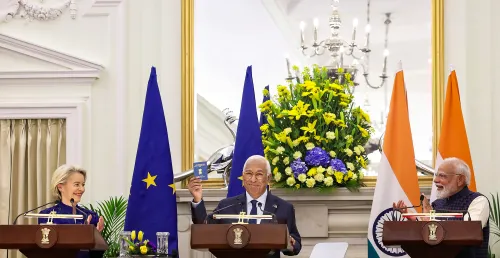
Prime Minister Narendra Modi and European Commission President Ursula von der Leyen recently finalized what is dubbed the "mother of all deals", marking a historic turning point in economic relations between India and the EU.
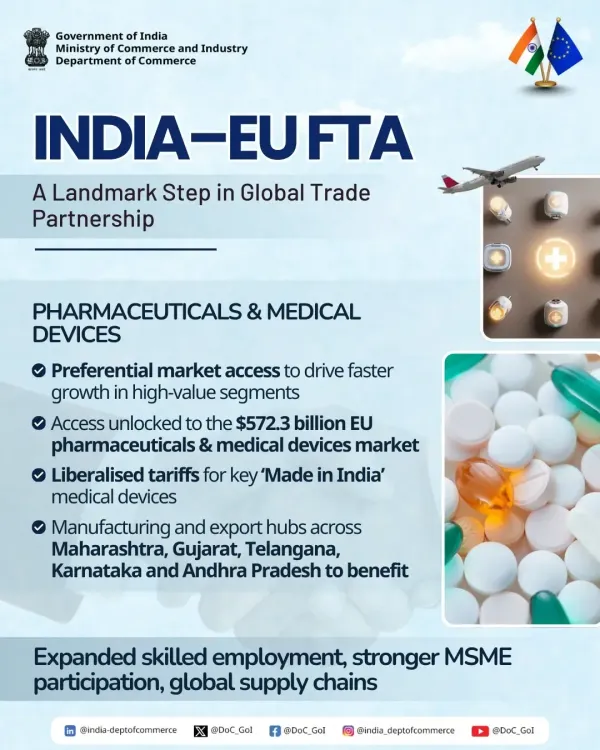
This FTA will eliminate tariffs on 90 percent of European optical, medical, and surgical equipment.
In an interview with IANS, RS Kanwar, the Chairman of the Export Promotion Council for Medical Devices (EPCMD), stated that this trade agreement is highly advantageous and could be transformative for the pharmaceutical sector.
“The India-EU Free Trade Agreement is a positive development for the Indian medical device sector. Access to life-saving medications will significantly benefit both parties,” he explained.
Kanwar pointed out that while zero tariffs on medical devices are beneficial, it is crucial to address non-tariff barriers to enable Indian manufacturers to penetrate that market effectively.
He also emphasized the importance of CE certification for Indian manufacturers. “For Indian manufacturers, obtaining CE certification poses a significant hurdle for gaining entry into the US market, and the associated costs are quite high,” Kanwar remarked.
“These challenges need to be resolved. If they remain unaddressed, while India's imports may rise, exports could stagnate,” he added.
Kanwar proposed that if the Indian certification, specifically international ISO 3485 or CBS code, is recognized by CIS authorities, then Indian manufacturers will gain better access to the European market.
“We should either reciprocate or negotiate a mutual agreement for recognizing our CBS code and ISO 13485. Most quality certifications fall under these categories,” he noted.
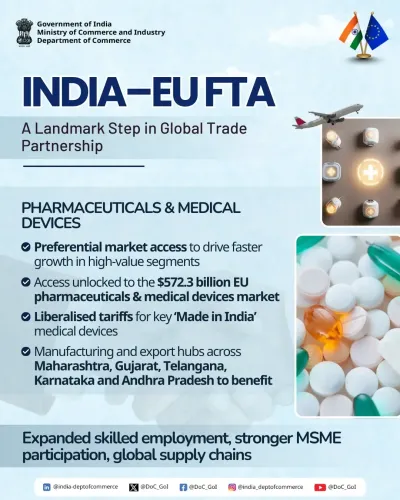
The trade deal will largely eliminate tariffs of up to 44% on machinery, 22% on chemicals, and 11% on pharmaceuticals, which the EU anticipates will significantly enhance market access and aim to double EU exports to India by 2032.
Additionally, tariffs on 90 percent of medical and surgical equipment will decrease from 27.5% to zero.
In return, the EU will reduce tariffs on 97.5% of India’s chemical exports from 12.8% to zero. While Indian pharmaceuticals already enjoy zero-duty entry into the EU, this agreement will provide preferential access to the EU pharma market and improve competitiveness for medical devices.
The removal of EU tariffs of up to 11% on pharmaceuticals will also enhance trade and ensure better access to innovative treatments for Indian patients.
“Considering that Indian healthcare relies heavily on high-end medical, surgical, and diagnostic equipment from Europe, the removal of tariffs under the India-EU trade agreement will significantly lower input costs for hospitals,” mentioned Dr. Dharminder Nagar, Co-Chair of the FICCI Healthcare Committee.
It will also “facilitate the adoption of advanced technologies, improve clinical outcomes, and ultimately lead to more affordable and higher-quality care for patients,” Nagar concluded.
Point of View
The India-EU Free Trade Agreement is a strategic move that aligns with India's goals of enhancing its healthcare sector and fostering economic ties with global partners. The potential benefits for the medical device industry are substantial, but it is crucial to ensure that non-tariff barriers are also addressed to maximize these opportunities.
NationPress
13 Sept 2026
Frequently Asked Questions
What is the India-EU Free Trade Agreement?
The India-EU Free Trade Agreement is a trade deal aimed at reducing tariffs and enhancing trade relations between India and the European Union, particularly in sectors like medical devices and pharmaceuticals.
How will the FTA benefit the Indian medical device sector?
The FTA will eliminate tariffs on 90% of medical and surgical equipment, making them more affordable and accessible, which is expected to improve healthcare delivery in India.
What are the challenges for Indian manufacturers under the FTA?
While the elimination of tariffs is advantageous, Indian manufacturers face challenges such as obtaining CE certification and overcoming non-tariff barriers to access the European market.
What is CE certification and why is it important?
CE certification is a mark that indicates conformity with health, safety, and environmental protection standards for products sold within the European Economic Area, crucial for Indian manufacturers to access the European market.
What is the expected impact of the FTA on healthcare costs in India?
The removal of tariffs on imported medical devices and pharmaceuticals is expected to lower input costs for hospitals, ultimately leading to more affordable healthcare for patients.