How Will the India-EU Trade Agreement Enhance Access to Medicines and Create Opportunities?
Synopsis
The India-EU trade deal is a game-changer for millions, promising affordable healthcare and increased access to medicines. This agreement not only strengthens economic ties but also opens doors for innovation and collaboration in healthcare, benefiting both regions.
Key Takeaways
Tariff reductions on medical equipment and pharmaceuticals.
Enhanced access to affordable healthcare for patients.
Increased collaboration between Indian and EU businesses.
Support for traditional medicine practitioners from India.
Strengthening India's role in global MedTech.
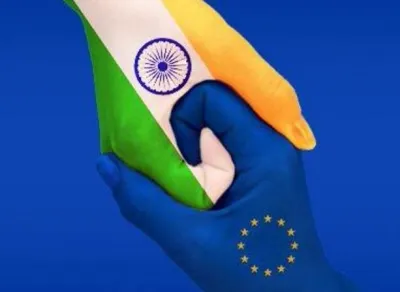
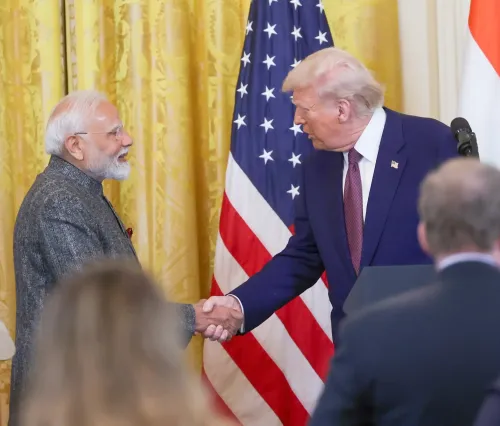
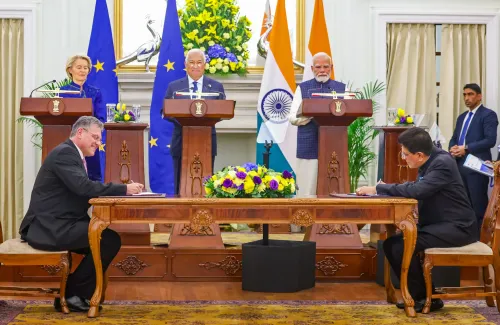
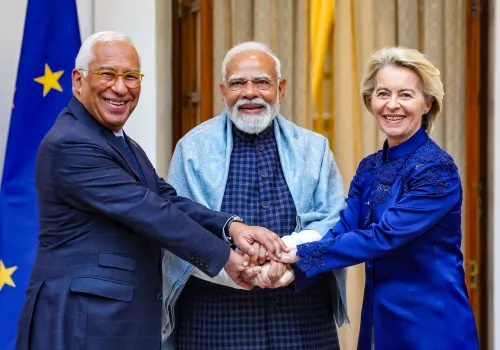
New Delhi, Jan 27 (NationPress) Industry experts highlighted that the groundbreaking trade agreement between India and the European Union is set to enhance access to medicines and foster numerous opportunities. This significant milestone was announced jointly by Prime Minister Narendra Modi and European Commission President Ursula von der Leyen, marking a pivotal moment in India-EU economic relations and collaboration with major global partners.
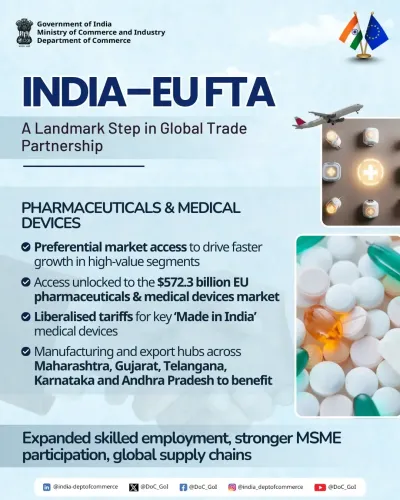
According to the FTA, tariffs on 90% of European optical, medical, and surgical equipment will be eliminated.
This agreement will effectively abolish tariffs as high as 44% on machinery, 22% on chemicals, and 11% on pharmaceuticals, a strategic move that the EU anticipates will significantly enhance market access and potentially double EU exports to India by 2032.
“This is a historic moment for both the EU and India. Establishing this trade deal allows for access to two of the world's largest markets. A seamless exchange of goods, services, and people can truly elevate trade between these nations,” stated Dr. Sharvil Patel, Managing Director of Zydus Lifesciences and Vice President of the Indian Pharmaceutical Alliance.
He further emphasized the importance of providing affordable healthcare, stating that the trade deal will facilitate enhanced access to medicines, benefiting patients across India and Europe.
With the new framework, tariffs on 90% of medical and surgical equipment will drop from 27.5% to zero.
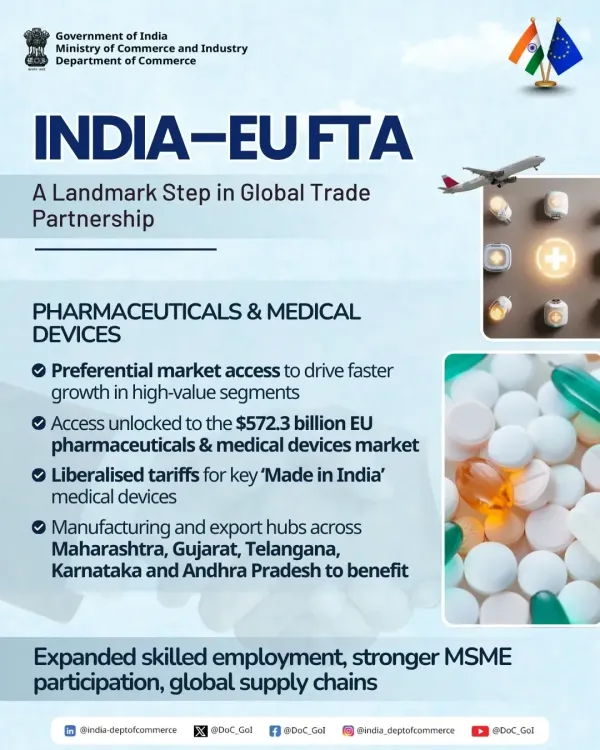
The EU will reciprocate by reducing tariffs on 97.5% of India's chemical exports from 12.8% to zero. Although Indian pharmaceuticals already enjoy zero-duty entry into the EU, this deal will provide preferential access to the EU pharma market and bolster competitiveness for medical devices.
“Businesses will gain from collaboration across various sectors, allowing for the movement of talent, goods, and intellectual property to benefit both nations and the globe,” remarked Youngsuk Chi, Chairman of Elsevier.
The elimination of EU tariffs up to 11% on pharmaceuticals will further promote trade and improve access to innovative medicines for patients in India.
Pavan Choudary, Chairman of the Medical Technology Association of India (MTaI), noted that this FTA will empower India to solidify its role as a reliable, innovation-driven partner by expanding its exports of medical textiles, surgical instruments, and disposables.
“For patients, potential tariff reductions on medical devices should enhance affordability and access to advanced therapies, making this agreement a prime example of how ethical and equitable trade can strengthen health systems on both sides,” he added.
Rajiv Nath, Forum Coordinator of AiMeD, mentioned that the India-EU FTA will protect against predatory imports and unlock high-value collaborations, bolstering domestic manufacturing and supporting India's ambition to become a top-five global MedTech hub.
Moreover, the FTA is projected to enhance services from traditional Indian medicine practitioners. In EU member states lacking regulatory frameworks, AYUSH practitioners will be permitted to offer their services using qualifications obtained in India.
“For the pharmaceutical sector, this FTA provides structural competitiveness. The near-zero tariff access greatly fortifies the position of Indian formulations, APIs, and value-added medicines in the EU, a crucial development for India's pharma MSMEs, which often have strong quality capabilities but face cost and access barriers in highly regulated markets,” added Namit Joshi, Chairman of Pharmexcil.
Point of View
This trade agreement between India and the EU is a significant step towards enhancing healthcare access and fostering economic growth. The potential for collaboration and innovation in the medical field is immense. It is a vital opportunity that aligns with our commitment to serving the nation and improving lives.
NationPress
27 Sept 2026
Frequently Asked Questions
What are the main benefits of the India-EU trade deal?
The trade deal aims to boost access to medicines, reduce tariffs on medical equipment, and create new market opportunities for businesses, enhancing healthcare for both regions.
How will the trade deal affect pharmaceutical prices?
The agreement is expected to lower tariffs on pharmaceuticals, making medicines more affordable and accessible for patients in India and Europe.
What impact will this deal have on Indian exports?
The deal is anticipated to double EU exports to India by 2032, significantly enhancing market access for Indian products in the EU market.