Could India-EU FTA Duty Reductions Transform India's Small Luxury Car Market?

Synopsis
The proposed India-EU free trade agreement could significantly alter the landscape of India's luxury car market, according to BMW Group India CEO Hardeep Singh Brar. With lower customs duties, the luxury segment has the potential for substantial growth, benefiting both consumers and the economy.
Key Takeaways
The India-EU FTA could lower customs duties on luxury cars.
Currently, luxury cars make up about 1% of the Indian market.
Lower duties could enhance consumer access to luxury vehicles.
The agreement aims for balanced benefits for both India and the EU.
CBUs currently constitute about 5% of BMW's sales in India.
New Delhi, Jan 26 (NationPress) The anticipated decrease in customs duties on imported vehicles through the forthcoming India-EU free trade agreement could significantly enhance India's small luxury car sector, asserted Hardeep Singh Brar, President and CEO of BMW Group India, on Monday.
Currently, the luxury vehicle market in India constitutes merely about 1% of the total passenger vehicle sales, offering ample opportunity for expansion if import duties are lowered.
“There is a strong and encouraging indication of faith in India's long-term growth narrative. Today, India is not only a vast market but also an economy poised for the future, underpinned by reforms and policies that promote a globally competitive environment,” he remarked.
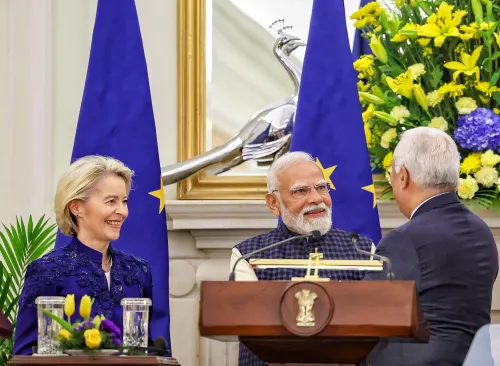
He emphasized that the India-EU Free Trade Agreement would mark a historic advancement for both parties, enhancing trade and fostering a greater exchange of technology and innovation.
“The India-EU Free Trade Agreement would be a landmark achievement for both parties, facilitating trade and promoting deeper technology and innovation exchange,” Brar added.
From the perspective of the automotive sector, Brar mentioned that the agreement should encompass balanced and mutually beneficial terms that stimulate demand for luxury vehicles and fortify supply chains, particularly amid global geopolitical instability.
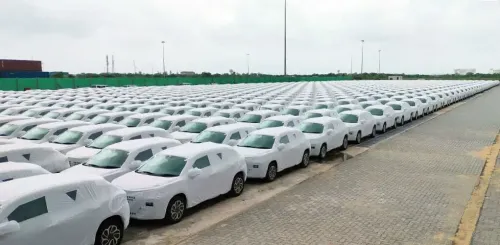
Brar noted that a reduction in customs duties on completely built units (CBUs) would render imported luxury cars more accessible and broaden the market in India.
Currently, CBUs represent approximately 5% of BMW's total sales in the country.
“If customs duties on CBUs are lowered, it would catalyze the growth of the luxury car market in India,” he remarked.
“While CBUs currently make up about 5% of our sales, such a framework would allow us to diversify our product range, introduce globally favored models, and explore new offerings,” Brar highlighted.
Brar observed that lowering duties on luxury cars would advantage consumers without undermining mass-market manufacturers, given that luxury vehicles occupy a small segment of India's passenger vehicle market.
“This would create a policy that is beneficial for both India and the European Union,” he concluded.
Point of View
The potential easing of customs duties on luxury cars under the India-EU Free Trade Agreement could signify a pivotal moment for India's automotive industry. While the luxury segment remains small, the proposed changes could stimulate growth, innovation, and consumer choice without jeopardizing the mass-market segment. This balanced approach could promote a mutually beneficial relationship between India and the European Union, aligning with India's aspirations for becoming a globally competitive economy.
NationPress
3 Oct 2026
Frequently Asked Questions
What is the significance of the India-EU Free Trade Agreement?
The India-EU Free Trade Agreement aims to lower tariffs and enhance trade relations, potentially boosting sectors like automotive.
How will reduced customs duties affect luxury car prices in India?
Lower customs duties on imported luxury cars could make them more affordable, thereby increasing consumer access and market growth.
What percentage of BMW's sales in India are from CBUs?
Currently, completely built units (CBUs) account for around 5% of BMW's total sales in India.
What impact will this agreement have on local car manufacturers?
The easing of duties on luxury vehicles is expected to benefit consumers without negatively impacting local mass-market car manufacturers.
Why is the luxury car market important for India?
The luxury car market represents a growing segment of consumer demand, contributing to economic growth and innovation in the automotive sector.