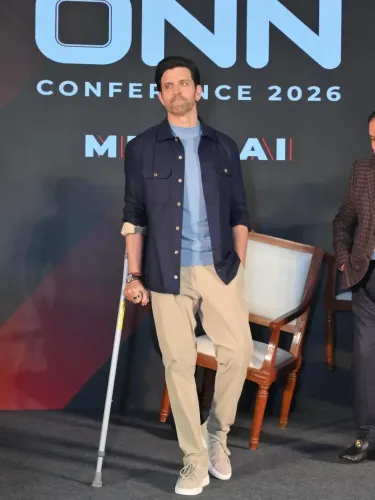
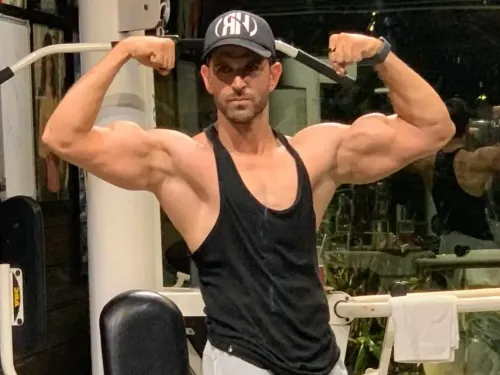
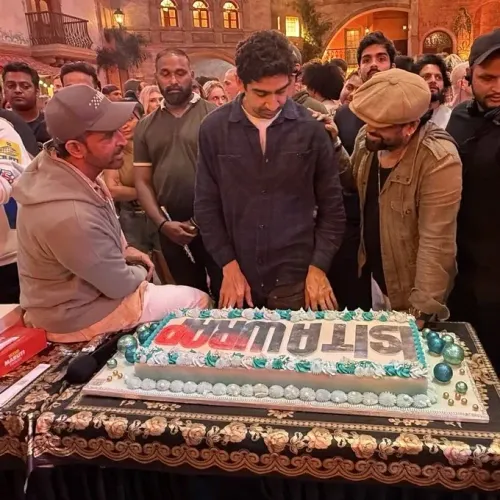
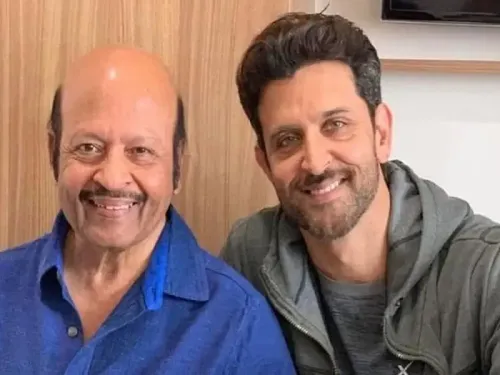
Hrithik Roshan told Abhijit Vaghani how 200mm lenses slim his face on screen

Synopsis
Veteran composer Abhijit Vaghani has revealed that Hrithik Roshan once sat him down and showed him test shots on his phone to explain why 200mm lenses are used to capture the actor’s cheekbones and jawline on screen — a candid peek into the craft and budget decisions that shape how Bollywood’s biggest stars look on camera.
Key Takeaways
Abhijit Vaghani , a music composer with over 27 years in Bollywood, shared a personal anecdote about Hrithik Roshan visiting his home studio in Andheri West, Mumbai .
Roshan explained that 200mm lenses are used during shoots to accentuate his cheekbones and jawline, making his face appear slimmer on screen.
The conversation happened after a track-change session wrapped in just 10 minutes , well ahead of the 2 hours Roshan had blocked for it.
Vaghani also spoke about AI in music production , saying it helps composers avoid the awkward task of telling a top singer their voice does not suit a track.
Veteran music composer and producer Abhijit Vaghani has offered a rare behind-the-scenes glimpse into his friendship with Bollywood superstar Hrithik Roshan, recounting a candid studio conversation in which the actor explained the camera lens secrets behind his chiselled on-screen appearance.
The Studio Story
Vaghani, who has spent over 27 years shaping the sound of Hindi cinema, recalled the encounter during a conversation at his studio in the Andheri West area of Mumbai. He said Roshan had visited his home studio to make changes to a track, only for the session to wrap up far sooner than expected.
'He had come home to wow in the studio. At that time, I had a studio in my house, so he had come there, and he wanted to do some changes in the track. He came, I sat down within ten minutes, changes were done. He was like, ‘I parked 2 hours for the changes but it took just 10 minutes. What do we do now? Let’s sit and talk’,' Vaghani recalled.
The 200mm Lens Revelation
With time to spare, Vaghani said he seized the moment to ask Roshan something that had long intrigued him — how his face appears noticeably slimmer on screen than in person. Roshan reportedly pulled out his phone on the spot to demonstrate.
'He said that the face has cheek bones and a jawline. He shared that to capture the definitions in the face, they use 200 mm lenses. I said, ‘But that’s very expensive’. So he said, ‘Yeah, but I mean, I have my budgets no’. So, we used to have such banters. He’s a very wonderful guy,' Vaghani said.
The anecdote offers an unusual window into how top Bollywood productions invest in cinematographic choices that go far beyond storytelling — down to the specific glass used to flatter a lead actor’s bone structure.
Vaghani on AI in Music
Separately, Vaghani also addressed a subject stirring debate across the Indian music industry: the growing use of artificial intelligence in music production. He argued that AI has quietly resolved one of the most awkward conversations in the business — telling a celebrated singer that their voice does not fit a particular track.
'Earlier, I remember that there was once when we had called — I wouldn’t name the singer, but a really big singer — to sing one of the songs. Imagine telling that big singer, whoever had come, the music director sitting there, and he has to have a call with the singer stating the fact that, ‘Hey, listen, your voice is not fitting the bill’,' he said.
'I can’t even put it on the producer. So in today’s day with AI, I can actually judge that by doing it through AI. So, I don’t have to answer to anyone. And everyone gets to hear that song,' he added.
A Career Spanning Three Decades
Vaghani’s observations carry weight given his standing in the industry. Over a career exceeding 27 years, he has served as the creative engine behind numerous commercially successful Bollywood compositions. His dual perspective — as someone who has worked closely with A-list talent and navigated rapid technological change — gives his remarks an authority that goes beyond casual reminiscence. As AI continues to reshape music production pipelines, voices like Vaghani’s will likely grow more prominent in the conversation.
Point of View
The power dynamics in the studio are shifting faster than the industry publicly acknowledges.
NationPress
31 Jul 2026
Frequently Asked Questions
What did Hrithik Roshan tell Abhijit Vaghani about his face looking slimmer on screen?
Hrithik Roshan explained to Vaghani that 200mm lenses are used during shoots to capture the definitions in his face, particularly his cheekbones and jawline, making him appear slimmer on screen. He showed Vaghani test shots on his phone to illustrate the point.
Who is Abhijit Vaghani?
Abhijit Vaghani is a Mumbai-based music composer and producer with over 27 years of experience in Bollywood. He has been the creative force behind numerous Hindi film songs and has worked with several top actors and directors in the industry.
Where did Abhijit Vaghani and Hrithik Roshan have this conversation?
The conversation took place at Vaghani’s home studio in the Andheri West area of Mumbai, where Roshan had come to make changes to a music track.
What did Abhijit Vaghani say about AI in music production?
Vaghani said AI helps music producers avoid the difficult task of informing a prominent singer that their voice does not suit a particular song. He noted that AI allows him to make such judgements without direct confrontation, ensuring the best voice reaches the audience.
Why does Hrithik Roshan use 200mm lenses during shoots?
According to Vaghani’s account of their conversation, Roshan said 200mm lenses are used to capture the bone structure — cheekbones and jawline — in his face, which creates a slimmer, more defined appearance on screen. Roshan acknowledged these lenses are expensive but said they fit within his production budgets.