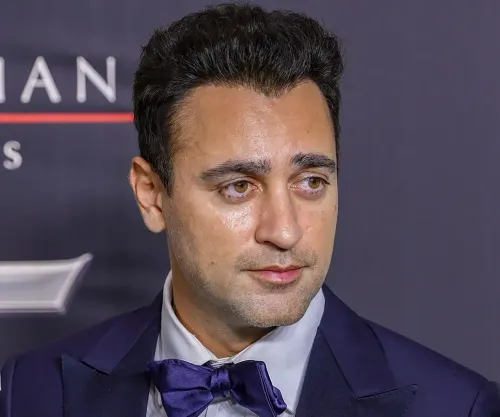
Ashoke Pandit backs notice asking Imran Khan to leave India by Oct 28

Synopsis
Actor Imran Khan — Aamir Khan's nephew — has been asked by Mumbai Police to leave India by 28 October after joining a protest demanding the Chief Election Commissioner's resignation, with authorities invoking the Immigration and Foreigners Act. Filmmaker Ashoke Pandit has backed the move sharply, arguing that non-citizens cannot claim the rights of Indian nationals.
Key Takeaways
Mumbai Police issued a notice on 15 October 2026 asking actor Imran Khan to leave India by 28 October 2026 .
Action was taken under Sections 7 and 29 of the Immigration and Foreigners Act over his alleged participation in a protest against Chief Election Commissioner Gyanesh Kumar .
Imran Khan was earlier detained on 10 October 2026 in connection with the demonstration at Shivaji Park , Mumbai.
Filmmaker and FWICE Chief Advisor Ashoke Pandit publicly backed the notice, saying non-citizens cannot claim rights reserved for Indian nationals.
Pandit alleged the protest may have been motivated by a desire to revive the actor's career in the film industry.
Filmmaker and Federation of Western India Cine Employees (FWICE) Chief Advisor Ashoke Pandit has publicly backed the government's decision to issue a departure notice to actor Imran Khan — nephew of superstar Aamir Khan — saying that one must be an Indian citizen first before claiming rights as one. The notice, issued by Mumbai Police on 15 October 2026, directs Imran Khan to leave India by 28 October 2026, days after the actor joined a protest demanding the resignation of Chief Election Commissioner Gyanesh Kumar.
Background: The Notice and Its Legal Basis
Authorities acted against Imran Khan under Sections 7 and 29 of the Immigration and Foreigners Act, citing his alleged participation in a political protest despite not holding Indian citizenship. The actor was detained by police on 10 October 2026 in connection with the demonstration before being released. He has since received a copy of the official notice, according to reports.
The protest, held at Shivaji Park in Mumbai, called for the removal of Chief Election Commissioner Gyanesh Kumar — a demand that placed Imran Khan at the centre of a politically charged controversy regarding foreign nationals' participation in domestic civic agitation.
What Ashoke Pandit Said
Pandit said he welcomes 'the decision taken by the authorities of our country, by the Government of India and the Ministry, to ask him to leave this country.' He went on to argue that the actor had fundamentally misunderstood his own legal standing: 'A person who has come on the streets to fight for his rights doesn't know what his rights are. So, to fight for your rights as an Indian, you have to be an Indian first. And I think this is nothing but an education.'
The filmmaker also suggested the protest outing was poorly considered, saying the actor 'got carried away and thought that it's a fun moment for you' and 'went to the ground as if you had to go there to Shivaji Park to play cricket.'
Pandit further alleged a possible career motive behind the actor's actions: 'If you want to use serious national issues to make a comeback in the industry and build a career, then I think that's a very wrong decision you have taken.' He framed the government's response as a broader signal, describing it as 'a signal to all those people who are on the streets trying to make a mockery of the law.'
The Constitutional Argument
Pandit stressed that constitutional rights in India are not universally available to all residents, particularly non-citizens. 'You ask questions to the Government of India authorities without realising that you don't have the right to do that,' he said, adding that the country has 'a proper system, proper courts and a proper judiciary.'
He concluded by calling on Imran Khan to comply: 'Mr Imran Khan should obey it and go back to the country where he belongs. We are very happy, and the entire country should be happy about it and react to this decision taken by the Narendra Modi government.'
Context and What Comes Next
The episode has reignited debate over the legal boundaries of political participation by foreign nationals in India. Critics of the deportation notice, not represented in Pandit's remarks, have raised questions about proportionality and the right of dissent — arguments that are likely to surface in any legal challenge Imran Khan or his representatives may pursue before the 28 October deadline. The actor has not publicly responded to the notice or Pandit's remarks, according to available reports.
Point of View
The optics of deporting a film personality for attending a protest will fuel a parallel debate about the space for dissent in India regardless of citizenship. Pandit's intervention is notable for its bluntness, but conflating legal ineligibility with moral culpability risks papering over a genuine question: how routine is enforcement of these provisions, and are they applied consistently? The 28 October deadline means this story is far from over.
NationPress
15 Oct 2026
Frequently Asked Questions
Why has Imran Khan been asked to leave India?
Mumbai Police issued a notice on 15 October 2026 directing actor Imran Khan to leave India by 28 October 2026. Authorities invoked Sections 7 and 29 of the Immigration and Foreigners Act, citing his alleged participation in a protest demanding the resignation of Chief Election Commissioner Gyanesh Kumar despite not holding Indian citizenship.
Who is Imran Khan, the actor?
Imran Khan is a Bollywood actor and the nephew of superstar Aamir Khan. He had earlier been detained by Mumbai Police on 10 October 2026 in connection with the same political protest before the formal departure notice was issued.
What did Ashoke Pandit say about the notice?
Filmmaker and FWICE Chief Advisor Ashoke Pandit welcomed the notice, saying that 'to fight for your rights as an Indian, you have to be an Indian first.' He also alleged that the protest may have been an attempt by Imran Khan to revive his film career.
What law was used against Imran Khan?
Action was taken under Sections 7 and 29 of the Immigration and Foreigners Act, which govern the conduct and permissible activities of foreign nationals residing in India. A copy of the notice has been served to the actor.
What happens if Imran Khan does not leave by October 28?
The notice sets 28 October 2026 as the deadline for Imran Khan to leave India. Should he fail to comply, he could face further legal consequences under the Immigration and Foreigners Act, though no specific escalation steps have been publicly stated by authorities at this stage.