BSF DG meets Bengal CM Adhikari, thanks state for 1,024 acres to seal India-Bangladesh border
Synopsis
BSF Director General Praveen Kumar’s meeting with West Bengal CM Suvendu Adhikari puts a number to a long-delayed infrastructure push: 1,024 acres across nine districts, now cleared for border fencing and outpost construction. With 569 km still unfenced and 70,000 people living in 360 zero-line villages straddling the fence line, the gap between stated targets and operational reality on India’s most porous border remains stark.
Key Takeaways
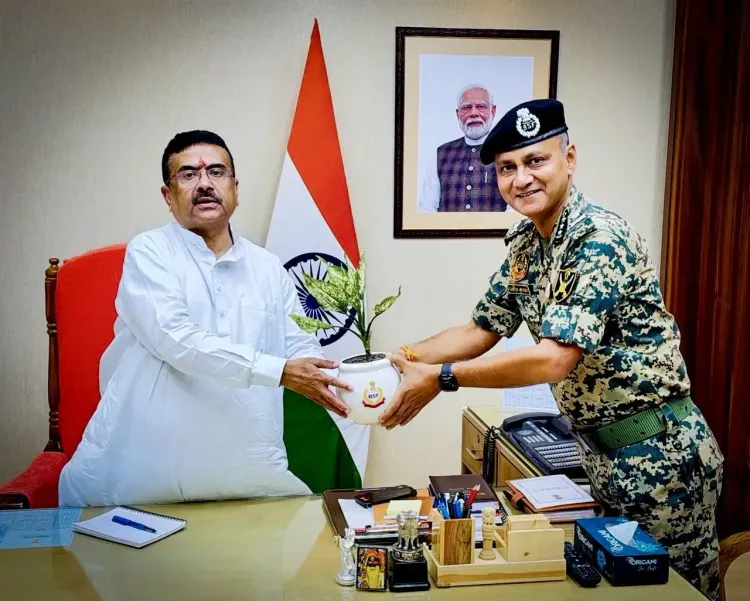
BSF DG Praveen Kumar met West Bengal CM Suvendu Adhikari on 14 October 2026 in Kolkata to review India-Bangladesh border security.
The state government has cleared 1,024 acres across nine districts for BSF fencing and Border Outpost (BOP) construction.
Approximately 569 km of the India-Bangladesh border in West Bengal remains unfenced; around 113 km is riverine and not conventionally fenceable.
West Bengal accounts for 2,216.7 km of India’s total 4,096.7-km border with Bangladesh.
Around 360 zero-line villages with a combined population of 70,000 pose relocation and fencing challenges; the CM assured BSF support.
The BJP state government attributed earlier infrastructure delays to the previous administration.
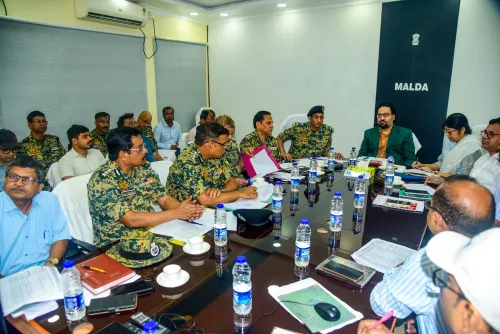
Border Security Force (BSF) Director General Praveen Kumar on 14 October 2026 met West Bengal Chief Minister Suvendu Adhikari in Kolkata and formally thanked the state government for providing land to strengthen infrastructure along the India-Bangladesh border. The meeting addressed pressing security gaps, including nearly 569 km of unfenced border in West Bengal that remains vulnerable to illegal infiltration.
Key Developments from the Meeting
According to an official statement, BSF DG Kumar ‘expressed gratitude to the Chief Minister and the state government for providing land for border infrastructure, which will facilitate the strengthening of the border security grid and plugging of feasible gaps in border fencing.’ The DG briefed Adhikari on the operational preparedness of BSF formations in the state and the strategies being adopted to secure unfenced stretches. Coordination among security agencies to prevent illegal infiltration and other border crimes was also reviewed.
The Scale of the Border Challenge
India shares a 4,096.7-km-long border with Bangladesh, of which 2,216.7 km falls in West Bengal alone — stretching from the Sundarbans in the south to the strategically sensitive Siliguri Corridor in the north. The Ministry of Home Affairs data indicates that approximately 569 km of this border remains unfenced. Of that, around 113 km is riverine terrain where conventional fencing is not feasible, posing a structural challenge for the force. West Bengal is unique in that the BSF operates through two frontiers here — the South Bengal Frontier and the North Bengal Frontier.
Land Transfer and Infrastructure Push
Since the Bharatiya Janata Party (BJP) government under Adhikari came to power, nearly 1,024 acres of land across nine districts have been cleared for transfer to the BSF for fencing and construction of Border Outposts (BOPs). The state government has maintained that delays under the previous administration had held up the development of critical border infrastructure. This handover is seen as a significant step in plugging longstanding gaps in the border security grid.
Zero-Line Villages: A Persistent Hurdle
A particularly complex issue discussed during the meeting was the status of zero-line villages — settlements located within 150 yards of the international border. West Bengal has approximately 360 such villages with a combined population of around 70,000 people. Many of these settlements lie beyond the border fence, and in some cases their presence has made fencing physically difficult. The need to relocate these communities was discussed, and Adhikari reportedly assured the BSF DG of the state government’s support in addressing the issue. He also committed to extending assistance for the welfare of BSF personnel and their families.
What Comes Next
The renewed focus on border infrastructure comes amid a broader security reassessment of the India-Bangladesh frontier, particularly following political changes in Dhaka. With land transfer now accelerating and the state government aligned with the Centre on border priorities, the BSF is expected to fast-track fencing and BOP construction in the cleared districts. The relocation of zero-line villages, however, remains a longer-term challenge requiring both administrative and community-level engagement.
Point of View
113 km of which may never be conventionally fenced, and 70,000 people living in legally awkward zero-line proximity to an international boundary. The political alignment between the BJP state government and the Centre has clearly unblocked land transfers that stalled for years, but land in hand is not fence in ground. The harder work — relocating zero-line communities, constructing BOPs in difficult terrain, and maintaining interagency coordination — is administrative, not political, and no amount of goodwill meetings accelerates that. The BSF’s two-frontier structure in Bengal is also an operational complexity that rarely features in official statements but directly affects command cohesion on the ground.
NationPress
15 Oct 2026
Frequently Asked Questions
Why did the BSF Director General meet West Bengal CM Suvendu Adhikari?
BSF DG Praveen Kumar met CM Adhikari on 14 October 2026 to brief him on the security situation along the India-Bangladesh border and to thank the state government for providing land for border fencing and infrastructure development. The meeting also covered coordination among security agencies and the status of zero-line villages.
How much of the India-Bangladesh border in West Bengal remains unfenced?
According to Ministry of Home Affairs data, approximately 569 km of the India-Bangladesh border in West Bengal remains unfenced. Of this, around 113 km is riverine terrain where conventional fencing is not feasible.
What are zero-line villages and why do they matter for border security?
Zero-line villages are settlements located within 150 yards of the international border. West Bengal has around 360 such villages with a combined population of about 70,000 people; many lie beyond the border fence, making fencing difficult and posing operational challenges for the BSF.
How much land has West Bengal transferred to the BSF for border infrastructure?
The BJP government in West Bengal has cleared nearly 1,024 acres of land across nine districts for transfer to the BSF, to be used for border fencing and construction of Border Outposts (BOPs).
What is the significance of the Siliguri Corridor in the context of India-Bangladesh border security?
The Siliguri Corridor is a narrow strip of land in northern West Bengal that connects India’s northeastern states to the rest of the country. The India-Bangladesh border in West Bengal extends northward to this strategically critical corridor, making its security particularly important for national connectivity and defence.