CM Himanta Inaugurates Green Wall at Guwahati Flyover

Synopsis
Chief Minister Himanta Biswa Sarma inaugurated a vertical green wall at Bhagadatta Flyover-1 in Dispur, Guwahati, on October 15, 2026. The ₹34.82 crore GMC project will install green walls at 20 flyover sites under the National Clean Air Programme, targeting particulate-matter reduction in the city.
Key Takeaways
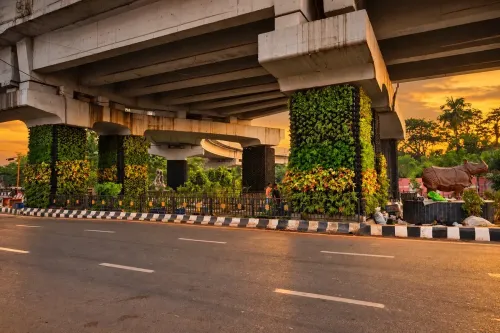
Chief Minister Himanta Biswa Sarma inaugurated Guwahati's first vertical green wall beneath Bhagadatta Flyover-1, Dispur , on October 15, 2026 .
The project costs ₹34.82 crore and will install green walls at 20 flyover locations across Guwahati.
It is implemented by the Guwahati Municipal Corporation under the National Clean Air Programme (NCAP) , a central scheme targeting PM2.5 and PM10 reduction.
Guwahati is one of 131 non-attainment cities under NCAP, meaning it has persistently failed national ambient air quality standards.
Similar vertical green-wall projects have been deployed under NCAP in cities like Lucknow and Ahmedabad .
The remaining 19 sites are yet to be completed; air-quality data from the Assam Pollution Control Board will be the project's ultimate measure of success.
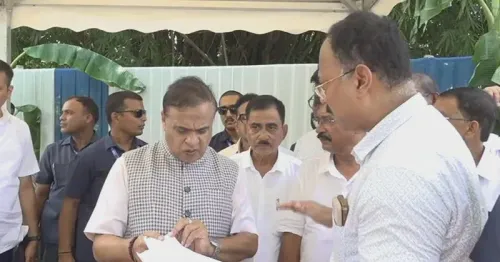
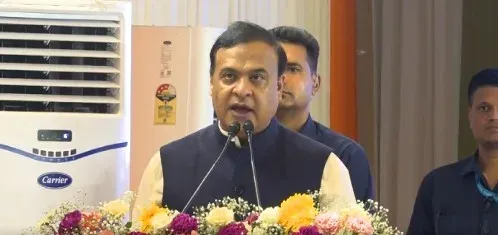
Beneath the concrete arc of Bhagadatta Flyover-1 in Dispur, Guwahati, a stretch of dead urban underspace is turning green — and it signals a city quietly fighting back against its own air. Chief Minister Dr. Himanta Biswa Sarma inaugurated a vertical green wall at the site on Thursday, October 15, 2026, kicking off one of Assam's most visible urban-environment projects to date.
A ₹34.82 Crore Bet on Living Walls
The project, implemented by the Guwahati Municipal Corporation (GMC), carries a price tag of ₹34.82 crore and targets 20 locations beneath flyovers across the city. Funding flows through the National Clean Air Programme (NCAP), the Ministry of Environment, Forest and Climate Change's flagship scheme launched in 2019 to cut particulate-matter levels in 131 non-attainment cities — Guwahati among them. The programme's stated target: a 20–30 percent reduction in PM2.5 and PM10 concentrations.
Vertical green walls — essentially engineered panels of living plants mounted on structural frames — are increasingly the tool of choice for NCAP cities looking to squeeze environmental gains out of leftover urban space. Similar installations have appeared under flyovers in Lucknow and Ahmedabad, cities that share Guwahati's non-attainment status. The logic is straightforward: flyover underbellies are heat traps, acoustic corridors, and pollution sinks — greening them attacks all three problems at once.
Guwahati's Non-Attainment Status and What It Means
Guwahati is the economic and administrative heart of Assam and the Northeast's largest city. Its designation as a non-attainment city under NCAP means its air quality has consistently failed to meet prescribed national ambient standards. Rapid urbanisation, heavy construction, vehicle density, and seasonal biomass burning have compounded the problem over the last decade.
The Assam government has aligned state urban-development spending with central NCAP grants since the city was notified, and this green-wall drive is the most spatially ambitious component yet — turning 20 flyover sites into a distributed green infrastructure network rather than concentrating investment in a single park or lung space.
Nineteen Sites Still to Come
Bhagadatta Flyover-1 is only the first. The remaining 19 locations are yet to be completed, making today's inauguration as much a ground-breaking signal as a finish line. Air-quality monitoring data from the Assam Pollution Control Board will eventually tell the real story — whether the walls deliver measurable improvement in particulate levels or remain primarily aesthetic. That data, when it arrives, will be the project's true report card.
For now, Guwahati has a new kind of urban landmark: one that grows.
Point of View
Highway corridors — into active environmental assets, blending aesthetic visibility with measurable air-quality intent. For the Himanta Biswa Sarma government, it serves a dual purpose: meeting NCAP compliance targets while delivering a visually tangible development story ahead of future electoral cycles. The real test, however, is whether Assam's Pollution Control Board publishes independent PM-level data for the sites, since without that monitoring, the green walls remain a symbol rather than a verified policy outcome. Guwahati's trajectory could either become a replicable Northeast model or a cautionary tale about infrastructure spending without accountability metrics.
NationPress
15 Oct 2026
Frequently Asked Questions
What is the vertical green wall project in Guwahati?
It is a ₹34.82 crore initiative by the Guwahati Municipal Corporation to install living plant walls at 20 flyover underbelly locations across Guwahati, funded under the National Clean Air Programme to improve the city's air quality.
Who inaugurated the green wall at Bhagadatta Flyover in Guwahati?
Chief Minister Dr. Himanta Biswa Sarma inaugurated the vertical green wall beneath Bhagadatta Flyover-1 in Dispur, Guwahati, on October 15, 2026.
What is the National Clean Air Programme and why does Guwahati qualify?
The National Clean Air Programme is a central scheme launched in 2019 to reduce PM2.5 and PM10 levels by 20–30 percent in 131 non-attainment cities — cities that have persistently failed to meet national ambient air quality standards. Guwahati is one of those 131 cities.
How many green wall sites will be built under the Guwahati project?
The project targets 20 locations beneath flyovers across Guwahati. The first was inaugurated at Bhagadatta Flyover-1 in Dispur, with the remaining 19 sites yet to be completed.
How does a vertical green wall help with air pollution?
Vertical green walls use living plants to absorb particulate matter, reduce surface temperatures, and buffer noise in dense urban areas. Placed under flyovers — which are heat traps and pollution corridors — they target localised pollution hotspots directly.