CM Sai joins Seva Sankalp Abhiyan device drive for Naxal victims
Synopsis
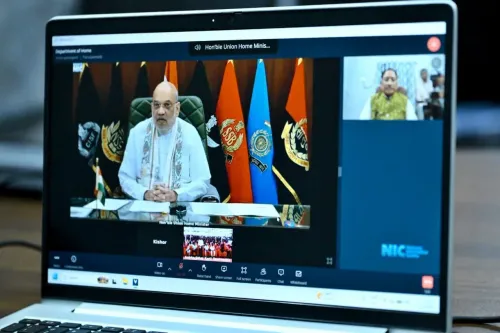
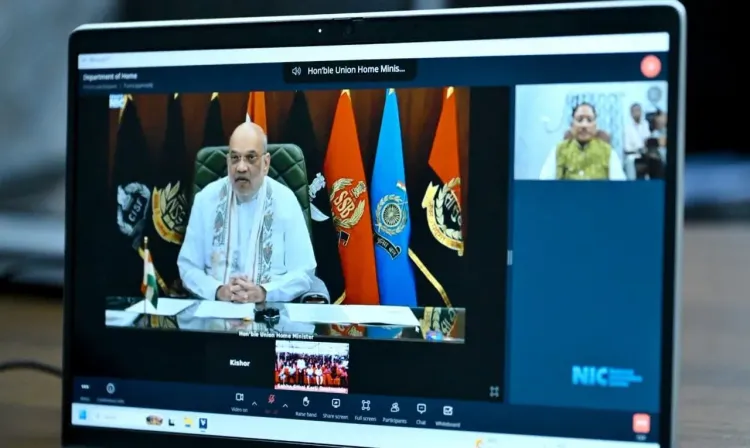
Chhattisgarh CM Vishnu Deo Sai joined Union Home Minister Amit Shah's Seva Sankalp Abhiyan event via video call on October 15, 2026, overseeing distribution of assistive devices to Naxal violence victims and differently-abled citizens, reaffirming the state's twin-track security-and-welfare push in Bastar.
Key Takeaways
CM Vishnu Deo Sai attended the Seva Sankalp Abhiyan assistive-device distribution ceremony on 15 October 2026 via video conferencing.
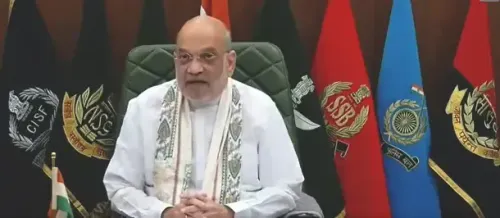
Union Home Minister Amit Shah presided over the event in person, underlining the Centre's direct ownership of Chhattisgarh's Naxal rehabilitation agenda.
The scheme targets persons disabled by Naxal violence and other differently-abled citizens, distributing equipment such as prosthetics, wheelchairs, and hearing aids.
Bastar — southern Chhattisgarh's insurgency-hit heartland — is the primary focus of the rehabilitation and development push.
CM Sai framed the effort as part of PM Modi's larger goal of a 'Naxal-free Chhattisgarh' combined with making Bastar 'prosperous and full of opportunities.' The state's approach mirrors a long-standing national policy of pairing counter-Naxal security operations with targeted welfare delivery.
Assistive devices reached the hands of those who lost limbs — and sometimes livelihoods — to decades of Naxal violence in Chhattisgarh, as Chhattisgarh Chief Minister Vishnu Deo Sai joined a distribution ceremony under the Seva Sankalp Abhiyan via video conferencing on Thursday, 15 October 2026, with Union Home Minister Amit Shah presiding over the event in person.
What Seva Sankalp Abhiyan means for Bastar's wounded
The Seva Sankalp Abhiyan is a Central initiative administered through the Ministry of Home Affairs that channels assistive equipment — wheelchairs, crutches, prosthetics, hearing aids — to persons disabled by Naxal violence as well as other differently-abled citizens. Bastar, the sprawling southern division of Chhattisgarh that has borne the sharpest edge of the insurgency for over four decades, sits at the heart of the programme's target geography.
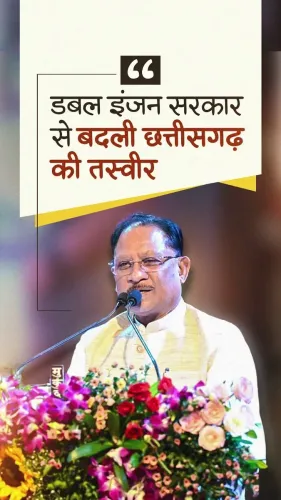
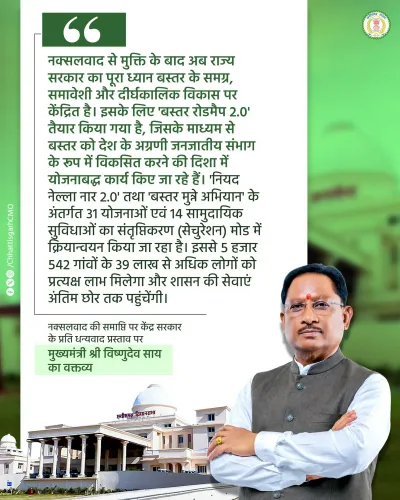
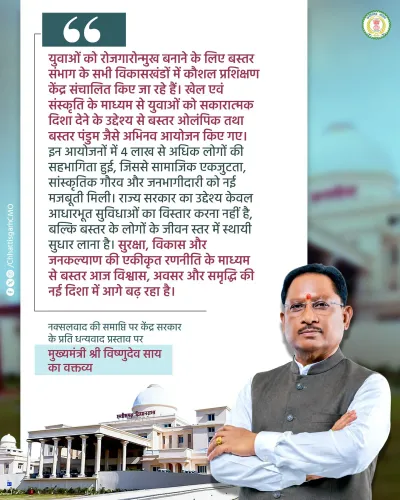
CM Sai, posting in Hindi on X, said the state's aim is to bring happiness back into the lives of those affected by Naxal violence, restore their confidence, and enable them to live with dignity and self-reliance — 'सम्मान के साथ आत्मनिर्भर जीवन' ('a self-reliant life lived with honour'). He credited Prime Minister Narendra Modi's leadership for the broader resolve to make Chhattisgarh Naxal-free, adding that the focus now turns to making Bastar 'prosperous, happy, and full of opportunities.'
Security and welfare: Chhattisgarh's twin-track approach
The event reflects a deliberate policy architecture that has defined New Delhi's anti-insurgency playbook for nearly two decades: pair security operations in the Red Corridor with visible, targeted welfare delivery to peel away civilian sympathy from armed groups. Successive governments at both the Centre and in Raipur have pursued this parallel-track strategy, and the current BJP administration has framed it explicitly under the banner of a 'Naxal-free Chhattisgarh.'
Amit Shah, as Union Home and Cooperation Minister, has been the most prominent face of the intensified counter-Naxal push, presiding over major operational reviews and announcing development packages for affected districts. His physical presence at today's ceremony — while the state's Chief Minister joined remotely — signals that the Centre continues to drive both the security and rehabilitation dimensions of the agenda.
What to watch in the weeks ahead
The rollout of additional welfare components under Seva Sankalp Abhiyan will be the immediate indicator of whether today's ceremony marks a one-time gesture or a sustained delivery push. State-level announcements on livelihood schemes, road connectivity, and educational access in Bastar's tribal blocks will reveal how deep the 'opportunities' promised by CM Sai actually run.
For the families in Bastar who have spent years navigating insurgency, displacement, and disability, the measure of success will be simple: whether a device handed over today still has service support six months from now — and whether the road home is safe enough to use it.
Point of View
Seamless mission under Modi's leadership, with Amit Shah providing the security credibility and local leaders providing the human face. By attending via video conference rather than in person, CM Sai signals that the Centre — not just the state — owns this agenda, which can be read both as coordination strength and as a reminder of where political authority over Bastar ultimately resides. The Seva Sankalp Abhiyan's focus on visible, individual beneficiaries — a device in someone's hand — is precisely the kind of tangible proof-point that converts a security policy into a voter-facing welfare narrative. Whether the programme's depth matches its optics will determine its long-term impact on Bastar's still-fragile social fabric.
NationPress
15 Oct 2026
Frequently Asked Questions
What is the Seva Sankalp Abhiyan?
Seva Sankalp Abhiyan is a Central government initiative administered by the Ministry of Home Affairs that distributes assistive devices — such as prosthetics, wheelchairs, and hearing aids — to persons disabled by Naxal violence and other differently-abled citizens in affected regions.
Who attended the Seva Sankalp Abhiyan event on 15 October 2026?
Union Home Minister Amit Shah presided over the event in person, while Chhattisgarh Chief Minister Vishnu Deo Sai joined via video conferencing.
Which area of Chhattisgarh does the Seva Sankalp Abhiyan primarily target?
The programme focuses significantly on Bastar, the southern Chhattisgarh region most severely affected by decades of Naxal insurgency.
What is Chhattisgarh's stated goal regarding Naxalism?
The state government, under CM Vishnu Deo Sai and guided by PM Narendra Modi's leadership, has declared its commitment to making Chhattisgarh completely Naxal-free while simultaneously developing Bastar into a prosperous, opportunity-rich region.
How does India's government combine security and welfare in Naxal-affected areas?
National policy since at least the mid-2000s has paired security operations in the Red Corridor with rehabilitation and welfare delivery — such as assistive devices, livelihood support, and infrastructure — to reduce civilian sympathy for armed groups and promote self-reliance among affected communities.