CM Assam Plans Hanging Gardens on Guwahati Flyovers

Synopsis
The Chief Minister's Office of Assam announced on July 17, 2026 that hanging gardens will be introduced on Guwahati's flyovers, blending urban infrastructure with sustainable design. The move aligns with national climate-resilient city goals and Chief Minister Himanta Biswa Sarma's broader push for green urban development in the state.
Key Takeaways
The Chief Minister's Office of Assam announced plans on July 17, 2026 to install hanging gardens on flyovers in Guwahati .
The initiative aims to blend urban infrastructure with sustainable and aesthetic development in the state capital.
Guwahati has expanded its flyover network significantly between 2018 and 2023 , providing the structural base for the greening plan.
The proposal aligns with the Guwahati Smart City Mission framework active since 2015 and national climate-resilient urbanisation goals.
Specific pilot flyover locations, costs, and rollout timelines have not yet been officially disclosed.
Chief Minister Himanta Biswa Sarma has led Assam since 2021 , overseeing combined urban infrastructure and environmental initiatives.
The Chief Minister's Office of Assam announced on Friday, July 17, 2026, that the state government is set to introduce hanging gardens on city flyovers in Guwahati, positioning the initiative as a convergence of urban infrastructure with sustainable and aesthetic development.
Context
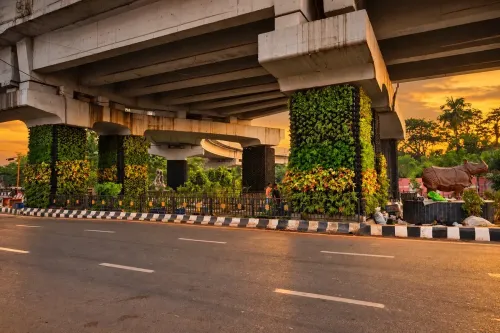
The announcement, shared on the official CMO Assam account, stated: 'Greener flyovers, a greener Guwahati. Assam is set to introduce hanging gardens on city flyovers, blending urban infrastructure with sustainable and aesthetic development.' The post was accompanied by an image illustrating the concept of greenery integrated into elevated road structures.
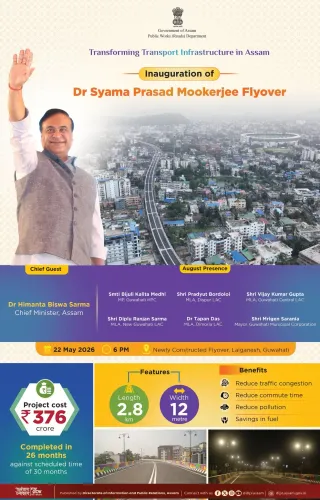
Guwahati, the largest city in Assam and the state's commercial capital, has seen a significant expansion of its flyover network between 2018 and 2023 under state urban development plans aimed at easing chronic traffic congestion. These structures now form the proposed canvas for the greening initiative.
Policy Backdrop
The proposal builds on a trajectory of urban greening efforts that trace back to the Guwahati Smart City Mission projects from 2015 onward, which included mobility upgrades and urban greening components. Chief Minister Himanta Biswa Sarma, who has led the state since 2021, has consistently framed urban infrastructure investment as inseparable from environmental resilience.
Across India, vertical gardens and green corridors on transport infrastructure have gained traction since the mid-2010s as tools to reduce urban heat islands and airborne pollution. Assam's initiative aligns with national goals under climate-resilient city missions, while also reflecting the state's particular sensitivity to environmental stress given the Brahmaputra valley's annual flood cycles.
Stakeholders and Impact
Guwahati's commuters and urban residents stand as the primary beneficiaries. Hanging gardens on flyovers can lower ambient temperatures on congested road corridors, improve air quality, and add green cover to a rapidly urbanising city that has historically struggled with encroachment on its wetlands and hills.
The initiative also signals a broader intent by the Assam Government to pair hard infrastructure — flyovers, roads, drainage — with soft, climate-adaptive design. Such an approach is increasingly seen as essential in cities exposed to both extreme heat and monsoon flooding, two pressures that Guwahati faces acutely each year.
What's Next
Specific details — including which flyovers will serve as pilot sites, the rollout timeline, and budget allocations — have not yet been made public. Observers will watch for announcements in the next state budget session or through the urban development department regarding tendering and implementation schedules.
If executed at scale, the hanging garden programme could establish Guwahati as a reference model for green urban infrastructure in Northeast India, with potential replication across other Assam cities as the state advances its sustainable urbanisation agenda.
Point of View
High-visibility signal from the Sarma administration that urban development in Assam will carry an environmental branding — particularly useful ahead of any electoral cycle. By attaching a green narrative to hard infrastructure already built, the government avoids fresh capital expenditure debates while projecting climate consciousness. The move fits a wider pattern of Indian state governments using vertical greening as a tangible, photogenic policy output that resonates with urban middle-class voters. The real test will be in implementation: whether the gardens are maintained long-term or fade as neglected fixtures, as has happened with similar projects in other Indian cities.
NationPress
15 Oct 2026
Frequently Asked Questions
What are the hanging gardens planned for Guwahati flyovers?
The Assam government has announced plans to install hanging gardens — suspended or vertical plantings — on the flyovers in Guwahati, integrating greenery into existing urban road infrastructure to improve aesthetics and sustainability.
Which flyovers in Guwahati will get hanging gardens?
The specific flyovers selected as pilot sites have not yet been officially announced. The government is expected to share further details, including locations and timelines, in subsequent announcements.
Who announced the Guwahati flyover hanging garden plan?
The announcement was made by the Chief Minister's Office of Assam on July 17, 2026, under Chief Minister Himanta Biswa Sarma's administration.
How will hanging gardens on flyovers benefit Guwahati?
Hanging gardens on flyovers can help reduce urban heat, improve local air quality, add green cover to a rapidly urbanising city, and enhance the visual character of road corridors used by daily commuters.
Is this part of the Guwahati Smart City Mission?
The initiative aligns with the broader urban greening goals of the Guwahati Smart City Mission, which has included green and mobility upgrades since 2015, though it has been announced as a separate state government plan.