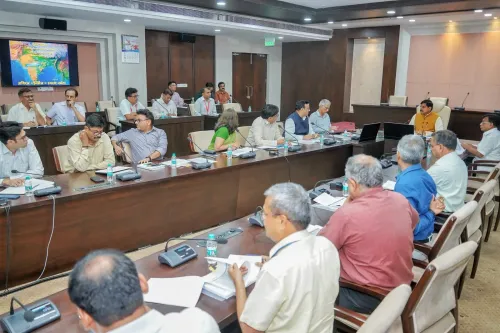
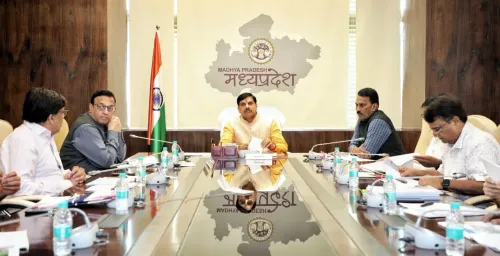
CM Mohan Yadav: Sleemanabad Tunnel to link Narmada, Son Basin
Synopsis
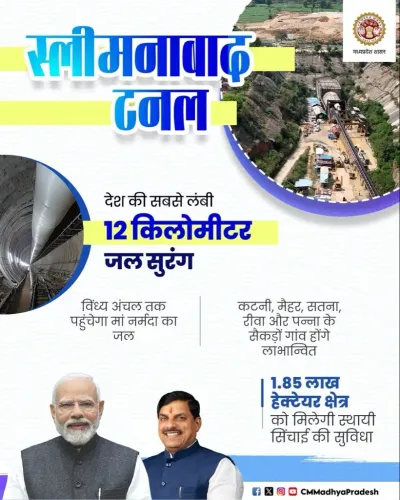
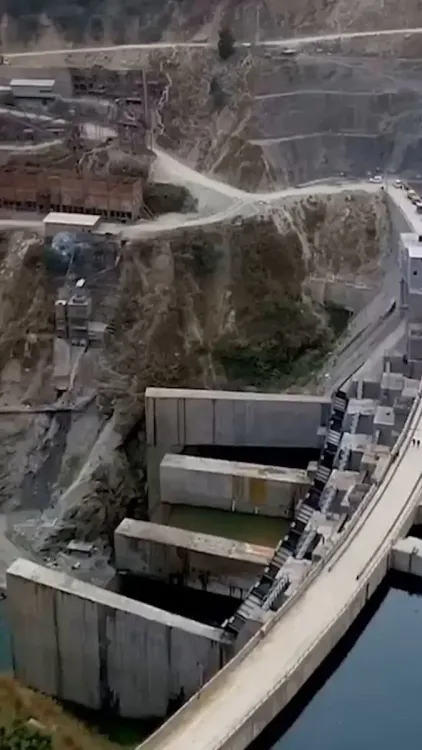
Madhya Pradesh's Chief Minister's Office announced the Sleemanabad Tunnel — billed as India's longest water tunnel — will divert Narmada waters to the Son Basin, aiming to transform irrigation access for lakhs of farmers in the state's eastern districts.
Key Takeaways
The Sleemanabad Tunnel is described by the Madhya Pradesh government as the country's longest water tunnel.
The project will transfer water from the Narmada river to the Son Basin in eastern Madhya Pradesh.
The announcement was made by the Chief Minister's Office of Madhya Pradesh on 17 July 2026 , tagging CM Dr.
The tunnel is intended to benefit lakhs of farmers by providing assured irrigation water to historically rain-dependent eastern districts.
India's National Perspective Plan from the 1980s had identified Narmada-Son basin linkages as a long-term water transfer possibility.
Completion timelines, operational status, and quantified farmer benefits have not been independently verified.
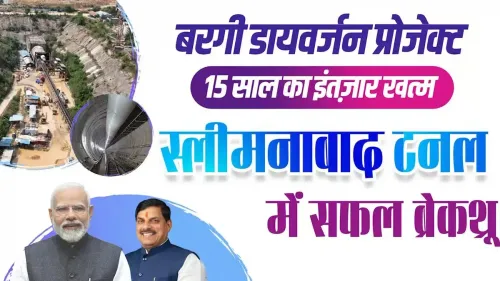
The Chief Minister's Office of Madhya Pradesh announced on Friday, 17 July 2026 that the Sleemanabad Tunnel — described as the country's longest water tunnel — will channel Narmada river waters into the Son Basin, promising a new era of irrigation for lakhs of farmers across the state.
The official post, tagging Chief Minister Dr. Mohan Yadav, declared: 'Madhya Pradesh jal prabandhan aur sinchai ke kshetra mein vikas ka naya itihas rach raha hai' — 'Madhya Pradesh is scripting a new chapter of development in water management and irrigation.' It added that Narmada's waters reaching the Son Basin would 'write a new chapter of prosperity and happiness in the lives of lakhs of farmers.'
Context
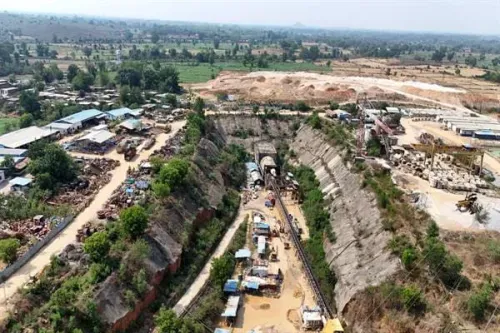
The Sleemanabad Tunnel is a large-scale inter-basin water transfer project designed to redirect surplus flows from the Narmada — one of India's major westward-flowing rivers — eastward into the Son river basin. The Son Basin spans parts of eastern Madhya Pradesh and neighbouring states, regions historically dependent on erratic rainfall for agricultural water supply. The project is positioned as a transformative step in the state's irrigation infrastructure drive.
Policy Backdrop
India's National Perspective Plan for inter-basin water transfer, formulated in the 1980s, had identified potential linkages between the Narmada and Son basins among a range of long-term water redistribution proposals. Madhya Pradesh has over the years pursued an expanding portfolio of canal and tunnel projects aimed at increasing irrigated area and stabilising agricultural production across its diverse river basins. The Sleemanabad Tunnel represents one of the most ambitious expressions of that strategy, connecting a water-rich western basin to a relatively water-scarce eastern one.
The project also aligns with the central government's broader interest in optimising inter-basin transfers to reduce regional water stress and support food security. State-level execution of such projects has gained political salience as successive governments compete to demonstrate irrigation coverage gains ahead of agricultural and electoral cycles.
Stakeholders and Impact
The primary beneficiaries identified in the announcement are farmers in the Son Basin districts of eastern Madhya Pradesh, where irrigation access has historically lagged behind the state's western and central regions. Assured water supply through the tunnel is expected to support year-round cultivation and reduce dependence on monsoon rainfall. The state government's framing emphasises prosperity and welfare for 'lakhs of farmers', though precise acreage and beneficiary counts have not been independently verified.
Beyond agriculture, improved water availability in the Son Basin could benefit rural drinking water supply and support allied sectors such as horticulture and agro-processing. District administrations in the eastern region are expected to coordinate water-release schedules once the tunnel becomes operational.
What's Next
Attention will now focus on the tunnel's completion timeline, commissioning date, and the rollout of water-distribution infrastructure connecting the tunnel outlet to farm-level channels in Son Basin districts. Independent assessments of the project's irrigated-area expansion and yield improvements will be critical to validating the state's claims. CM Dr. Mohan Yadav's administration is likely to use the project as a centrepiece of its agricultural development narrative, with progress updates expected through official channels in the months ahead.
Point of View
Timed to reinforce its agricultural-welfare credentials in a state where farmer welfare is an enduring political priority. Inter-basin water transfer projects carry long gestation periods and complex stakeholder dynamics, making their political communication as significant as their engineering milestones. The framing of the tunnel as 'the country's longest' elevates it to a national-record narrative, amplifying its symbolic weight beyond state borders. Whether the project delivers measurable irrigation gains in the Son Basin will ultimately determine its lasting policy legacy.
NationPress
17 Jul 2026
Frequently Asked Questions
What is the Sleemanabad Tunnel in Madhya Pradesh?
The Sleemanabad Tunnel is a large inter-basin water transfer project in Madhya Pradesh designed to carry water from the Narmada river eastward to the Son Basin, aiming to expand irrigation access for farmers in the state's eastern districts.
Why is the Sleemanabad Tunnel significant?
The Madhya Pradesh government has described it as the country's longest water tunnel, and it is intended to bring Narmada waters to the Son Basin — a region historically dependent on rainfall — benefiting lakhs of farmers.
Who announced the Sleemanabad Tunnel project?
The Chief Minister's Office of Madhya Pradesh made the announcement on 17 July 2026, tagging Chief Minister Dr. Mohan Yadav in the post.
Which farmers will benefit from the Sleemanabad Tunnel?
Farmers in the Son Basin districts of eastern Madhya Pradesh are the primary intended beneficiaries, as the tunnel would provide assured irrigation water to areas that currently rely heavily on monsoon rainfall.
What is the connection between the Narmada and Son Basin water transfer?
India's National Perspective Plan, formulated in the 1980s, had identified potential water linkages between the Narmada and Son basins as part of a long-term inter-basin transfer vision, which the Sleemanabad Tunnel now seeks to realise at the state level.