CM Haryana: PM Modi to Launch India's First Hydrogen Train
Synopsis
The Chief Minister's Office of Haryana announced PM Modi will inaugurate NaMoGreenRail — India's first fully indigenous hydrogen fuel-cell train — alongside development projects worth approximately ₹15,000 crore in the state, marking a major milestone in Indian Railways' decarbonisation drive.
Key Takeaways
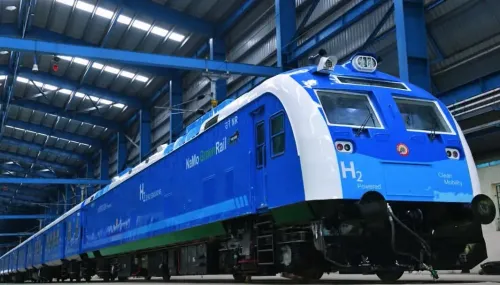
The Chief Minister's Office of Haryana announced that PM Narendra Modi will launch NaMoGreenRail , described as India's first fully indigenous hydrogen fuel-cell train.
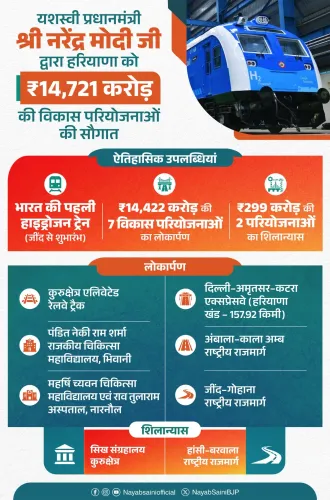
The event will also include the inauguration and foundation-laying of development projects worth approximately ₹15,000 crore in Haryana .
The train is described as 'fully indigenous,' aligning with the Make in India and Atmanirbhar Bharat policy frameworks.
The initiative builds on the National Green Hydrogen Mission launched in January 2023 and Indian Railways' net-zero target by 2030.
The green hydrogen industry and rail commuters are among the key stakeholders watching the programme's rollout and potential expansion.
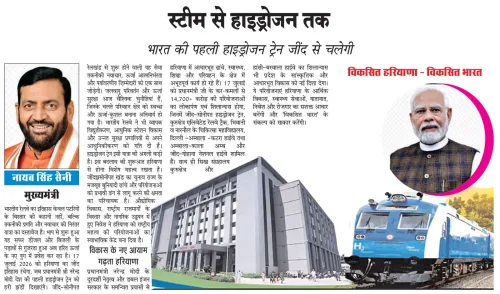
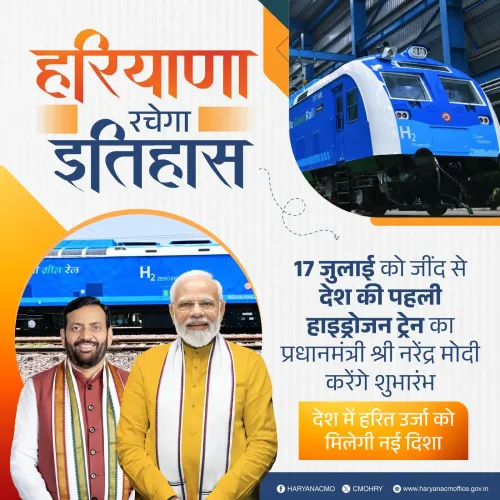
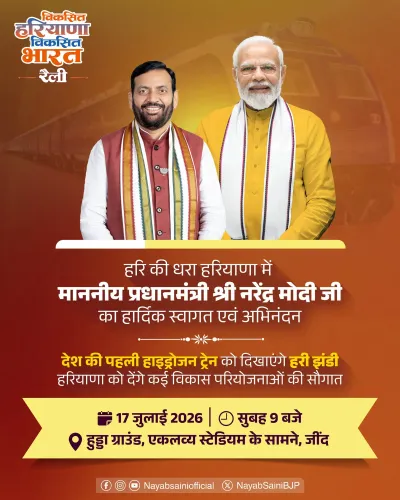
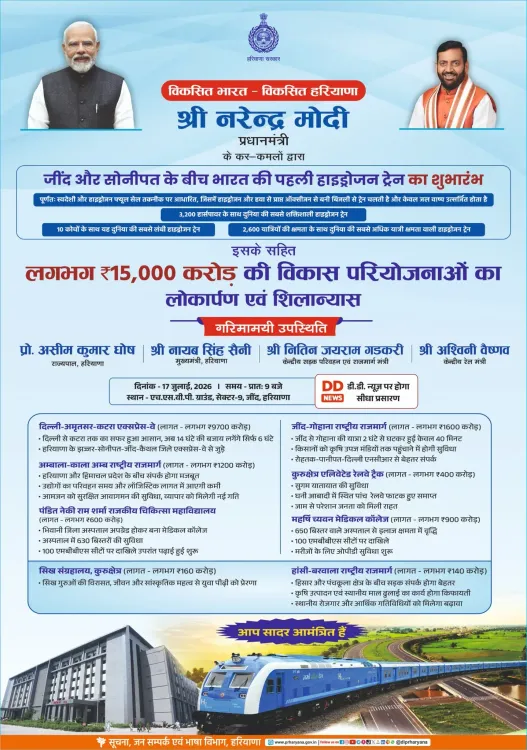
The Chief Minister's Office of Haryana announced on Friday, 17 July 2026 that Prime Minister Narendra Modi will inaugurate #NaMoGreenRail, described as India's first fully indigenous hydrogen fuel-cell train, along with development projects worth approximately ₹15,000 crore in the state.
The CMO's post, shared in Hindi, states: 'पूर्णतः स्वदेशी और हाइड्रोजन फ्यूल सेल तकनीक पर आधारित भारत की पहली हाइड्रोजन ट्रेन' — ('India's first hydrogen train based on fully indigenous hydrogen fuel-cell technology'). The event will also see the dedication and foundation-laying of multiple infrastructure projects in Haryana.
Context
Indian Railways, which operates one of the world's largest rail networks, has been pursuing a net-zero emissions target by 2030. Hydrogen fuel-cell technology has been identified as a key pillar of this decarbonisation drive, with pilot projects announced as far back as 2021–22. The NaMoGreenRail initiative, if realised as described, would mark a significant milestone in that roadmap. The emphasis on the train being 'fully indigenous' — pūrṇataḥ svadeśī — aligns directly with the Make in India and Atmanirbhar Bharat frameworks that have shaped central government industrial policy in recent years.Policy Backdrop
The National Green Hydrogen Mission, approved by the Union Cabinet in January 2023, laid the policy foundation for scaling indigenous green hydrogen production and its application across sectors, with transport — particularly railways — identified as a priority area. The mission aims to position India as a global hub for green hydrogen production and export. Railways remain one of India's largest single consumers of energy, and shifting even a portion of traction to hydrogen would have measurable impact on the country's overall emissions profile and its dependence on fossil-fuel imports. The ₹15,000 crore package announced alongside the train launch signals that the event is framed as a broader infrastructure push for Haryana, not solely a railways milestone.Stakeholders and Impact
The announcement carries implications for multiple constituencies. Rail commuters in Haryana and beyond stand to benefit if hydrogen-powered services are eventually expanded beyond a pilot. The domestic green hydrogen industry — including electrolyser manufacturers, fuel-cell developers, and ancillary suppliers — will watch closely for procurement and commercialisation signals. For Haryana, the ₹15,000-crore project package represents a significant injection of central investment, spanning what the CMO describes as 'development projects' (vikās pariyojanāeṃ) to be both inaugurated and foundation-laid at the same event. The specific composition of this package has not been detailed in the post.What's Next
The operational deployment of hydrogen trains beyond an inaugural run will be the critical test of the programme's scale and sustainability. Observers will track whether NaMoGreenRail moves into regular commercial service, on which routes, and at what frequency — and whether the associated ₹15,000-crore projects in Haryana are executed on schedule. India's broader push to decarbonise transport, anchored in its 2070 net-zero pledge, means the hydrogen rail programme will be benchmarked against international peers in Japan, Germany, and China that have already run hydrogen trains on passenger routes. The success of an indigenous model would strengthen India's position in the emerging global green hydrogen economy.Point of View
Indigenous manufacturing, and state-level infrastructure investment. Branding the train 'NaMoGreenRail' signals that the Centre intends to own this milestone visibly, ahead of any electoral cycle in Haryana or nationally. The ₹15,000-crore project package bundled into the same event suggests a deliberate effort to maximise political capital from a single high-profile visit. Whether the hydrogen train moves from inauguration to sustained commercial operation will ultimately determine whether this is a transformative policy moment or a well-staged demonstration.
NationPress
17 Jul 2026
Frequently Asked Questions
What is NaMoGreenRail?
NaMoGreenRail is the name given to India's first fully indigenous hydrogen fuel-cell train, set to be launched by Prime Minister Narendra Modi, as announced by the Chief Minister's Office of Haryana.
What is a hydrogen fuel-cell train?
A hydrogen fuel-cell train generates electricity by combining hydrogen and oxygen in a fuel cell, emitting only water vapour. It is considered a zero-emission alternative to diesel traction on non-electrified rail routes.
What is the National Green Hydrogen Mission?
The National Green Hydrogen Mission is a central government scheme approved in January 2023 to promote indigenous production and use of green hydrogen across sectors, including transport and railways.
What are the ₹15,000 crore projects being launched in Haryana?
The Chief Minister's Office of Haryana announced that development projects worth approximately ₹15,000 crore will be inaugurated and foundation-laid at the same event, though the specific project list has not been detailed in the post.
What is Indian Railways' net-zero target?
Indian Railways has set a target to achieve net-zero carbon emissions by 2030, with hydrogen fuel-cell trains forming part of its broader decarbonisation strategy alongside electrification and renewable energy adoption.