CM Rekha Gupta Hails Modi Govt's Naxal-Free India Pledge Fulfilled
Synopsis
Delhi CM Rekha Gupta amplified Home Minister Amit Shah's declaration that the Modi government's Naxal-free India pledge has been fulfilled, shifting focus to healing victims and ensuring dignified lives for all those scarred by decades of left-wing extremism.
Key Takeaways
Delhi CM Rekha Gupta shared Home Minister Amit Shah 's statement on 15 October 2026 declaring the Naxal-free India resolve fulfilled.
Shah's statement explicitly calls for healing the 'wounds' caused by Naxalism and ensuring a dignified life for every victim.
The Modi government pursued a dual strategy of security operations and development schemes in Naxal-affected districts since 2014 .
Chhattisgarh was the primary theatre of anti-Naxal operations over the past decade.
Key stakeholders going forward include tribal communities, surrendered Naxals, and security force families awaiting rehabilitation and livelihood support.
The Ministry of Home Affairs is expected to announce updates on district reclassification and new victim-support schemes.
A decades-long shadow over central and eastern India has, by the central government's own reckoning, finally lifted. Delhi Chief Minister Rekha Gupta on Thursday, 15 October 2026 shared a pointed declaration by Union Home Minister Amit Shah, marking what the BJP government is calling the fulfilment of its pledge to build a Naxal-free India — and immediately pivoting to the harder task of healing the wounds left behind.
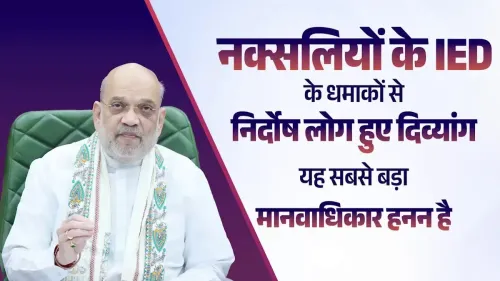
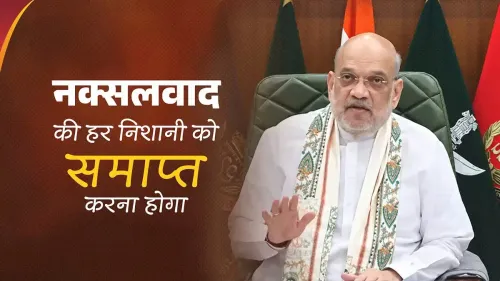
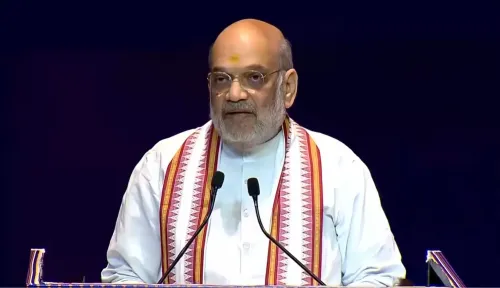
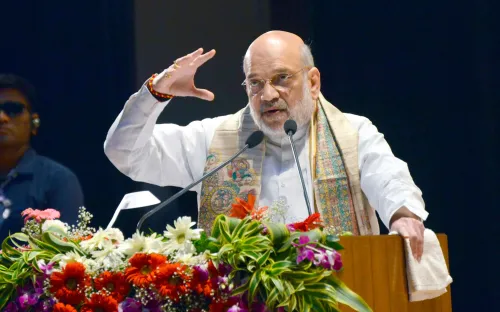
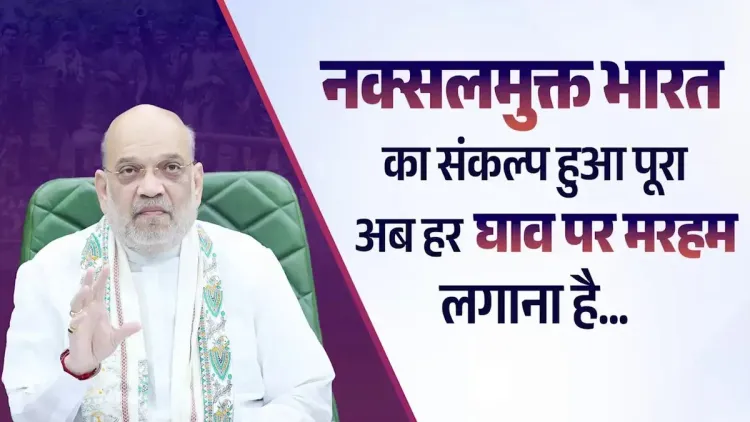
Quoting Home Minister Amit Shah directly, CM Gupta's post carried the message: 'Modi sarkar ka Naxalmukta Bharat banane ka sankalp pura hua' — 'The Modi government's resolve to build a Naxal-free India has been fulfilled.' Shah's statement did not stop at the security milestone; it turned immediately to the human cost, saying the wounds the country has suffered due to Naxalism must now be healed, and every victim must be ensured a life of dignity.
From Security Operations to Healing: What Shah's Statement Signals
The framing is deliberate and significant. For years, the Ministry of Home Affairs under Amit Shah pursued a twin-track strategy: intensified paramilitary operations in affected districts alongside targeted development and welfare schemes in tribal heartlands. The language of 'wounds' and 'rehabilitation' in Shah's statement signals that the government believes the kinetic phase is over — and the longer, harder work of reconstruction has begun.
Chhattisgarh, long the epicentre of left-wing extremism in India, saw some of the most sustained security operations of the past decade. Tribal communities, surrendered Naxals, and the families of security personnel killed in action are now the stated focus of whatever comes next — livelihood schemes, reintegration programmes, and district-level development pushes in what were once the most conflict-scarred zones.
A Decade-Long Campaign Reaches Its Claimed Endpoint
The Modi government, from 2014 onward, explicitly listed the elimination of left-wing extremism as a core internal-security priority. Official data tracked across that period showed a progressive reduction in violence-affected districts and incident counts — a trend the government cited repeatedly as evidence the strategy was working. Today's declaration frames that arc as complete.
What follows will be watched closely: whether the Ministry of Home Affairs announces new victim-support or livelihood schemes, how many districts are formally declassified from Naxal-affected status, and whether the rehabilitation pipeline for surrendered cadres and displaced tribal families translates into concrete, measurable outcomes on the ground. The pledge of a dignified life for every victim is now the government's self-set benchmark — and the measure by which this chapter will ultimately be judged.
Point of View
The BJP is attempting to recast its internal-security record as a humanitarian achievement, not merely a law-and-order one. The harder test will be institutional: whether the ministry's rehabilitation and livelihood frameworks deliver at scale in districts that have suffered chronic under-development alongside violence. The self-set benchmark of 'dignified life for every victim' is now an accountability metric opposition parties and civil society groups will scrutinise closely.
NationPress
15 Oct 2026
Frequently Asked Questions
Has India been declared Naxal-free in 2026?
The Modi government, through Home Minister Amit Shah, declared in October 2026 that its resolve to build a Naxal-free India has been fulfilled, signalling that the government considers the major phase of left-wing extremist activity to be over.
What did Amit Shah say about Naxalism in India?
Home Minister Amit Shah stated that the Modi government's Naxal-free India pledge has been fulfilled, and that the focus must now shift to healing the country's wounds from Naxalism and ensuring every victim can live with dignity.
What is the Modi government's strategy against Naxalism?
Since 2014, the Modi government has followed a dual approach combining intensified paramilitary operations in Naxal-affected districts with targeted development and welfare schemes for tribal communities in those regions.
Which state was most affected by Naxalism in India?
Chhattisgarh has been the epicentre of left-wing extremism in India, witnessing the most sustained security operations over the past decade, alongside states like Jharkhand, Odisha, and Maharashtra.
What happens to Naxal-affected districts after operations end?
The Ministry of Home Affairs oversees district reclassification, rehabilitation of surrendered Naxals, and livelihood and development programmes for tribal communities in formerly violence-affected areas.