Amitabh Bachchan on early Bollywood struggles: 'No heroine would work with me'
Synopsis
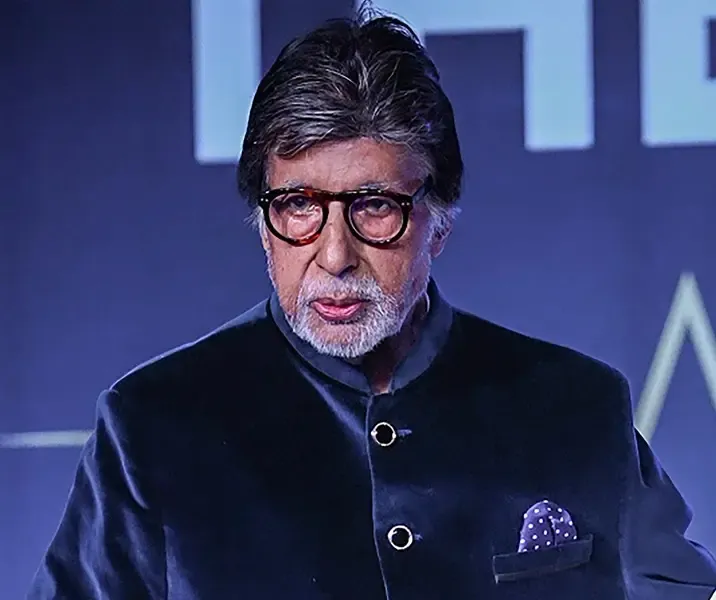
Amitabh Bachchan has revealed on KBC Season 18 that his iconic hairstyle was never a style statement — it was a fix. Producers told the young actor his height would scare off heroines and his face was too small for the screen. His solution: grow his hair to his temples. The rest, as Hindi cinema history shows, is legend.
Key Takeaways
Amitabh Bachchan spoke about his early career struggles on Kaun Banega Crorepati Season 18 .
Producers flagged two concerns: his height (no heroine would work with him) and his small face .
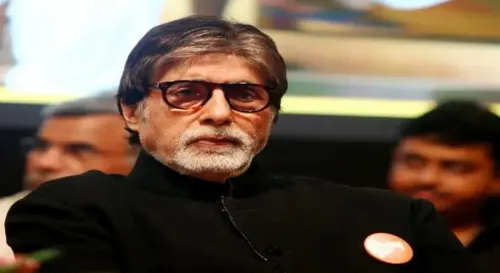
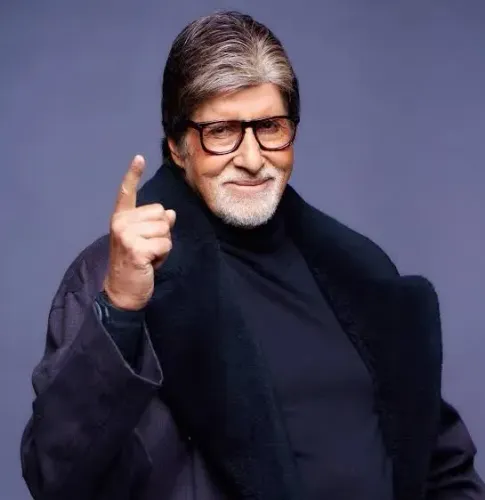
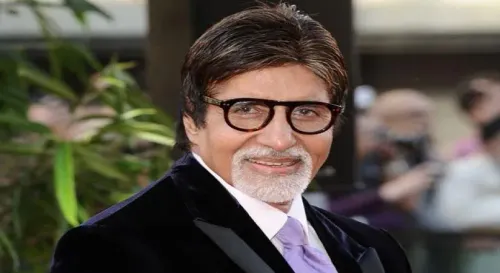
His now-iconic hairstyle — with hair grown to the temples — was a deliberate workaround to make his face appear fuller.
Bachchan made his debut with Saat Hindustani in 1969 ; his breakthrough came with Zanjeer in 1973 .
His subsequent films — including Sholay , Deewaar , and Don — turned those early liabilities into defining traits of a generational screen icon.
Veteran Bollywood star Amitabh Bachchan has revealed the surprising origin story behind his now-iconic hairstyle — one born not of style, but of survival. Speaking candidly during an episode of Kaun Banega Crorepati Season 18, Big B disclosed that early in his career, producers raised two specific concerns that threatened to derail his entry into Hindi cinema.
What Producers Told a Young Amitabh
The conversation was sparked by a contestant named Vinamra, whose grandfather was a film distributor and who noted how Bachchan's signature long sideburns and swept hairstyle had become inseparable from his larger-than-life screen image. Responding to the observation, the actor offered a candid and self-deprecating explanation.
In his own words, Bachchan said: 'Sir, kya hain ki shuruvat mein jab hum filmo mein aaye toh kaam milne keliye toh producer doh cheez pe humme bolte the ki humari height lambi hain toh koi heroine kaam nahi karegi aur dusra ki humara chehra bohot chota hain. Toh kya hain usko bharne keliye humne humare baal badaye aur baal ko kaanpati tak ughaya jisse humara chehra bhar bhara lage.'
Translated, the actor explained that producers told him his considerable height meant no heroine would agree to be paired with him, and that his face was considered too small for the screen. His solution was to grow his hair out to his temples, lending his face greater visual fullness.
The Hairstyle That Became a Cultural Marker
What began as a pragmatic workaround to industry scepticism eventually transformed into one of the most recognisable looks in Indian cinema history. The sideburns and flowing hair became as much a part of his identity as his baritone voice, long before the phrase 'personal branding' entered the entertainment lexicon.
This is not the first time Bachchan has reflected openly on adversity — over the decades, he has spoken about financial struggles, a near-fatal accident on the sets of Coolie in 1982, and a prolonged professional slump in the late 1980s and early 1990s. His candour on KBC has consistently drawn attention, making the show as much a platform for his own storytelling as for contestants.
The Rise of the 'Angry Young Man'
Bachchan made his acting debut with Saat Hindustani in 1969. Despite early recognition, sustained success proved elusive for several years. His career trajectory changed decisively with the cult classic Zanjeer in 1973, which cast him as the quintessential 'Angry Young Man' of Hindi cinema and redefined the era's mainstream hero archetype.
A string of landmark films followed — Deewaar, Sholay, Don, Amar Akbar Anthony, and Muqaddar Ka Sikandar among them — cementing his status as the dominant star of an entire generation. The very physical attributes that producers once flagged as liabilities became, in the audience's imagination, defining marks of his authority on screen.
Significance of the Revelation
The anecdote offers a rarely glimpsed window into the gatekeeping dynamics of Bollywood in the late 1960s and early 1970s, when a prospective star's physical dimensions were subject to blunt industry calculations. That one of the greatest careers in Indian film history nearly stalled over height and facial proportions adds a striking footnote to a legacy that now spans more than five decades.
Bachchan continues to remain active in cinema, television, and brand endorsements well into his eighties, a trajectory that makes the story of his hesitant beginnings all the more resonant.
Point of View
But it also quietly exposes the arbitrary gatekeeping that has long governed Bollywood casting — where physical metrics, not talent, determined access. That Bachchan had to engineer a hairstyle to pass a producer's checklist is a reminder that the industry's eye for star quality is often retrofitted after the fact. Mainstream coverage will treat this as a warm nostalgia moment; the sharper read is that the same filters — height, complexion, facial 'type' — still operate in 2026, just with different vocabulary. Bachchan's longevity is exceptional precisely because he routed around that system.
NationPress
6 Oct 2026
Frequently Asked Questions
Why did Amitabh Bachchan grow his iconic hairstyle?
Amitabh Bachchan grew his hair to his temples early in his career to make his face appear fuller, after producers told him his face was too small for the screen. The hairstyle, born of practicality, eventually became one of the most recognisable looks in Indian cinema.
What did producers tell Amitabh Bachchan about working with heroines?
Producers told the young Bachchan that his considerable height meant no heroine would agree to be paired opposite him, making it difficult to cast him in lead roles. He revealed this during an episode of Kaun Banega Crorepati Season 18.
When did Amitabh Bachchan make his Bollywood debut?
Amitabh Bachchan made his acting debut with Saat Hindustani in 1969. His career breakthrough, however, came four years later with Zanjeer in 1973, which established his 'Angry Young Man' persona.
Where did Amitabh Bachchan share this anecdote?
The actor shared the story on the sets of Kaun Banega Crorepati Season 18, in conversation with a contestant named Vinamra, whose grandfather had been a film distributor.
Which films made Amitabh Bachchan a superstar after his early struggles?
After his breakthrough with Zanjeer in 1973, Bachchan delivered a series of defining performances in films including Deewaar, Sholay, Don, Amar Akbar Anthony, and Muqaddar Ka Sikandar, establishing him as the dominant star of his era.