Gajendra Chauhan slams Ramayana film: 'Dialogue delivery lacks divine weight'
Synopsis
Former FTII chief Gajendra Chauhan has taken aim at the ₹4,000 crore Ranbir Kapoor-led Ramayana, arguing that the film's dialogue delivery lacks the divine gravity such characters demand — and that VFX spectacle is no substitute for worthy casting. His remarks, grounded in his own experience playing Yudhishtir on television, inject a heavyweight voice into an already polarised public debate.
Key Takeaways
Gajendra Chauhan , former FTII chairperson, criticised Ranbir Kapoor 's Ramayana on 15 November 2026 in Mumbai .
He objected to the film's title spelling, arguing the correct form is 'Ramayan' , not 'Ramayana'.
Chauhan said the film's divinity is 'the divinity of VFX' and that mythological films are made with artistic capability, not money alone.
His central critique: the dialogue delivery of the artists lacks the divine weight expected of characters who are worshipped.
He acknowledged his critique is based on clips , not a full viewing of the film.
The film has reportedly been made at a cost of ₹4,000 crore , making it one of India's most expensive productions.
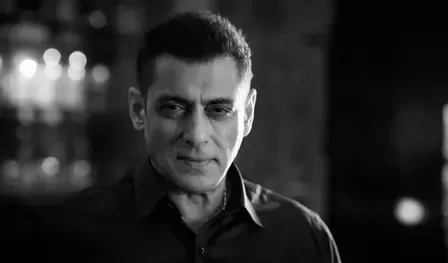
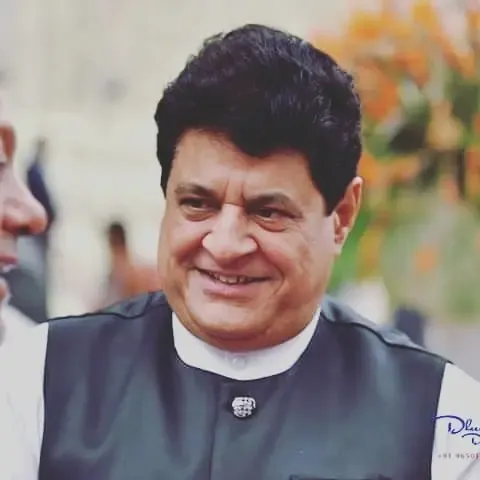
Actor Gajendra Chauhan, former chairperson of the Film and Television Institute of India (FTII), has openly criticised the recently released mythological epic Ramayana, starring Ranbir Kapoor, citing concerns about dialogue delivery and the casting philosophy that underpins the big-budget production. Chauhan, known for his portrayal of Yudhishtir in B.R. Chopra's iconic television adaptation of the Mahabharata, made his remarks on 15 November 2026 in Mumbai.
The 'Ramayan' Versus 'Ramayana' Debate
Chauhan began by flagging what he described as a linguistic and cultural misstep. "'Ramayana' is not a word. It is 'Ramayan'," he said. "Ramayan is our heritage. Mahabharata is our heritage. It is the heritage of the country. And we are very proud of these two books." He claimed to be among the first voices to publicly raise this objection, arguing that the anglicised spelling dilutes the sanctity of a text central to Indian civilisation. The film's makers and director, he noted, have continued to use the spelling Ramayana in all official communications.
On the Weight of Divinity — and the Limits of VFX
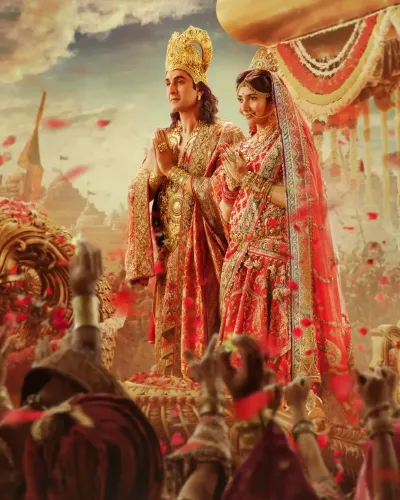
While acknowledging that the film has drawn polarised responses — "some say it is good, some say it is bad" — Chauhan was pointed in his assessment of where it falls short. "There is divinity in the film. There is divinity, but it is the divinity of VFX," he said, suggesting that spectacle had been substituted for authenticity. He contrasted this with the production philosophy of B.R. Chopra, who, Chauhan recalled, insisted that every actor cast in the Mahabharata be worthy of the role, both in personality and physicality. "The king should look like the king," he emphasised. "If you make a 4 feet tall man as Yudhishtir, then how will he look?"
Dialogue Delivery: The Core Objection
Chauhan clarified that his critique of Ramayana is based on clips rather than a full viewing of the film — a caveat he acknowledged upfront. Even so, he said the excerpts left him unimpressed, specifically on the question of how divine characters speak on screen. "His dialogues should look like they have come from the mouth of God… from the mouth of those characters who are worshipped," he said. "The dialogue delivery between the artists, or the weight that should be there in it — God does not say anything small." He argued that there must be 'calmness in the vacuum' around a god-like character's speech, a quality he felt was absent in what he had seen.
Budget, Casting and the Bigger Question
The film has reportedly been made at a cost of ₹4,000 crore, making it one of the most expensive Indian productions in history. Chauhan, however, suggested that money alone cannot substitute for the intangible qualities a mythological epic demands. "Any mythological subject is not made with money… It is made with the capability of the artists," he said. This comes amid a broader industry conversation about whether large-scale VFX productions can carry the cultural and emotional resonance that audiences expect from adaptations of revered texts. Notably, several other artists have reportedly commented on the film, with some highlighting its sense of divinity — a point Chauhan does not entirely dispute, only contextualises differently.
What This Signals for Big-Budget Mythological Cinema
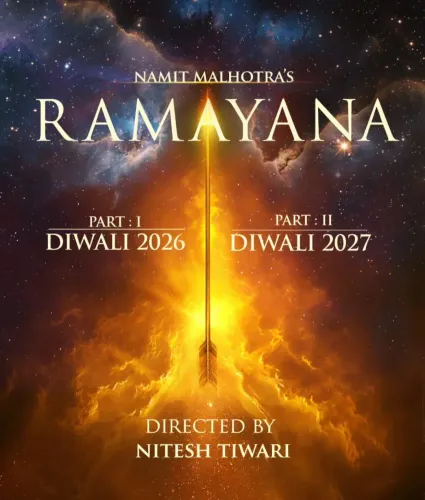
The Ramayana adaptation, starring Ranbir Kapoor, has been one of the most anticipated Hindi films in recent memory, with its scale and production ambition drawing comparisons to international fantasy franchises. Chauhan's critique, coming from a veteran actor who has himself inhabited a mythological role that defined a generation's cultural imagination, adds an authoritative voice to what has become a live debate on social media and among film circles. How the makers respond — and whether audience reception ultimately validates or challenges Chauhan's concerns — will be watched closely as the film continues its theatrical run.
Point of View
Lower-budget productions earned organically? The ₹4,000 crore price tag may be the film's greatest liability in this debate — it sets a scale that invites scrutiny on every dimension, including the one Chauhan identifies, where money most visibly cannot help. What is missing from mainstream coverage is the structural point: India is producing its most expensive mythological films at a moment when the audience's familiarity with and emotional attachment to these epics is deeper than ever, raising the bar in ways no budget can clear by itself.
NationPress
15 Nov 2026
Frequently Asked Questions
What did Gajendra Chauhan say about the Ramayana film?
Gajendra Chauhan criticised the Ranbir Kapoor-starrer Ramayana on 15 November 2026, saying the dialogue delivery lacks the divine weight expected of characters who are worshipped, and that the film's sense of divinity is essentially 'the divinity of VFX' rather than authentic artistic capability. He also objected to the anglicised spelling 'Ramayana', arguing the correct term is 'Ramayan'.
Has Gajendra Chauhan watched the Ramayana film in full?
No. Chauhan clarified that his critique is based on clips of the film rather than a full viewing. He stated he had not seen the entire film but had seen enough to form a view on the dialogue delivery and characterisation.
Why does Chauhan believe casting is central to mythological films?
Chauhan drew on the production philosophy of B.R. Chopra's Mahabharata, in which he played Yudhishtir, to argue that a performer must be physically and personally worthy of a mythological role. He said divine characters are 'larger than life' and must be looked up to with respect — a quality that cannot be assigned arbitrarily regardless of a film's budget.
What is the reported budget of the Ramayana film?
The Ranbir Kapoor-starrer Ramayana has reportedly been made at a cost of ₹4,000 crore, making it one of the most expensive Indian productions in history. Chauhan referenced this figure to argue that mythological subjects cannot be made with money alone.
Who is Gajendra Chauhan and why does his opinion carry weight?
Gajendra Chauhan is a veteran Indian actor best known for playing Yudhishtir in B.R. Chopra's landmark television adaptation of the Mahabharata. He also served as chairperson of the Film and Television Institute of India (FTII). His experience portraying a central mythological figure gives his critique of casting and dialogue in mythological cinema particular authority.