CINTAA data leak row: Poonam Dhillon, Padmini Kolhapure question Upasana Singh over privacy breach
Synopsis
CINTAA's internal war just turned into a data privacy flashpoint. Poonam Dhillon and Padmini Kolhapure allege members' KYC details — including Aadhaar and PAN data of stars like Amitabh Bachchan and Shah Rukh Khan — were leaked to FWICE, while a late-night password request by Upasana Singh has deepened suspicions of unauthorised access.
Key Takeaways
Poonam Dhillon and Padmini Kolhapure alleged CINTAA members' private data — including Aadhaar and PAN details — was shared with FWICE without authorisation.
Upasana Singh reportedly sought CINTAA's digital account passwords at 11:30 pm , raising alarm among office-bearers.
CINTAA's CEO office was allegedly sealed with masking tape bearing numbers, dates, and handwritten signatures.
An unidentified person reportedly chained and locked the CINTAA office; CCTV footage has helped identify them.
The dispute centres on elections, resignations, and control of the association's operations and records.
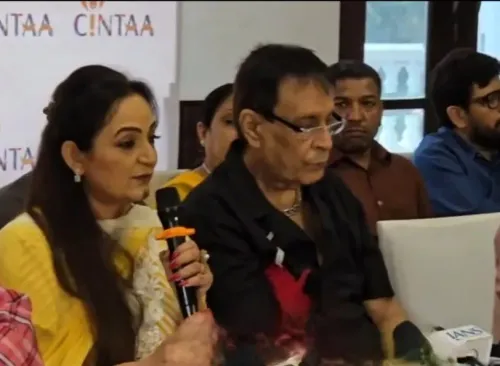
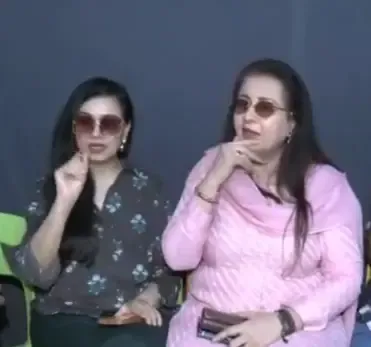
Actors and CINTAA (Cine & TV Artistes' Association) office-bearers Poonam Dhillon and Padmini Kolhapure have raised serious concerns over an alleged breach of members' personal data, questioning fellow member Upasana Singh over how the association's private records were reportedly accessed and shared externally. The confrontation comes amid a widening internal dispute within CINTAA over elections, resignations, and control of the association's operations in Mumbai.
How members' data was allegedly shared
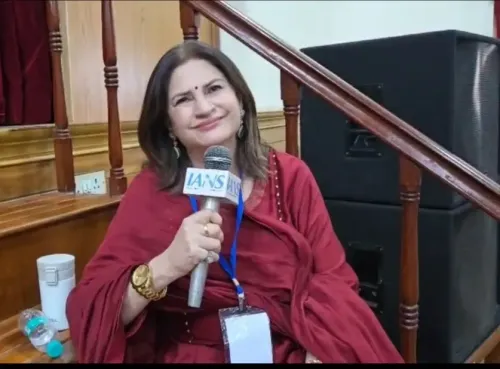
Speaking to reporters, Poonam Dhillon questioned how the Federation of Western India Cine Employees (FWICE) obtained CINTAA members' personal contact details. She alleged that SMS messages and communications had been sent to members using information that should have remained confidential.
'First of all, how is FWICE sending out SMSs and messages to all our members? Where did they get our data from? It's very private data,' Poonam said.
She noted that CINTAA maintains sensitive KYC records, including Aadhaar cards, PAN cards, phone numbers, and private email addresses of its members. 'We cannot let any association take all our data and send messages to all of them because they have access to it. How did they get access to it? I want to know. That's a big question,' she added.
Privacy stakes for high-profile members
Poonam underscored that the alleged breach carries particular weight given the nature of CINTAA's membership, which includes prominent film personalities such as Smriti Irani, Amitabh Bachchan, Shah Rukh Khan, and Hrithik Roshan — all of whom are known to guard their personal information closely. The leak of such data, she suggested, could have far-reaching consequences for members' safety and privacy.
Late-night password request raises alarm
In a separate but related disclosure, Poonam recalled an incident involving CINTAA's digital accounts. She said the association follows a security protocol under which passwords are changed periodically and that neither the erstwhile president nor the general secretary had direct access to login credentials — these were managed exclusively by staff.
According to her, Upasana Singh reportedly sent a message to the executive committee group at approximately 11:30 pm seeking password access. 'I said 11:30? Why is she asking this at 11:30 in the night?' Poonam recalled, noting that access to email passwords could potentially unlock CINTAA's Google Drive, hard drives, and other sensitive data repositories.
Office access dispute and alleged sealing
The two office-bearers also addressed allegations that documents had been removed from CINTAA's office. They said that after new personnel began working, regular meetings continued because the association's members still required services.
However, access to the office itself reportedly became contentious. Poonam and Padmini alleged that an unidentified individual had placed a chain and lock on the office premises. They said CCTV footage had helped them identify the person, though they declined to reveal the name, indicating they were evaluating whether to take formal action.
More strikingly, they alleged that the CINTAA CEO's office had been sealed with masking tape bearing numbers, dates, and handwritten signatures. 'We can't open it. Who has given them the right? They have unlawfully done it,' Poonam stated.
Election dispute and resignation confusion
The broader dispute within CINTAA has been simmering for weeks, with questions raised over elections, resignations, and institutional governance. Poonam recalled the discussion that followed Upasana Singh's reported call for fresh elections. She said confusion arose over whether existing office-bearers were expected to resign before the election process could begin, and clarified that they had not agreed to step down.
This is not the first time a creative-industry association has faced internal governance turmoil, but the alleged data breach adds a digital-age dimension that could invite scrutiny under India's data protection framework. With neither side showing signs of backing down, the dispute appears headed for further escalation, potentially involving legal proceedings.
Point of View
PAN cards, private emails. If those records were indeed shared with an external body without members' consent, it raises questions not just of internal governance but of potential violations under India's Digital Personal Data Protection Act. The fact that neither faction has yet moved to an independent audit or a formal complaint suggests this remains more about leverage than accountability — and that is precisely the problem.
NationPress
13 Sept 2026
Frequently Asked Questions
What is the CINTAA data leak controversy about?
CINTAA office-bearers Poonam Dhillon and Padmini Kolhapure have alleged that members' private data — including Aadhaar, PAN, phone numbers, and email addresses — was shared with FWICE without authorisation. They have questioned Upasana Singh over how external parties obtained this sensitive information.
Who are the key figures involved in the CINTAA dispute?
The main figures are actors Poonam Dhillon and Padmini Kolhapure, who serve as CINTAA office-bearers, and Upasana Singh, who is at the centre of the allegations regarding data access and a call for fresh elections.
Why is the alleged data breach significant?
CINTAA's membership includes high-profile personalities such as Amitabh Bachchan, Shah Rukh Khan, and Hrithik Roshan. The association holds sensitive KYC details, making any unauthorised sharing a serious privacy concern, potentially under India's data protection laws.
What happened at the CINTAA office?
The office-bearers allege an unidentified person chained and locked the CINTAA office, and that the CEO's office was sealed with masking tape bearing numbers, dates, and handwritten signatures. CCTV footage has reportedly helped identify the person responsible.
What is the current status of elections within CINTAA?
Upasana Singh reportedly called for fresh elections, but Poonam Dhillon clarified that existing office-bearers have not agreed to resign as a precondition. The election process and governance control remain contested between the factions.