George Clooney reveals Terrence Malick cut him from 'The Thin Red Line'
Synopsis
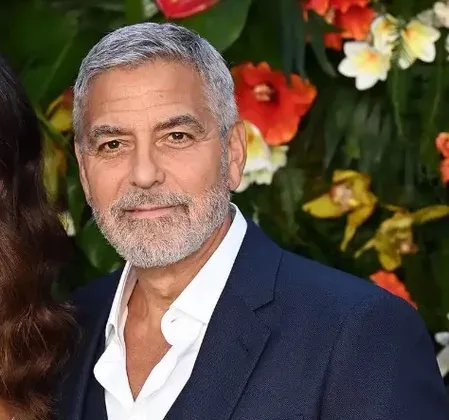
George Clooney spent months filming Terrence Malick's 'The Thin Red Line' in Australia — and made it into exactly one scene. His candid Biennale Cinema 2026 Masterclass account adds a first-person voice to Malick's legendary habit of building and then dismantling entire performances in the edit suite.
Key Takeaways
George Clooney revealed at Biennale Cinema 2026 that Terrence Malick cut him almost entirely from 'The Thin Red Line' after months of shooting in Australia .
Only one scene — the film's final scene — survived Malick's edit featuring Clooney.
Clooney said he joined the production to support Malick's return to filmmaking after a 15-year absence.
Clooney also discussed his directorial debut, 'Confessions of a Dangerous Mind' ( 2002 ), which came about after Steven Soderbergh challenged him to direct it. 'The Thin Red Line' ( 1998 ) is an adaptation of James Jones' 1962 novel and was nominated for the Academy Award for Best Picture .
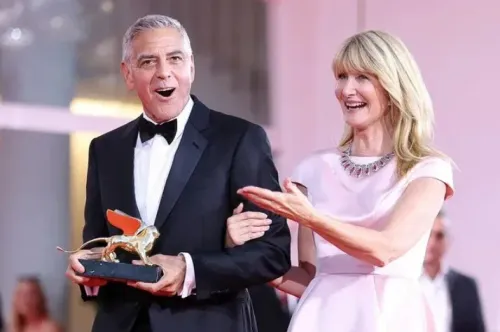
Actor-filmmaker George Clooney has opened up about one of Hollywood's most striking behind-the-scenes stories — spending months shooting Terrence Malick's critically acclaimed 1998 war epic 'The Thin Red Line' in Australia, only to be cut almost entirely from the final film. Clooney made the revelation during a Masterclass at Biennale Cinema 2026, offering a candid window into the realities of working with one of cinema's most uncompromising auteurs.
How Clooney Got Behind the Camera
Before discussing Malick, Clooney traced his unlikely path to directing. He recalled how 'Confessions of a Dangerous Mind' — a project that had languished in development for years — finally came together through a challenge from his collaborator Steven Soderbergh.
'Confessions of a Dangerous Mind had been around for a long time, lot of directors tied to it and it wasn't getting made… And I went to Steven Soderbergh, he was my partner and he said if I want to get this made will you direct it,' Clooney said.
Soderbergh's offer came with an unusual safety net. 'He said I can't, I don't have the time and he said you should direct it and I was like I don't really know how and he said I'll make you a deal — you direct it and if you totally f*** it up I'll take over. And luckily for me he didn't have to,' Clooney recalled. 'Confessions of a Dangerous Mind', released in 2002, marked Clooney's directorial debut and starred Sam Rockwell as game show host and producer Chuck Barris, based on Barris' 1984 unauthorised autobiography of the same name.
Clooney on Filmmaking as Art
Reflecting on the craft of cinema, Clooney was characteristically candid about the spectrum of his own work. 'Sometimes it's an art and sometimes it's not… I have done some films that are definitely not art… But when you do it right it is art. The director is the painter and everything else is the paint,' he said.
He underscored the near-absolute authority a director holds over an actor's screen presence. 'An actor only affects as much as a director decides… I could change any actor's performance as a director. I could cut him out for that matter,' Clooney added — a remark that set up his next revelation perfectly.
The Thin Red Line: Months of Work, One Scene Remaining
Clooney then disclosed the full extent of his experience on 'The Thin Red Line', the epic war film written and directed by Terrence Malick. Malick had been absent from filmmaking for 15 years before returning with the project, and Clooney said he was motivated by a desire to support the director's comeback.
'I remember I did The Thin Red Line — it was an interesting film. Terrence Malick was coming back, he hadn't worked in 15 years and wanted to come back and do a film… So I thought I want to help him get this film made and I want to do this part for him, and I was in Australia shooting for months and then he cut me completely out except the last scene in the film,' Clooney said.
He appeared to take the episode in good humour. 'The very last scene in the film… And he's like pretty fun. So you can change people's performances,' he quipped. 'The Thin Red Line' is the second screen adaptation of James Jones' 1962 novel of the same name, following a 1964 film version. The Malick film portrays a fictionalised account of the Battle of Mount Austen, part of the Guadalcanal campaign in the Pacific Theatre of the Second World War, following US soldiers of C Company, 1st Battalion, 27th Infantry Regiment, 25th Infantry Division.
What the Anecdote Reveals About Malick's Process
Malick is widely known for his unconventional approach to filmmaking — shooting vast amounts of footage, often improvised, and reshaping narratives entirely in the edit. 'The Thin Red Line' famously featured an ensemble cast including Sean Penn, Jim Caviezel, and Adrien Brody, several of whom also found their roles dramatically reduced in the final cut. Clooney's account adds another first-person dimension to that well-documented pattern. The film went on to receive widespread critical acclaim and was nominated for the Academy Award for Best Picture at the 71st Academy Awards.
Clooney's Masterclass remarks serve as a reminder that in Malick's cinema, even months of on-location work offer no guarantee of screen time — and that, as Clooney himself noted, the director ultimately holds every card.
Point of View
But it points to something more structurally significant about how Malick works — and what it costs actors who sign on. Multiple major names from 'The Thin Red Line' cast experienced the same erasure, yet the film's mythology has only grown. The real question is whether Malick's edit-room omnipotence is creative genius or a power dynamic that deserves more scrutiny. That Clooney frames it with a quip rather than grievance says as much about Hollywood's tolerance for auteur excess as it does about his own equanimity.
NationPress
24 Oct 2026
Frequently Asked Questions
Why did Terrence Malick cut George Clooney from 'The Thin Red Line'?
No official reason has been given by Malick, who is known for radically reshaping films in post-production. Clooney said he spent months filming in Australia and was reduced to a single scene — the film's final scene — without any public explanation from the director.
What is 'The Thin Red Line' about?
'The Thin Red Line' is a 1998 war epic written and directed by Terrence Malick, adapted from James Jones' 1962 novel. It depicts a fictionalised account of the Battle of Mount Austen during the Guadalcanal campaign in the Pacific Theatre of the Second World War.
Where did George Clooney make these revelations?
Clooney spoke about his experience at a Masterclass held during Biennale Cinema 2026, where he also discussed his directorial debut 'Confessions of a Dangerous Mind' (2002).
What was George Clooney's directorial debut?
'Confessions of a Dangerous Mind' (2002) was Clooney's first film as director. He took on the project after Steven Soderbergh challenged him to direct it, with Soderbergh offering to step in if things went wrong — a safety net that, Clooney said, ultimately was not needed.
Was Clooney the only actor cut from 'The Thin Red Line'?
No. Several members of the film's large ensemble cast, including Adrien Brody, reportedly had their roles significantly reduced in Malick's final cut. Clooney's account is among the most detailed first-person confirmations of this pattern.