Daayra review: Meghna Gulzar's 4.5-star thriller challenges justice itself
Synopsis
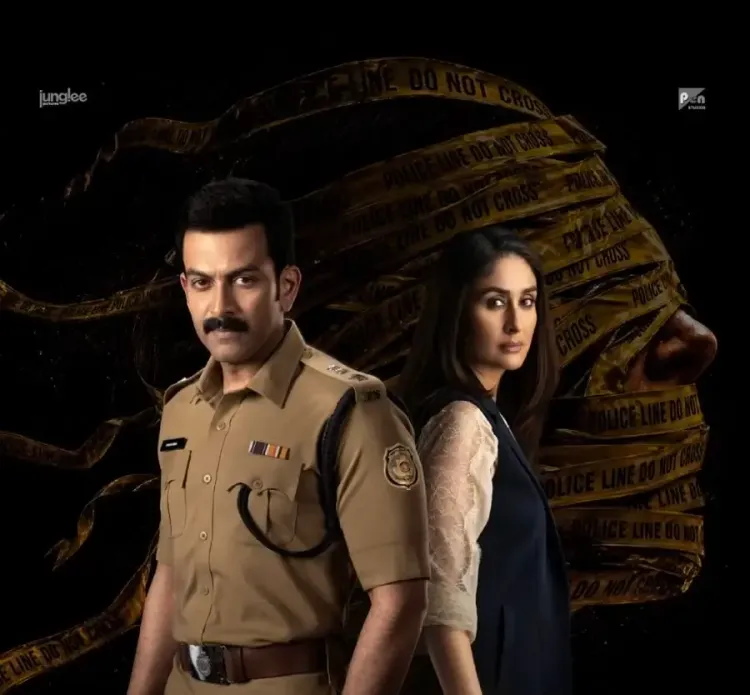
Meghna Gulzar's 'Daayra' doesn't just tell a crime story — it weaponises the investigation as a mirror. With Kareena Kapoor Khan and Prithviraj Sukumaran playing cops who agree on guilt but disagree on law, the film dares to ask whether a broken justice system eventually justifies breaking the rules — and refuses to answer.
Key Takeaways
Daayra directed by Meghna Gulzar releases in theatres on 18 September .
The film earns 4.5 out of 5 stars for its morally complex, grounded storytelling.
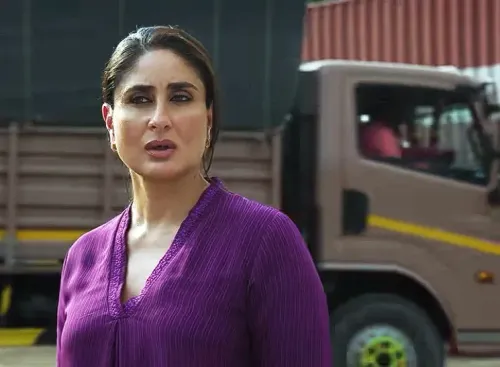
Kareena Kapoor Khan plays DCP Ajooni Kohli , an officer investigating a police encounter; Prithviraj Sukumaran plays DCP Raman Kumar , the officer at the centre of it.
The screenplay by Meghna Gulzar , Sima Agarwal and Yash Keswani avoids easy moral conclusions, letting two competing ideas of justice drive the conflict.
Minor pacing issues in the dialogue-heavy second half are the film's only significant flaw.
Produced by Junglee Pictures and Pen Studios ; distributed by Pen Marudhar .
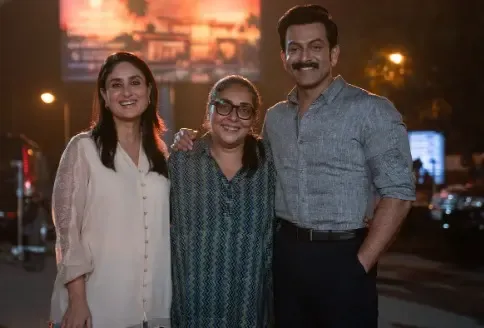
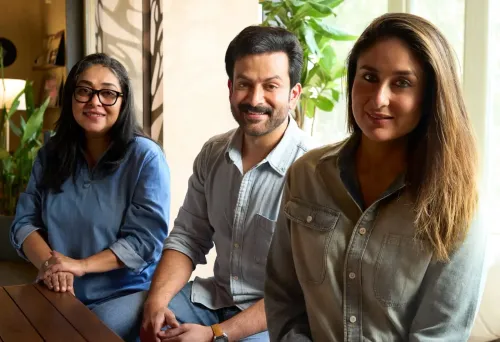
Director Meghna Gulzar's 'Daayra', releasing in theatres on 18 September, is a morally charged crime drama that pits two police officers — and two entirely different philosophies of justice — against each other. Starring Kareena Kapoor Khan and Prithviraj Sukumaran, the film earns a confident 4.5 out of 5 stars for its refusal to offer easy answers on one of the most uncomfortable questions modern law enforcement faces.
The Story at the Centre
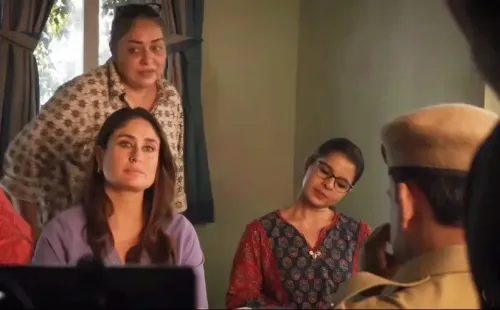
DCP Ajooni Kohli, played by Kareena Kapoor Khan, and DCP Raman Kumar, played by Prithviraj Sukumaran, are colleagues brought together by a serious rape case — and immediately divided by their response to it. Raman is convinced that perpetrators of such crimes deserve punishment beyond what slow, bureaucratic legal processes typically deliver. Ajooni is handed the task of investigating an encounter and probing the circumstances that led to it.
What unfolds is not a simple procedural thriller. As Ajooni's investigation deepens, the film layers in questions about police authority, evidence integrity, public pressure and the social machinery that routinely turns its scrutiny on victims rather than perpetrators. The central conflict is never reduced to hero versus villain — both officers are animated by genuine moral conviction, and that ambiguity is precisely where Daayra finds its power.
Kareena Kapoor Khan's Finest Recent Work
Kareena Kapoor Khan delivers what may be one of her most controlled and assured performances in years. DCP Ajooni is not written as a stock 'tough female cop' archetype — she has interiority, personality and a convincing institutional authority that Kareena conveys largely through posture, restraint and precision of expression. There is no performative aggression, no theatrical speech-making; just the quiet, measured presence of someone who knows exactly which battles to fight and when.
The emotional sequences, in particular, are handled with a discipline that keeps sentiment from tipping into melodrama. It is a textured, grounded performance that deserves to be counted among the better work she has done on screen.
Prithviraj Sukumaran Matches Her Beat for Beat
Prithviraj Sukumaran is equally effective as DCP Raman Kumar. His character carries anger, conviction and a self-righteous certainty about his own version of justice — but Prithviraj resists the temptation to play him as an overtly aggressive caricature. The intensity is sustained, controlled and, crucially, comprehensible: Raman is not a bad man. He is a man who has decided that the system has failed, and that decision is written into every scene he shares with Kareena.
Their professional friction becomes the film's most compelling engine. The disagreement between them is not personal; it is philosophical — two interpretations of law, punishment and institutional responsibility colliding repeatedly. The supporting cast, including Kanwaljit Singh, Trupti Khamkar and Kshitee Jog, add credibility and texture without overstaying their welcome.
Gulzar's Direction and the Screenplay's Moral Architecture
The screenplay, written by Meghna Gulzar, Sima Agarwal and Yash Keswani, deliberately withholds resolution. This is a film that presents a situation, honours the complexity of competing viewpoints and then steps back — trusting the audience to sit with the discomfort. Gulzar has long been drawn to stories where individual choices ripple outward into social consequence ('Talvar', 'Raazi'), and Daayra continues that lineage with confidence.
Notably, the film handles sexual violence with unusual maturity — not as a shock device deployed for dramatic impact, but as a structural fact whose aftermath, institutional response and social distortion become the actual subject of the film. The central question the film poses — when justice takes too long, does the wait itself become injustice? — gives Daayra a contemporary resonance that extends well beyond its running time.
There are minor issues: the second half turns considerably more dialogue-heavy during the encounter investigation, and the procedural passages occasionally feel denser than they need to. The pacing dips where it should probably sharpen. These are real imperfections, though not ones that significantly diminish the overall effect.
Verdict
'Daayra', produced by Junglee Pictures and Dr Jayantilal Gada of Pen Studios and distributed by Pen Marudhar, is a gripping, seriously intended crime drama that earns its tension through character and moral complexity rather than action set pieces. It is thought-provoking without sacrificing its thriller bones, and its finest achievement is leaving the audience uncertain about who was right — which, for a film about the nature of justice, is exactly the correct outcome. It opens in theatres on 18 September.
Point of View
Police accountability and delayed justice for sexual violence has rarely been louder — and Gulzar is smart enough not to waste the timing. The film's real risk is its restraint: mainstream audiences primed for verdict-delivering dramas may resist a film that hands back the question unanswered. But that refusal to adjudicate is also what elevates it above the genre. Kareena Kapoor Khan's performance deserves particular attention — it is precisely the kind of unglamorous, authority-from-within portrayal that tends to get undervalued in awards conversations dominated by louder, more theatrical turns.
NationPress
17 Sept 2026
Frequently Asked Questions
What is the film 'Daayra' about?
'Daayra' is a crime drama directed by Meghna Gulzar in which two police officers — DCP Ajooni Kohli (Kareena Kapoor Khan) and DCP Raman Kumar (Prithviraj Sukumaran) — find themselves on opposite sides of a police encounter investigation stemming from a rape case. The film explores competing ideas of justice, institutional accountability and the social treatment of victims.
When does 'Daayra' release in theatres?
'Daayra' releases in theatres on 18 September. It is produced by Junglee Pictures and Pen Studios, and distributed by Pen Marudhar.
How has 'Daayra' been received by critics?
The film has earned 4.5 out of 5 stars. Critics have praised Meghna Gulzar's assured direction, the strength of both lead performances, and the screenplay's refusal to reduce a morally complex situation to a simple verdict. Minor pacing concerns in the second half are noted but considered secondary to the film's overall impact.
How does Kareena Kapoor Khan perform in 'Daayra'?
Kareena Kapoor Khan delivers one of her most controlled performances in recent years as DCP Ajooni Kohli. She conveys authority and moral seriousness through restraint and physicality rather than dramatic speeches, and her emotional scenes are handled with notable discipline.
Who wrote the screenplay for 'Daayra'?
The screenplay was written by Meghna Gulzar, Sima Agarwal, and Yash Keswani. It is notable for not rushing toward resolution, instead allowing the investigation to surface the legal, social and institutional complexities surrounding the case.