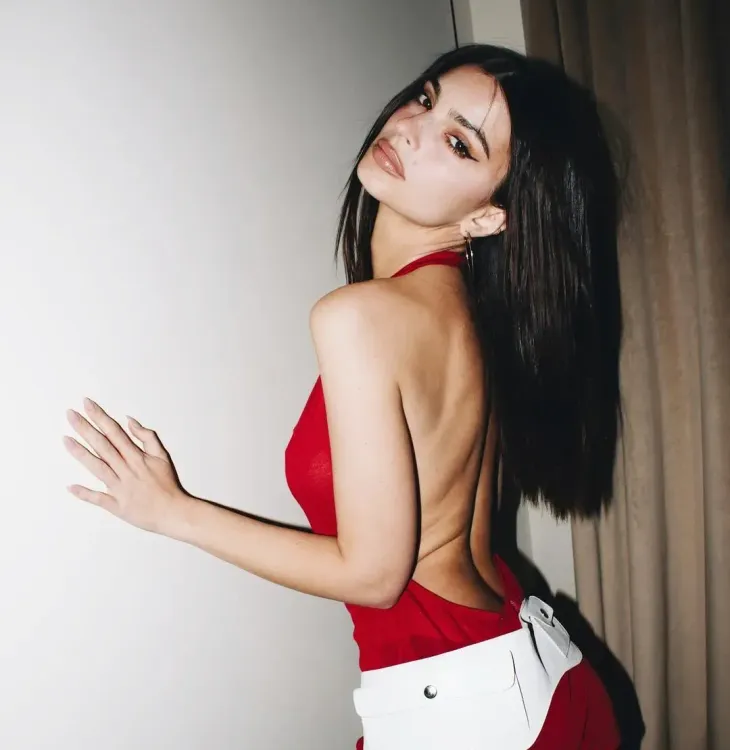
Emily Ratajkowski on becoming a 'villain' after her 2022 divorce
Synopsis
Emily Ratajkowski didn't just survive her 2022 divorce — she deliberately engineered a reinvention. In a raw essay for The Cut, she describes channelling Poison Ivy and Catwoman to shed the 'Madonna' identity, trading victimhood for a self-styled villain who drank gin martinis and owed no one sympathy.
Key Takeaways
Emily Ratajkowski split from film producer Sebastian Bear-McClard in 2022 after four years of marriage .
The couple share a five-year-old son, Sylvester .
In an essay for The Cut , Ratajkowski described deliberately adopting a 'sexual but scary' villain persona post-divorce.
She invoked Poison Ivy and Catwoman as the archetypes of the character she chose to embody during a period of compulsive dating.
She described the period as her 'villain origin story' and said she learned that 'being alone was better than most partnerships.'
Hollywood actress and model Emily Ratajkowski has candidly revealed how she consciously reinvented herself as a 'sexual but scary' villain figure in the aftermath of her 2022 divorce — a transformation she has described as her 'villain origin story.'
The Split That Changed Everything
Ratajkowski separated from film producer Sebastian Bear-McClard, the father of her now five-year-old son Sylvester, in 2022 following four years of marriage. In a personal essay published in The Cut, she detailed the raw emotional state she was in just days after the split and the deliberate persona she chose to build in its wake.
What She Wrote in The Cut
In the essay, Ratajkowski described her post-divorce mindset in strikingly unfiltered terms. She wrote that she wanted to dismantle the identity she had carefully cultivated before motherhood and replace it with something altogether different. 'I decided to f*** my way into a new kind of woman,' she wrote, adding that just a week after her separation she found herself in Brooklyn, 'a shell-shocked and sleepless version of myself,' relying on friends to arrange introductions to available men as a form of distraction.
One such introduction was to a DJ — described as low-stakes because he lived locally, had been sober for over 10 years, and was a 'friend of a friend of a friend.' Ratajkowski clarified she did not pursue anything beyond friendship with him, but said the experience helped trigger a liberating new chapter.
The 'Villain' Persona She Embraced
The character she said she embodied during this period of 'compulsive dating' was, in her own words, a villain — invoking comic-book archetypes like Poison Ivy and Catwoman. 'Sexual but scary, and she drank gin martinis. Many, many gin martinis. She was not tragic. Nothing close to a victim. No-one needed to feel sorry for her. In fact, they should all be jealous,' she wrote.
Notably, Ratajkowski framed the experience not as recklessness but as self-reclamation — a way of refusing the role of the pitiable divorcée.
Lessons From the Experience
Ratajkowski, who was barely into her 30s when the marriage ended, reflected on what the period taught her. 'I'd learned the hard way that being alone was better than most partnerships,' she said. She also described how living in New York City as a single mother felt, in her framing, 'sexier and bohemian' — though she acknowledged she may have been telling herself a comforting story. Her essay positions the divorce not as a collapse but as an accelerated education in self-sufficiency that many women, she observed, only encounter in their mid-40s.
Point of View
She is refusing that transaction entirely. What mainstream coverage often misses is the class and geography subtext: she frames New York single motherhood as bohemian rather than difficult, which is a privilege not available to most women navigating the same circumstances. The essay is sharp, but its universalising impulse deserves scrutiny.
NationPress
13 Sept 2026
Frequently Asked Questions
Why did Emily Ratajkowski describe herself as a 'villain' after her divorce?
Ratajkowski used the term to describe the persona she consciously built after splitting from Sebastian Bear-McClard in 2022 — one that was 'sexual but scary' and refused the role of victim or object of pity. She wrote about this in a personal essay published in The Cut.
Who is Emily Ratajkowski's ex-husband?
Her ex-husband is film producer Sebastian Bear-McClard. The couple married in 2018 and separated in 2022 after four years together. They have one son, Sylvester, who is now five years old.
Where did Emily Ratajkowski publish her divorce essay?
She published the essay in The Cut, a New York Magazine publication known for first-person personal narratives. The piece details her emotional state immediately after the split and the choices she made in the weeks that followed.
What did Emily Ratajkowski say about being a single mother in New York?
She said that 'being a New Yorker made being a single mom feel sexier and bohemian,' while acknowledging that framing may have been a story she told herself to cope. She added that the experience taught her she had 'learned the hard way that being alone was better than most partnerships.'
Did Emily Ratajkowski date anyone after her divorce?
She described a period of 'compulsive dating' in the essay, including a brief introduction to a DJ in Brooklyn who had been sober for over 10 years. She clarified that the connection did not go beyond friendship, but said it helped initiate a freeing new stage of her life.