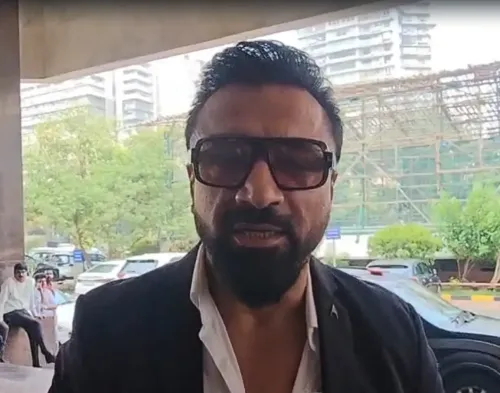
Imran Khan files writ petition in Bombay HC against FRRO 'Leave India' notice

Synopsis
Bollywood actor Imran Khan has moved the Bombay High Court to block an FRRO order asking him to leave India by 28 October — issued after his alleged participation in August Kranti Maidan protests. His petition challenges not just the substance but the entire procedure: no inquiry, no show-cause notice, and no consideration of his OCI residency rights. The case could set a precedent for millions of OCI cardholders worldwide.
Key Takeaways
Imran Khan filed a writ petition in the Bombay High Court on 17 October 2026 seeking a stay on the FRRO's expulsion order.
The FRRO directed Khan to leave India before 28 October for allegedly violating the Foreigners Act by participating in August Kranti Maidan protests.
The petition argues that no show-cause notice , prior inquiry, or opportunity to be heard was provided before the order was issued.
Khan's lifelong residency rights as an OCI cardholder were reportedly not considered by the FRRO.
BJP leader Kirit Somaiya had approached the Union Ministry of Home Affairs on 13 October , urging a Look Out Circular against Khan.
Bollywood actor Imran Khan has filed a writ petition in the Bombay High Court seeking an urgent stay on an order issued by the Foreigners Regional Registration Office (FRRO) directing him to leave India before 28 October. The petition, filed on 17 October 2026 in Mumbai, challenges both the substance and the procedure of the FRRO's directive, raising questions about due process and OCI cardholder rights.
What the Petition Argues
The petition contends that the FRRO failed to specify the precise immigration violation allegedly committed by Imran Khan, and urges the court to direct the authority to produce the record on the basis of which the decision was taken. Crucially, the petition states that Khan's lifelong residency rights as an Overseas Citizenship of India (OCI) cardholder were not taken into account before issuing the notice.
It further points out that Khan was given only 14 days to vacate the country — without a prior inquiry, a show-cause notice, or any opportunity to present his side of the matter.
The August Kranti Maidan Protest Background
The FRRO's order stems from Khan's alleged participation in protests held at August Kranti Maidan in Mumbai, which demanded the resignation of Chief Election Commissioner Gyanesh Kumar. The FRRO accused Khan of violating the Foreigners Act by taking part in the demonstration, on the ground that, as an OCI cardholder rather than a full citizen, he is not permitted to engage in political activity in India.
The petition, however, contests this characterisation. It argues that the protest site was not a restricted area and that Khan did not breach any barricades. It further states that Khan was in the process of leaving when he was suddenly surrounded by media personnel, after which he was detained.
BJP Leader's Role
The political pressure behind the FRRO notice has also come into focus. BJP leader and former Member of Parliament Kirit Somaiya approached the Union Ministry of Home Affairs and immigration authorities on 13 October, urging them to issue a Look Out Circular (LOC) against Khan. Somaiya's intervention preceded the FRRO's formal directive to leave by 28 October.
Key Legal and Constitutional Questions
The case raises significant questions about the rights of OCI cardholders in India — a status held by a large number of people of Indian origin settled abroad. OCI status ordinarily confers near-parity with Indian citizens for most purposes, but political participation remains a grey area. Legal observers note that the absence of a show-cause notice before the expulsion order, if upheld by the court, could set a precedent with wide implications for the OCI community. The Bombay High Court is yet to schedule a hearing date on the petition.
Point of View
And it is the detail that mainstream coverage has largely glossed over. OCI status was designed to offer people of Indian origin near-citizen rights, and a summary expulsion order with no stated violation and no opportunity to respond sits uneasily with that promise. Beyond Imran Khan the celebrity, this case is a test of what procedural protections OCI cardholders can actually count on when the state moves against them — a question that matters to millions of people. The political backdrop — a BJP MP's intervention preceding the FRRO order — adds a layer that courts will not adjudicate but the public will not ignore.
NationPress
17 Oct 2026
Frequently Asked Questions
Why has the FRRO ordered Imran Khan to leave India?
The FRRO directed Imran Khan to leave India by 28 October after alleging that he violated the Foreigners Act by participating in protests at August Kranti Maidan in Mumbai, which demanded the resignation of Chief Election Commissioner Gyanesh Kumar. As an OCI cardholder rather than a citizen, Khan is reportedly barred from political activity in India.
What does Imran Khan's writ petition argue?
The petition argues that the FRRO failed to specify the precise immigration violation, did not issue a show-cause notice, and gave Khan no opportunity to present his defence before ordering him to leave within 14 days. It also contends that his lifelong OCI residency rights were not taken into account.
What is OCI status and what rights does it confer?
Overseas Citizenship of India (OCI) is a form of long-term residency granted to people of Indian origin holding foreign nationality. It confers near-parity with Indian citizens for most purposes but does not include the right to vote or participate in political activity, which is the core of the FRRO's case against Khan.
Who is Kirit Somaiya and what role did he play?
Kirit Somaiya is a BJP leader and former Member of Parliament who approached the Union Ministry of Home Affairs and immigration authorities on 13 October, urging them to issue a Look Out Circular against Imran Khan before the FRRO issued its formal expulsion order.
What happens next in this case?
The Bombay High Court is yet to schedule a formal hearing date on the petition. If the court grants an interim stay, Imran Khan would be permitted to remain in India past the 28 October deadline while the case is argued on merits.