CM Fadnavis Offers Navratri Prayers at Nagpur Mandal
Synopsis
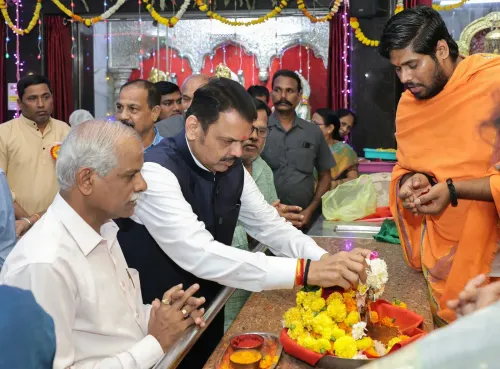
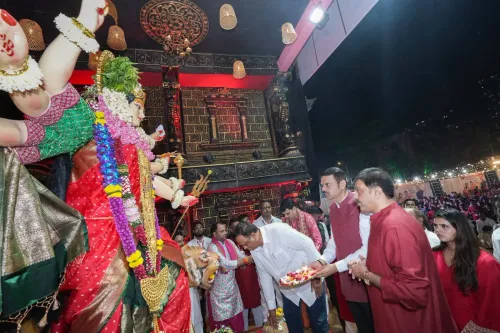
Maharashtra Chief Minister Devendra Fadnavis visited the Mahila Navdurga Utsav Mandal in Nagpur on October 17, 2026, offered aarti during Navratri, and prayed for the welfare of the entire state.
Key Takeaways
CM Devendra Fadnavis visited the Mahila Navdurga Utsav Mandal in Nagpur on October 17, 2026 , during the Navratri festival.
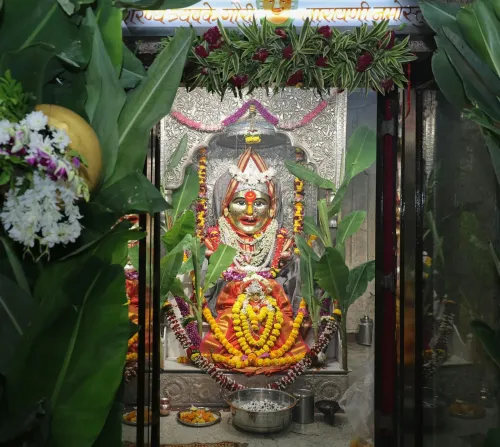
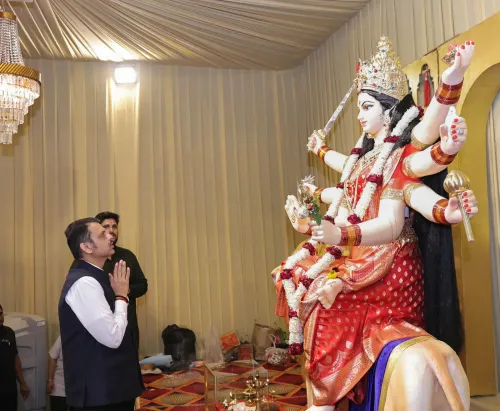
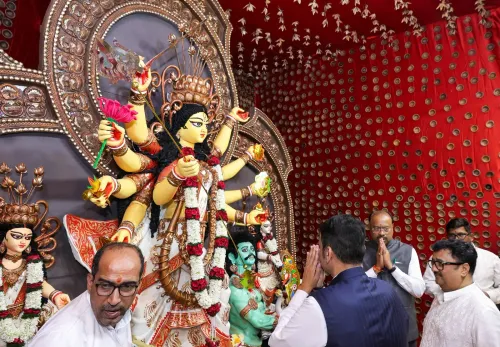
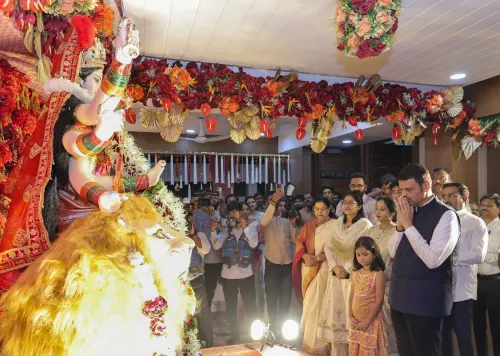
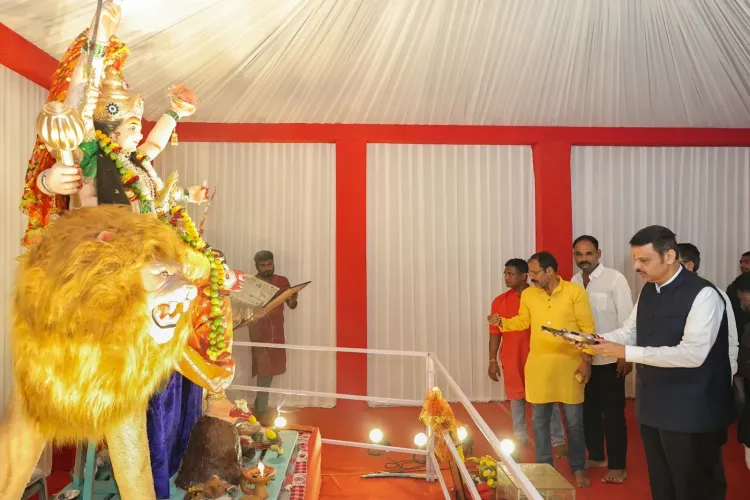
He bowed at the feet of Goddess Durga and performed the aarti at the mandal.
Fadnavis offered a prayer specifically for the welfare of the entire state of Maharashtra .
Nagpur , Maharashtra's winter capital, is also the CM's home constituency and a major Navratri celebration hub.
The visit follows a well-established tradition of Maharashtra's senior leaders participating in Navratri mandal events across the state.
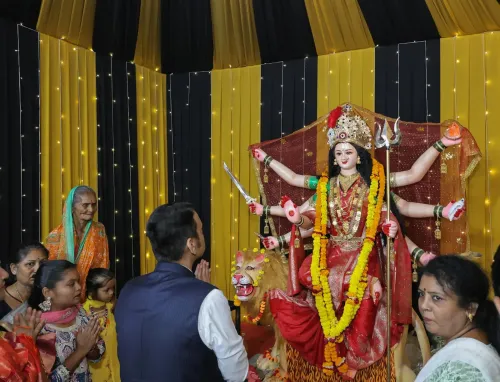
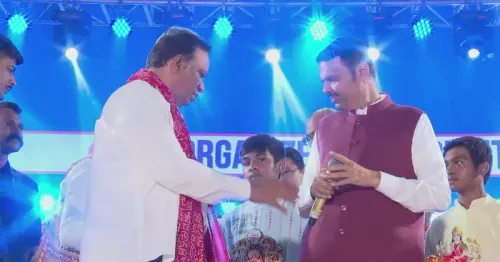
On the auspicious occasion of Navratri 2026, Maharashtra Chief Minister Devendra Fadnavis visited the Mahila Navdurga Utsav Mandal in Nagpur on Saturday, October 17, bowing at the feet of Goddess Durga and performing the evening aarti — and praying for the welfare of all of Maharashtra.
Sharing the visit on X, CM Fadnavis wrote in Marathi: 'नवरात्रीनिमित्त आज नागपूर येथील महिला नवदुर्गा उत्सव मंडळ येथे भेट देऊन देवीमातेच्या चरणी नतमस्तक झालो व आरती केली' — 'On the occasion of Navratri, I visited the Mahila Navdurga Utsav Mandal in Nagpur today, bowed at the feet of the Goddess, and performed the aarti.' He added that he prayed to the Goddess for the well-being of the entire state of Maharashtra.
Nagpur, Navratri, and the CM's home turf
Nagpur is not just Maharashtra's winter capital — it is Fadnavis's home constituency and a deeply significant cultural and political base for him. The city's Navratri celebrations draw large gatherings across its mandals and neighbourhood committees, making a CM's visit a moment that blends civic duty with personal faith.
The Mahila Navdurga Utsav Mandal is one of the prominent festival organisations in Nagpur that celebrates the nine-night festival with elaborate idols, devotional music, and community participation. Chief ministers and senior leaders visiting such mandals during Navratri is a long-established tradition in Maharashtra — a gesture that connects the state's highest office to its grassroots cultural fabric.
A ritual that echoes across Maharashtra
Navratri — the nine-night Hindu festival dedicated to Goddess Durga — is one of the most widely observed celebrations across India, with Maharashtra giving it a particularly vibrant character. For an elected leader, participation in these rituals carries a dual weight: personal devotion and public symbolism, an affirmation that the state's cultural pulse is felt at the very top.
Fadnavis's prayer specifically for 'sampurna Maharashtracha kalyan' — the welfare of the entire Maharashtra — frames the visit as more than a personal act of faith. It is a public statement of responsibility, offered at a moment when millions of devotees across the state are in prayer themselves.
Point of View
Participation in high-visibility festival events doubles as political outreach, keeping the party connected to neighbourhood-level community organisations. The specific invocation of welfare for 'the entire Maharashtra' is a deliberate framing that stretches a personal act of faith into a statement of governance intent. In a state as politically competitive as Maharashtra, such symbolic moments are rarely accidental.
NationPress
17 Oct 2026
Frequently Asked Questions
Where did CM Fadnavis offer Navratri prayers in 2026?
CM Devendra Fadnavis offered Navratri prayers at the Mahila Navdurga Utsav Mandal in Nagpur on October 17, 2026.
What is the Mahila Navdurga Utsav Mandal in Nagpur?
The Mahila Navdurga Utsav Mandal is a prominent Navratri festival organisation in Nagpur that celebrates the nine-night festival with community gatherings, elaborate idol installations, and devotional programmes.
What did Fadnavis pray for during Navratri 2026?
CM Fadnavis prayed to Goddess Durga for the welfare and well-being of the entire state of Maharashtra.
Why do Maharashtra leaders visit Navratri mandals?
Visiting Navratri mandals is a long-standing tradition for Maharashtra's political leaders, combining personal religious participation with public engagement at the community level during one of the state's most celebrated festivals.
What is Navratri and when is it celebrated?
Navratri is a nine-night Hindu festival dedicated to Goddess Durga, celebrated annually across India, with Maharashtra observing it through large community mandals, aarti ceremonies, and devotional events.