Sitharaman Invites Thai Cave Rescue Survivors to Bodh Gaya
Synopsis
Finance Minister Nirmala Sitharaman met members of the 2018 Thai Tham Luang cave rescue team, commended their courage, and invited them to visit Bodh Gaya in Bihar and Namsai in Arunachal Pradesh, reflecting India's Buddhist cultural diplomacy with Southeast Asia.
Key Takeaways
Nirmala Sitharaman met survivors of the 2018 Tham Luang cave rescue in Thailand, who were trapped for 18 days in a flooded cave.
She commended their courage and expressed gratitude to Lord Buddha for protecting the young lives.
Sitharaman invited the team — who practise Theravada Buddhism — to visit Bodh Gaya in Bihar and Namsai in Arunachal Pradesh .
The team members warmly accepted and expressed eagerness to visit India soon.
India has promoted Bodh Gaya under the Swadesh Darshan Buddhist Circuit since 2014 as a key religious tourism destination.
The engagement reflects India's use of shared Buddhist heritage under its broader Act East Policy to build people-to-people ties with Southeast Asia .
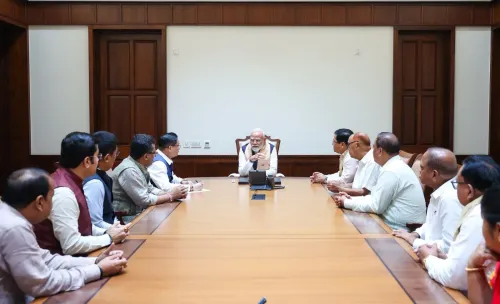
A meeting that began with shared memories of one of the most dramatic rescue operations in modern history ended with an invitation to walk the path of the Buddha. Union Finance Minister Nirmala Sitharaman met members of the Tham Luang cave rescue — the Thai youth football team and their coach who were trapped for 18 days in a flooded cave in Thailand in 2018 — and extended a personal invitation to visit Bodh Gaya in Bihar and Namsai in Arunachal Pradesh.
From a Flooded Cave to a Buddhist Invitation
The members shared their experiences and perspectives on the Tham Luang ordeal directly with Sitharaman, who commended their courage and resolve. She also expressed heartfelt gratitude to Lord Buddha for His blessings and for protecting the young lives through the ordeal. The moment carried unmistakable emotional weight — survivors of a near-tragedy, now being welcomed into a conversation about faith, heritage, and shared civilisational bonds.
Noting that the team practises Theravada Buddhism, Sitharaman extended the invitation to two sites of deep significance. The team members warmly accepted and expressed their eagerness to visit India soon.
Why Bodh Gaya and Namsai Are Not Incidental Choices
Bodh Gaya, a UNESCO World Heritage Site in Bihar, is where Gautama Buddha attained enlightenment — making it arguably the single most important pilgrimage destination for Buddhists across the world. Namsai, a district in Arunachal Pradesh, is home to a cluster of Theravada Buddhist monasteries and stands as a living centre of Buddhist culture in India's Northeast. For a group of young Theravada practitioners from Thailand, both destinations carry profound personal and spiritual resonance.
India has been developing the Buddhist Circuit under the Swadesh Darshan scheme since 2014, connecting pilgrimage sites including Bodh Gaya to promote religious tourism. Sitharaman's invitation fits neatly into that infrastructure — turning a cultural meeting into a potential footfall for one of India's most storied heritage corridors.
Buddhist Heritage as a Bridge to Southeast Asia
This is not an isolated gesture. India has consistently used its shared Buddhist heritage as a thread of cultural diplomacy with Thailand, Sri Lanka, Myanmar, Cambodia, and other Theravada nations in Southeast Asia. The Act East Policy — India's strategic framework for deepening ties with the region — has people-to-people contact as a core pillar, and invitations to sacred Buddhist sites form a recurring instrument of that outreach.
The 2018 Tham Luang rescue generated global goodwill and kept Thailand in the world's spotlight for weeks. Engaging its survivors years later, in a meeting that blends humanitarian memory with spiritual invitation, is precisely the kind of sustained soft-power move that outlasts any single diplomatic event. The question now: will the team's visit to India materialise — and what formal cultural or tourism cooperation might follow in its wake?
Point of View
Not merely a heritage asset. This sits within the Modi government's Act East Policy, which has consistently used cultural and religious connectivity to complement economic and strategic outreach to Southeast Asia. If the Thai team's visit materialises, it could catalyse a broader template for engaging Buddhist communities across the region through India's pilgrimage infrastructure.
NationPress
17 Oct 2026
Frequently Asked Questions
Who were the Tham Luang cave rescue survivors?
The Tham Luang cave rescue survivors are 12 boys from a Thai youth football team and their coach who were trapped for 18 days in a flooded cave in Thailand in 2018 before being rescued in a dramatic international operation.
Why did Nirmala Sitharaman invite them to Bodh Gaya?
Sitharaman invited the team to Bodh Gaya because they practise Theravada Buddhism, and Bodh Gaya in Bihar is the site where Gautama Buddha attained enlightenment, making it the most sacred pilgrimage destination for Buddhists worldwide.
What is Namsai in Arunachal Pradesh known for?
Namsai is a district in Arunachal Pradesh known for its Theravada Buddhist monasteries and as a vibrant centre of Buddhist culture in India's Northeast, making it especially significant for Theravada practitioners.
What is the Swadesh Darshan Buddhist Circuit?
The Swadesh Darshan Buddhist Circuit is a government scheme launched in 2014 to develop and promote tourism infrastructure at key Buddhist pilgrimage sites across India, including Bodh Gaya, to attract Buddhist visitors from around the world.
How does this meeting relate to India's Act East Policy?
India's Act East Policy prioritises people-to-people and cultural ties with Southeast Asian nations. Engaging Thai survivors of the Tham Luang rescue through shared Buddhist heritage is a direct expression of that framework, using spiritual diplomacy to build lasting goodwill.