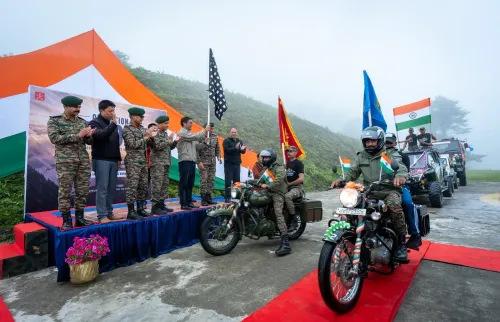
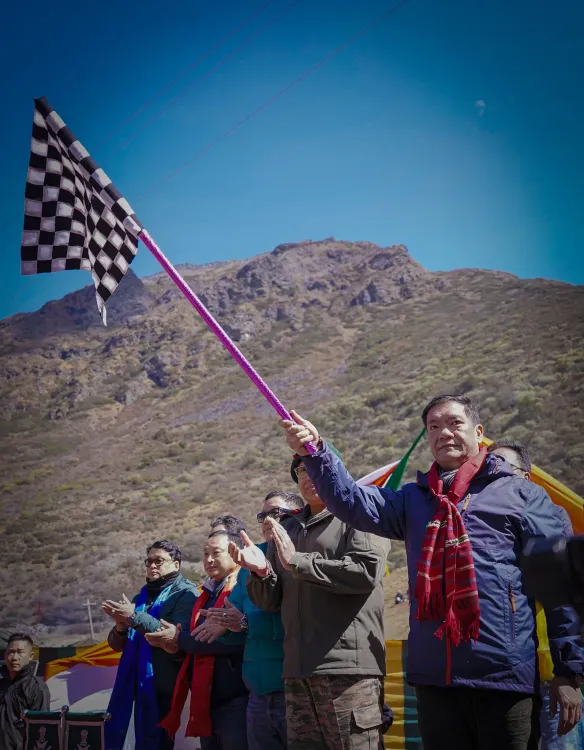
CM Pema Khandu flags off Bajrang Peak Expedition in Tawang
Synopsis
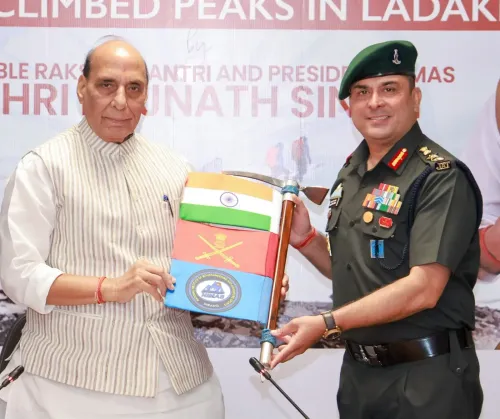
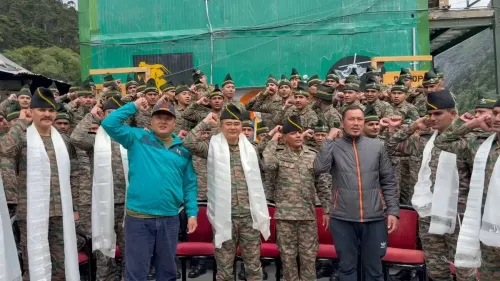
Arunachal Pradesh CM Pema Khandu on 17 October 2026 flagged off the Bajrang Peak Expedition to Pt 5583 at Chuna, Tawang, under Operation Arunoday, led by the 7th Garhwal Rifles with NIMAS personnel and local youth.
Key Takeaways
CM Pema Khandu flagged off the Bajrang Peak Expedition on 17 October 2026 at Chuna, Tawang .
The target summit is Point 5583 , standing at 5,583 metres above sea level.
The expedition is organised by the 7th Battalion, The Garhwal Rifles under Operation Arunoday .
NIMAS personnel and local Tawang youth are participating alongside the army team.
Tawang borders China and hosts a significant strategic military presence, giving the expedition geopolitical resonance beyond sport.
Indian Army high-altitude expeditions in the Eastern Himalayas serve dual purposes: operational readiness and community engagement in border districts.
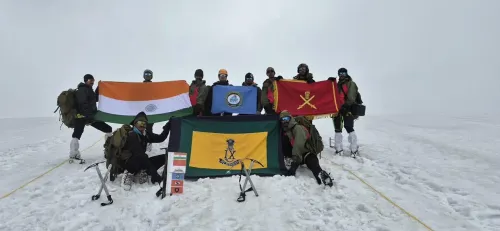
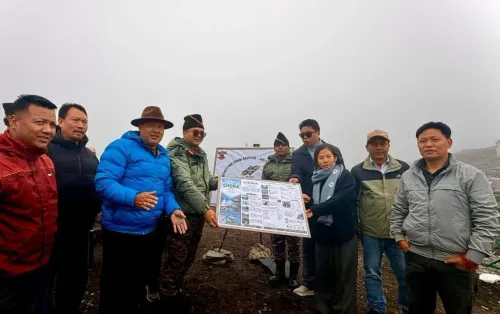
At Chuna, Tawang, on 17 October 2026, Arunachal Pradesh Chief Minister Pema Khandu flagged off the Bajrang Peak Expedition targeting Point 5583 — 5,583 metres above sea level — under the banner of Operation Arunoday. The team combining soldiers, mountaineers, and local youth will now push into some of the Eastern Himalaya's most demanding terrain.
The 7th Garhwal Rifles and NIMAS join forces at 5,583 metres
The expedition is organised by the 7th Battalion, The Garhwal Rifles, an infantry unit with a long record of high-altitude deployments along India's northern and eastern borders. Alongside the battalion, personnel from NIMAS — the Nehru Institute of Mountaineering and Adventure Sports — bring specialist technical climbing expertise to the team. CM Khandu specifically credited the Garhwal Rifles for pulling the effort together and extended best wishes for a 'safe and successful expedition.'
What makes this push distinctive is the deliberate inclusion of local youth from Tawang. Rather than a purely military exercise, the expedition bridges the gap between the Indian Army and the border community — a quiet but meaningful signal in a district that sits directly adjacent to the India-China border.
Tawang's strategic weight behind every summit attempt
Tawang is not just a high-altitude district. Home to the famous Tawang Monastery and a sustained military presence, it has been a focal point of India's border sensitivities for decades. Indian Army units have consistently used mountaineering expeditions here to sharpen operational readiness in terrain that is both logistically brutal and strategically vital — fitness at altitude is not a luxury; it is a battlefield necessity.
Operation Arunoday frames these expeditions within a broader initiative covering activities and development in Arunachal Pradesh with military participation. High-altitude climbs under this umbrella serve a dual purpose: they keep troops conditioned for the environment and reinforce India's active, visible presence in a frontier zone.
Adventure, identity, and a border district's pride
CM Khandu's closing words carried a clear emotional register — he expressed hope that the team would 'reach the summit and return safely, making Arunachal Pradesh proud.' That framing matters. Army-organised expeditions in Tawang increasingly weave together three threads: military preparedness, adventure tourism potential, and the identity of local communities in a state that has long sought greater national attention for its mountain heritage.
NIMAS, based in Dirang, West Kameng, has been central to building that heritage — training hundreds of young climbers from the Northeast and running Himalayan expeditions that put Arunachal on the adventure-sports map. Its presence on the Bajrang Peak team signals institutional depth, not a one-off event.
The summit of Pt 5583 now awaits. If the team plants its flag there, it will be one more data point in a steady, deliberate effort to assert presence — human, institutional, and national — across the rooftop of India's easternmost frontier.
Point of View
CM Khandu reinforces Arunachal Pradesh's identity as an integral, active part of India — a consistent political posture for the BJP-led state government. Operation Arunoday's framing of such expeditions as organised initiatives, rather than ad hoc events, suggests a deliberate effort to institutionalise the army-community relationship in Tawang. Watch whether the expedition's completion is followed by further announcements under the same banner, which would confirm it as a sustained programme rather than a ceremonial one-off.
NationPress
18 Oct 2026
Frequently Asked Questions
What is the Bajrang Peak Expedition in Tawang?
The Bajrang Peak Expedition is a mountaineering mission targeting Point 5583 — an altitude of 5,583 metres — at Chuna in Tawang district, Arunachal Pradesh. It was flagged off by CM Pema Khandu on 17 October 2026 under Operation Arunoday.
Which army unit is organising the Bajrang Peak Expedition?
The expedition is organised by the 7th Battalion, The Garhwal Rifles , an Indian Army infantry unit known for high-altitude deployments in border sectors.
What is Operation Arunoday?
Operation Arunoday is an initiative encompassing expeditions and activities in Arunachal Pradesh with military participation. Specific details of its full scope have not been officially detailed in public records.
What is NIMAS and why is it part of this expedition?
NIMAS — the Nehru Institute of Mountaineering and Adventure Sports — is a premier Himalayan mountaineering institution based in Dirang, Arunachal Pradesh. Its personnel bring specialist technical climbing expertise to the Bajrang Peak team.
Why is Tawang significant for Indian Army mountaineering expeditions?
Tawang borders China and hosts a substantial military presence, making high-altitude fitness and terrain familiarity operationally critical. Army expeditions there also serve to strengthen ties with local border communities.