Gadkari launches Dhapewada handloom hub in Nagpur
Synopsis
Nitin Gadkari inaugurated the Dhapewada Textile handloom cluster in Nagpur's Vidarbha region on 17 October 2026, with Union Textiles Minister Giriraj Singh and MP Hema Malini present. The project links centuries-old weaving traditions to organised production, waste-fabric reuse, and market access, targeting livelihoods for hundreds of women weavers.
Key Takeaways
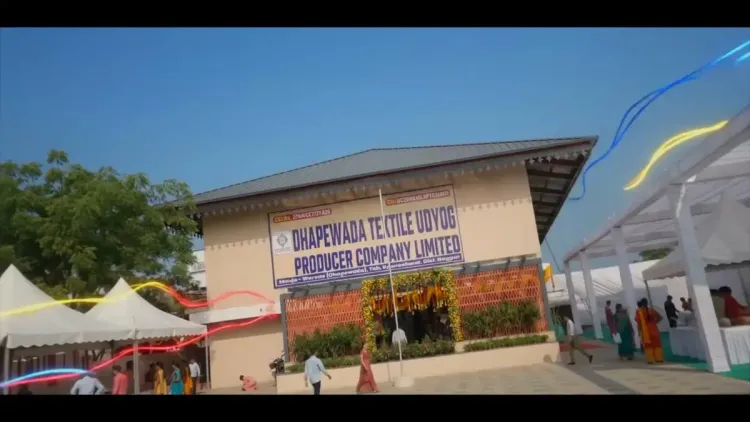
The new Dhapewada Textile Industries building and handloom cluster were formally inaugurated at Dhapewada, Nagpur on 17 October 2026 .
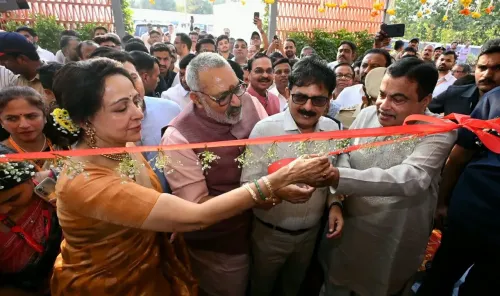
Union Textiles Minister Giriraj Singh presided; BJP MP Hema Malini performed the formal opening.
Dhapewada Textile Producer Company Limited will organise weavers, provide training infrastructure, and pursue domestic and international market linkages.
A waste-fabric reuse programme converts textile scraps into rugs and mats, combining circular-economy practice with women's income generation.
The Pachgaon Handloom Project has reportedly employed over 350 women ; the Dhapewada company has extended livelihoods to over 500 women , per Gadkari's post.
Dhapewada is also a key pilgrimage site known as Vidarbha's 'mini Pandharpur' , and the project explicitly seeks to preserve its cultural and craft heritage alongside economic development.
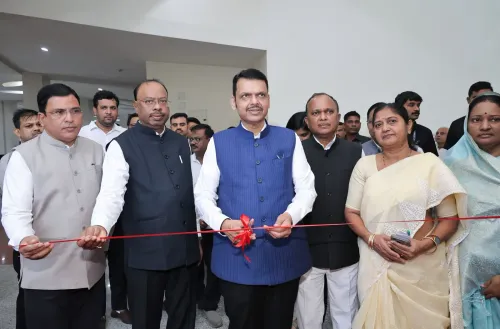
Centuries of weaving tradition just got a new building, a new company structure, and a shot at international markets. Union Road Transport and Highways Minister Nitin Gadkari inaugurated the newly constructed premises of Dhapewada Textile Industries and formally launched its handloom cluster project at Dhapewada, Nagpur, on 17 October 2026 — framing the event as a turning point for Vidarbha's artisan economy.
Giriraj Singh and Hema Malini lead the inauguration
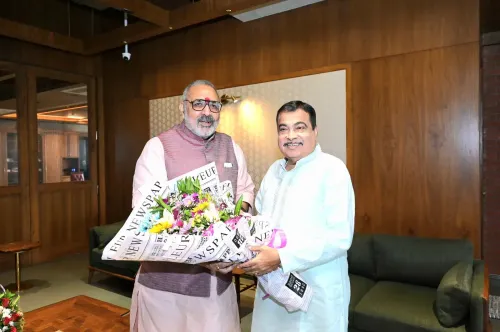
Union Textiles Minister Giriraj Singh presided over the ceremony as the chief guest, while BJP MP and actress Hema Malini performed the formal ribbon-cutting. Maharashtra Textiles Minister Sanjay Sawkare, local legislators, and officials of Dhapewada Textile Producer Company Limited were also present. The combination of a central minister, a high-profile parliamentarian, and a state minister signals the political weight the government is placing on reviving Vidarbha's weaving belt.
Dhapewada's twin identity: pilgrimage town and weaving heartland
Gadkari's post describes Dhapewada as Vidarbha's 'mini Pandharpur' — a significant pilgrimage destination tied to the faith of Lord Vitthal-Rukmini. That spiritual identity has long coexisted with a centuries-old handloom tradition, where families have passed down the craft of turning raw thread into fine cloth across generations. The new initiative explicitly seeks to honour both identities: preserving the weaving heritage while connecting it to organised production and modern markets.
What the new facility actually does for weavers
The newly inaugurated building consolidates training halls, workspaces, and production infrastructure under one roof — all operated through Dhapewada Textile Producer Company Limited, a producer company model that gives weavers collective bargaining power and a formal corporate identity. The cluster approach mirrors similar handloom upgrade programmes the Ministry of Textiles has rolled out across India's textile belts, linking artisan households to organised supply chains and buyer networks.
A distinctive feature of this project is its waste-fabric reuse programme: women artisans are converting textile scraps into dariyas (rugs) and mats, creating a small but meaningful circular-economy loop that simultaneously generates income and reduces fabric waste. Gadkari's post notes that the initiative is targeting both domestic and international market access for these products.
Women's employment at the centre of the cluster model
The project places women's economic participation at its core. According to Gadkari's post, the Pachgaon Handloom Project has provided employment to more than 350 women, while Dhapewada Textile Producer Company Limited has extended livelihoods to more than 500 women at the local level. The Ministry of Textiles' cluster development framework — which backs weaver training, infrastructure, and market linkages — provides the policy spine for this kind of ground-up mobilisation.
The ambition, as Gadkari articulates it, is a four-way balance: faith and pilgrimage, artisan livelihoods, women's self-reliance, and youth opportunity — all anchored in a town that has long been overlooked in mainstream economic planning.
If buyer linkages and training pipelines scale as intended, Dhapewada's looms could soon be weaving for markets far beyond Vidarbha — and that would be the real test of whether this inauguration was a milestone or merely a ceremony.
Point of View
The event maximises optics around women's empowerment and rural livelihoods ahead of ongoing political cycles in Maharashtra. The producer-company structure is a meaningful institutional upgrade over informal weaver networks, but the cluster's long-term viability will hinge on whether buyer linkages and training pipelines are sustained beyond the inauguration. Vidarbha's persistent agrarian distress makes the promise of non-farm women's employment politically potent — and the government clearly knows it.
NationPress
17 Oct 2026
Frequently Asked Questions
What was inaugurated at Dhapewada in Nagpur in October 2026?
The newly constructed premises of Dhapewada Textile Industries and its handloom cluster project were inaugurated on 17 October 2026, providing weavers with training, workspace, and production infrastructure under one roof.
Who attended the Dhapewada handloom inauguration?
Union Textiles Minister Giriraj Singh presided as chief guest, BJP MP and actress Hema Malini performed the formal opening, and Maharashtra Textiles Minister Sanjay Sawkare and local legislators were also present.
What is Dhapewada Textile Producer Company Limited?
It is a producer company that organises handloom weavers in Dhapewada, Nagpur, giving them a collective corporate identity, access to training, and linkages to domestic and international markets.
How many women have got jobs through the Dhapewada handloom project?
According to Nitin Gadkari's post, the Dhapewada Textile Producer Company Limited has provided employment to more than 500 women locally, while the Pachgaon Handloom Project has employed over 350 women.
Why is Dhapewada called the 'mini Pandharpur' of Vidarbha?
Dhapewada is a significant pilgrimage site associated with the faith of Lord Vitthal-Rukmini, similar in religious character to the famous Pandharpur temple town, earning it the informal title of Vidarbha's 'mini Pandharpur'.