Giriraj Singh inaugurates Handloom Industries building in Nagpur
Synopsis
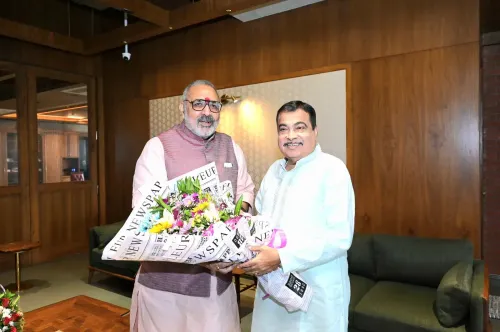
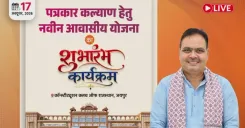
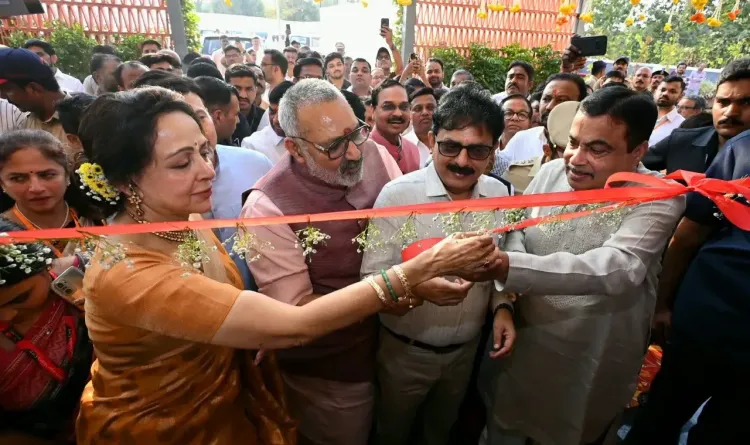
Union Textiles Minister Giriraj Singh, joined by Nitin Gadkari and Hema Malini, inaugurated a new Handloom Industries building in Nagpur's Dhapewada on 17 October 2026, aimed at boosting weaver skills, industry promotion, and local employment.
Key Takeaways
Giriraj Singh inaugurated the newly constructed Handloom Industries building at Dhapewada, Nagpur on 17 October 2026 .
Union Minister Nitin Gadkari and MP Hema Malini were present at the inauguration ceremony.
The building aims to promote the handloom industry, recognise weaver skills, and create local employment opportunities.
The facility is aligned with the National Handloom Development Programme , operational since 2015 under the Ministry of Textiles.
Gadkari's presence links the textile facility to broader road connectivity and supply-chain infrastructure in Nagpur.
A new chapter for handloom weavers opened in Nagpur's Dhapewada on Saturday, 17 October 2026, as Union Textiles Minister Giriraj Singh joined senior colleagues to inaugurate a newly constructed Handloom Industries building — a facility built to anchor one of India's oldest craft traditions to a more competitive future.
Singh was joined at the ceremony by Union Road Transport and Highways Minister Nitin Gadkari and BJP Lok Sabha MP Hema Malini. The new building at Dhapewada, Nagpur is designed to advance the handloom sector through consolidated infrastructure — bringing weavers, skills training, and market linkages under one roof.
What the Dhapewada building is meant to do
Posting about the event, Singh described the building as 'hathkargha udyog ko protsahan dene, bunakaron ke kaushal ko nayi pehchaan dilaane aur sthaniya star par rozgar ke avsar badhaane ki disha mein mahatvapurna kadam' — 'an important step towards promoting the handloom industry, giving new recognition to weavers' skills, and expanding local employment opportunities.'
The three-part framing is deliberate: promotion of the industry, skills recognition, and job creation. It reflects a long-standing tension in India's handloom sector — skilled artisans exist in abundance, but without infrastructure and organised market access, that skill rarely translates into stable income.
Gadkari's presence — connectivity as an enabler
The attendance of Nitin Gadkari, whose ministry governs India's road and highway expansion, signals an intent to link handloom clusters to wider supply-chain and transport networks. Nagpur sits at the geographic heart of India and has repeatedly been central to Gadkari's infrastructure vision — making it a natural fit for a facility that needs to move goods efficiently to markets. That cross-ministry presence at a textile inauguration is not incidental.
National Handloom Development Programme as the policy spine
The broader policy framework for such infrastructure is the National Handloom Development Programme, running since 2015 under the Ministry of Textiles. The programme channels central government funds into weaver welfare, cluster development, and the physical infrastructure — like the Dhapewada building — that allows artisans to operate at scale rather than in isolation.
Maharashtra has an established weaving community, and investments in physical handloom clusters here are part of a pattern the central government has pursued across states with strong textile traditions — from Varanasi's Banarasi silk belt to Andhra Pradesh's Pochampally ikat clusters. The idea: modernise production conditions without erasing the handmade character that gives Indian handloom its global edge.
Three ministers, one building, and decades of weaver aspiration — the real test now is whether the facility translates inauguration-day energy into year-round livelihoods.
Point of View
Suggesting a deliberate attempt to frame handloom growth as part of the broader connectivity-and-employment narrative that the BJP has made central to its governance pitch in Maharashtra. With assembly politics a constant undercurrent in the state, infrastructure inaugurations that combine three prominent names carry obvious electoral optics alongside genuine policy intent. The test, as always, is post-inauguration utilisation — whether the building becomes a live hub or a ribbon-cut milestone.
NationPress
17 Oct 2026
Frequently Asked Questions
What was inaugurated at Dhapewada Nagpur by Giriraj Singh?
A newly constructed Handloom Industries building was inaugurated at Dhapewada in Nagpur on 17 October 2026, aimed at promoting the handloom sector and creating local employment.
Who attended the Dhapewada handloom building inauguration?
Union Textiles Minister Giriraj Singh, Union Road Transport Minister Nitin Gadkari, and BJP MP Hema Malini attended the inauguration ceremony.
What is the National Handloom Development Programme?
The National Handloom Development Programme, launched in 2015, is a Ministry of Textiles scheme that funds infrastructure, weaver welfare, and cluster development to strengthen India's handloom industry.
How does the Nagpur handloom building help weavers?
The building is designed to provide weavers with consolidated infrastructure for skills development, industry promotion, and better market access, helping translate artisan talent into stable livelihoods.
Why was Nitin Gadkari at a handloom event in Nagpur?
As Union Road Transport Minister and Nagpur's most prominent political figure, Gadkari's presence signals an intent to integrate handloom cluster infrastructure with broader road connectivity and supply-chain networks.