Giriraj Singh Inaugurates Handloom Hub in Nagpur's Dhapewada
Synopsis
Union Textiles Minister Giriraj Singh inaugurated a new Handloom Industries Building at Dhapewada, Nagpur on 17 October 2026, toured the handloom cluster, and met Road Transport Minister Nitin Gadkari at Gadkari Wada to discuss weaver empowerment and Maharashtra's craft economy under the Atmanirbhar Bharat framework.
Key Takeaways
Giriraj Singh inaugurated the new Handloom Industries Building at Dhapewada, Nagpur on 17 October 2026 .
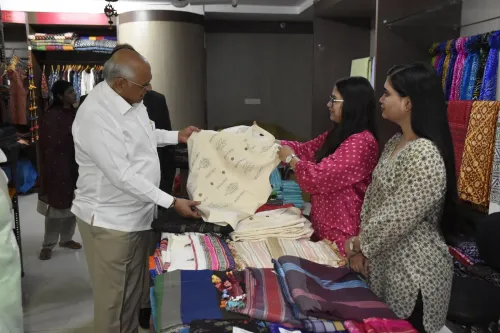
He toured the associated handloom cluster as part of his formal visit to Nagpur.
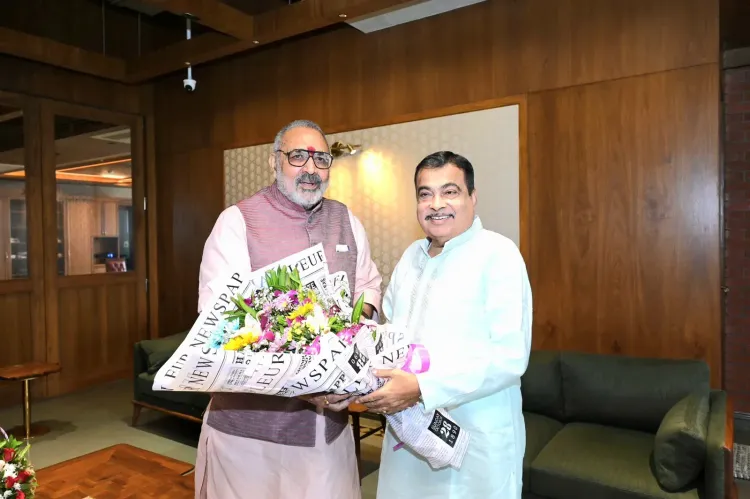
Singh met Nitin Gadkari at Gadkari Wada for discussions on Nagpur's handloom industry and weaver empowerment.
Talks covered local industry promotion and Maharashtra's overall development, framed under the Atmanirbhar Bharat initiative.
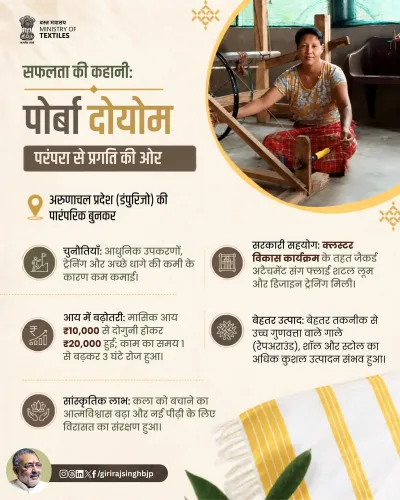
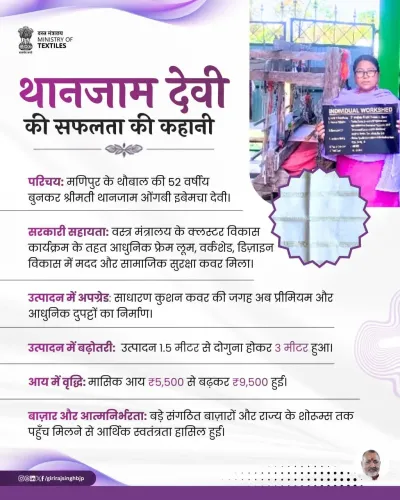
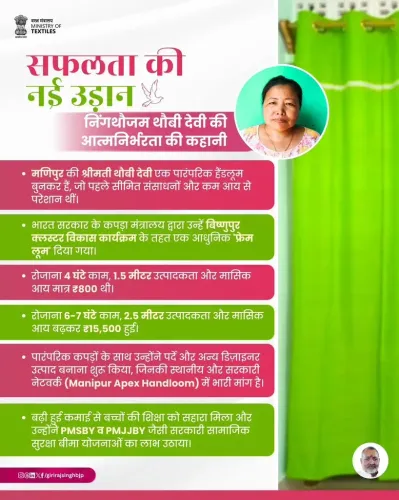
The cluster model aims to provide weavers and artisans with infrastructure, market linkages, and institutional access.
Inter-ministerial coordination between Textiles and Road Transport signals a connectivity-led approach to handloom sector growth.
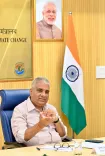
A new landmark for Maharashtra's weaving community took shape on Saturday, 17 October 2026, as Union Textiles Minister Giriraj Singh inaugurated the new Handloom Industries Building at Dhapewada, Nagpur, and toured the associated handloom cluster — combining the ribbon-cutting with a warm meeting at Gadkari Wada with Union Road Transport and Highways Minister Nitin Gadkari, Nagpur's most prominent political son.
Posting about the visit on X, Singh described the encounter as an 'aatmiya mulakat' — an affectionate meeting — and said discussions ranged across the development of Nagpur's handloom industry, the empowerment of weavers and artisans, promotion of local industries, and the broader goal of Maharashtra's and India's overall growth.Dhapewada's new building and what it means for Nagpur's weavers
The Dhapewada Handloom Industries Building anchors a cluster model the central government has been rolling out across states to bring weavers, raw-material suppliers, and market linkages under one organised roof. Nagpur — already a commercial hub in the Vidarbha region — gives this cluster a logistics advantage, sitting at the crossroads of national highways and rail freight corridors that Gadkari's ministry has been steadily widening.
For the artisan community, a dedicated building signals more than bricks and mortar. It means formal address, institutional credibility, and access to credit and government welfare schemes that remain hard to reach for loom workers operating out of homes or informal sheds.
Singh and Gadkari: two ministries, one regional agenda
The meeting at Gadkari Wada — the minister's Nagpur residence — is a visible signal of inter-ministerial coordination. Handloom clusters depend on connectivity: roads that move raw yarn in and finished fabric out, and infrastructure that makes distant markets accessible to village-level producers. That Gadkari, whose ministry controls the national highway network, sat with the Textiles Minister to discuss Nagpur's craft economy is not incidental.
Singh's visit also carried the explicit stamp of Atmanirbhar Bharat, the self-reliance initiative launched in May 2020 that has repeatedly cited handlooms as a sector where domestic demand and local employment can grow together without import dependency.
Maharashtra's handloom sector in the national picture
Maharashtra hosts a significant weaving tradition — from the silk of Yeola to the cotton textiles of Vidarbha. Yet the sector has long struggled with competition from power looms and synthetic fabrics. Government-backed cluster infrastructure is the central policy bet: aggregate the weavers, reduce input costs, improve design support, and link them to retail and export channels.
Saturday's inauguration fits neatly into that bet — and with Gadkari's road network expanding freight capacity out of Nagpur, the supply-chain argument for clustering here grows stronger.
The loom is back at the centre of Maharashtra's economic conversation. Whether Dhapewada's new building translates into sustained income gains for the weavers inside it will be the real measure — and that story is only just beginning.
Point of View
Attach a national-scheme brand like Atmanirbhar Bharat, and use ministerial photo-ops to signal political commitment to a vulnerable workforce. The presence of Gadkari — a Maharashtra heavyweight whose constituency is Nagpur — adds local-politics weight to what might otherwise read as a routine ministry event. For the Textiles Ministry, building visible cluster assets ahead of state political cycles in Maharashtra helps demonstrate tangible delivery. The deeper question remains whether cluster buildings translate into durable income gains for weavers, or whether they become under-utilised infrastructure once inauguration energy fades.
NationPress
17 Oct 2026
Frequently Asked Questions
What did Giriraj Singh inaugurate in Nagpur?
Giriraj Singh inaugurated the new Handloom Industries Building at Dhapewada, Nagpur, and toured the handloom cluster there on 17 October 2026.
What is the Dhapewada handloom cluster?
Dhapewada is a locality in Nagpur, Maharashtra, where the central government has developed a handloom cluster to bring weavers, artisans, and industry support services together under organised infrastructure.
Why did Giriraj Singh meet Nitin Gadkari in Nagpur?
Singh met Gadkari at Gadkari Wada in Nagpur to discuss the development of the city's handloom industry, empowerment of weavers and artisans, promotion of local industries, and Maharashtra's broader economic development.
What is Atmanirbhar Bharat's role in handloom promotion?
Atmanirbhar Bharat, launched in May 2020, promotes self-reliance in domestic manufacturing and traditional sectors including handlooms, providing a policy framework for cluster development and weaver welfare schemes.
How does the Road Transport Ministry connect to handloom clusters?
Road connectivity is essential for handloom clusters to move raw materials in and finished products to markets; Nagpur's position on national highway and freight corridors managed by Gadkari's ministry makes inter-ministerial coordination directly relevant.