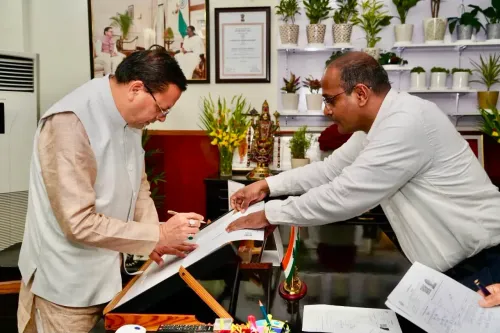
CM Dhami attacks Congress over voter list revision row
Synopsis
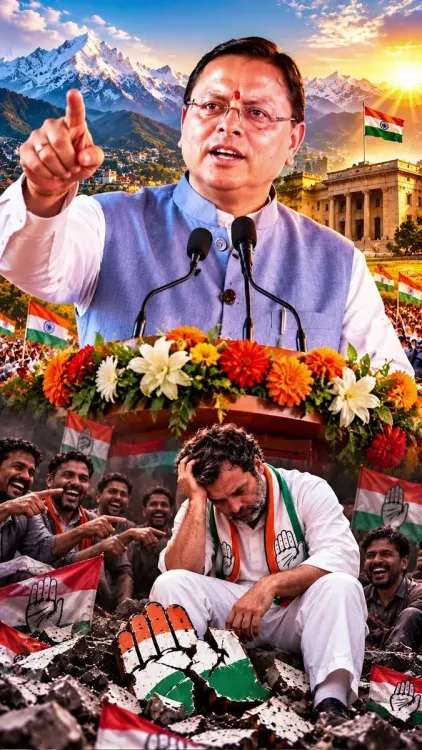
Uttarakhand CM Pushkar Singh Dhami slammed Congress for opposing the Special Intensive Revision of electoral rolls, questioning why the party objects to a process meant to purify voter lists and detect illegal infiltrators, and predicting further defeats for the opposition.
Key Takeaways
Uttarakhand CM Pushkar Singh Dhami posted on 17 October 2026 attacking Congress over its criticism of the Special Intensive Revision (SIR) of voter rolls.
Dhami accused Congress of being 'rattled by successive defeats' and using opposition politics to avoid electoral accountability.
The SIR is an Election Commission of India process that audits voter lists, adds eligible voters, and removes ineligible entries including those failing citizenship criteria.
BJP-led governments in border and hill states have long framed such revisions as anti-infiltration tools; Congress has consistently questioned their political motivation.
The dispute is unfolding ahead of future Uttarakhand assembly elections , raising the political stakes of an otherwise procedural exercise.
Key watchpoints include the Election Commission's SIR timeline announcement and any formal legal challenges from opposition parties.
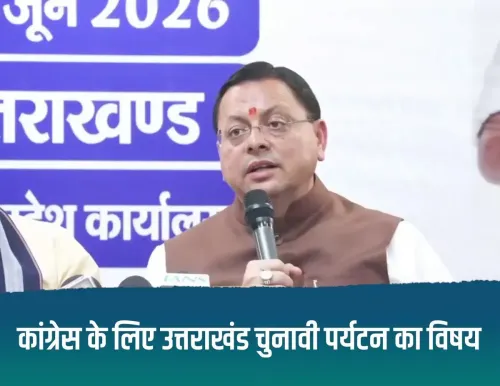
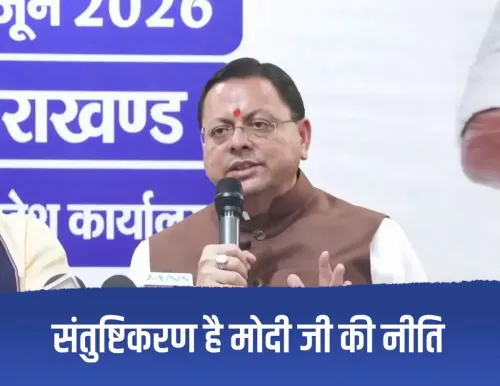
A sharp political volley landed on Saturday evening when Uttarakhand Chief Minister Pushkar Singh Dhami publicly challenged the Indian National Congress over its objections to the Special Intensive Revision (SIR) of electoral rolls — framing the opposition's resistance as proof of a deeper discomfort with electoral transparency.
Posting on 17 October 2026, Dhami wrote in Hindi: 'Lagataar mil rahi haar se baukhlaai Congress ab matdata suchi ke vishesh gahan punarnikshan (SIR) par bhi sawaal utha rahi hai' — 'A Congress rattled by successive defeats is now raising questions even about the Special Intensive Revision of the voter list.' He went further, asking pointedly why the party has a problem with a process designed to clean up electoral rolls and identify illegal infiltrators, and warned that 'politics of opposition cannot win public trust' and that Congress faces certain defeat in the upcoming elections.
What the SIR process actually does
The Special Intensive Revision is a mechanism deployed by the Election Commission of India to systematically audit voter rolls — verifying existing entries, adding eligible new voters, and weeding out ineligible ones, including individuals who do not meet citizenship requirements. The Election Commission has conducted similar drives ahead of state assembly cycles in previous years, and the process carries legal backing under the Representation of the People Act. Proponents argue the SIR is a routine, constitutionally sanctioned exercise that strengthens the integrity of every vote cast.The BJP-Congress fault line on electoral rolls
Dhami's broadside fits a well-established pattern. BJP-led state governments, particularly in border and hill states like Uttarakhand, have consistently framed voter list revisions as indispensable shields against demographic manipulation and alleged illegal immigration. Congress, on the other hand, has frequently characterised such exercises as politically motivated — a tool to disenfranchise minority or marginalised communities under the cover of anti-infiltration rhetoric. Neither charge is new; both sides have traded versions of this argument through multiple electoral cycles. What gives the exchange fresh urgency here is the electoral calendar. Uttarakhand, a state the BJP has governed since 2017 and held through the 2022 assembly election, will eventually face voters again. Dhami's framing — that Congress is 'rattled by successive defeats' — is as much a pre-election positioning move as it is a policy argument. By tying opposition criticism of the SIR to a losing streak, the Chief Minister attempts to delegitimise dissent and keep the narrative on electoral hygiene rather than governance performance.What to watch as the SIR unfolds
The next pressure points will be the Election Commission of India's official announcements on the SIR timeline for Uttarakhand, any formal legal challenges Congress or allied groups might file, and whether other opposition parties join the critique. If the Commission releases specific data on deletions or additions to the voter rolls, that will become the battleground on which both sides test their arguments before the electorate. The real question the SIR row poses is simple: can a procedural exercise survive being conscripted into electoral combat — or will the noise around it undermine public confidence in the very transparency it is designed to deliver?Point of View
The BJP frames any challenge to voter-roll revision as motivated self-interest rather than principled concern. Congress's vulnerability here is real: if it cannot articulate a specific procedural grievance beyond the broad charge of political motivation, the attack lands cleanly. The broader pattern — BJP using demographic and infiltration rhetoric in hill and border states — suggests this is a template being stress-tested, not a one-off exchange.
NationPress
17 Oct 2026
Frequently Asked Questions
What is the Special Intensive Revision (SIR) of voter lists in India?
The Special Intensive Revision (SIR) is a process conducted by the Election Commission of India to thoroughly audit electoral rolls — verifying existing voter entries, enrolling newly eligible citizens, and removing ineligible individuals, including those who do not meet residency or citizenship requirements.
Why is Congress opposing the SIR in Uttarakhand?
Congress has raised objections to the Special Intensive Revision, which it has characterised as a politically motivated exercise. CM Dhami contends the opposition is questioning a transparent cleansing of voter rolls simply because of its own electoral vulnerabilities, though specific reasons cited by Congress in this instance have not been independently verified.
What did CM Dhami say about Congress and the voter list revision?
CM Dhami said on 17 October 2026 that a Congress 'rattled by successive defeats' is now questioning the SIR process, asked why the party objects to identifying illegal infiltrators through voter roll purification, and warned that the politics of opposition cannot win public trust, predicting Congress's defeat in upcoming elections.
When are the next Uttarakhand assembly elections?
The specific date of the next Uttarakhand assembly elections had not been officially announced as of October 2026, but the state's electoral cycle and preparations such as the SIR process signal that the poll season is approaching.
What role does the Election Commission of India play in the SIR?
The Election Commission of India is the constitutional authority that orders, oversees, and certifies the Special Intensive Revision process. Its announcements on the SIR timeline, methodology, and results carry legal weight and are a key watchpoint in the ongoing BJP-Congress dispute over electoral rolls.