CM Dhami Accuses Congress of Appeasement Over National Interest
Synopsis
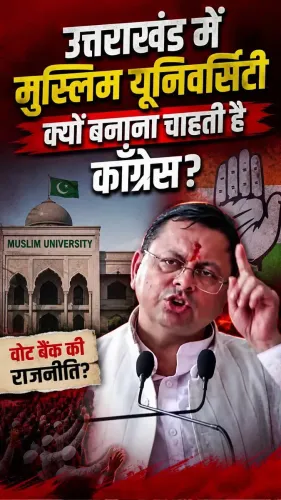
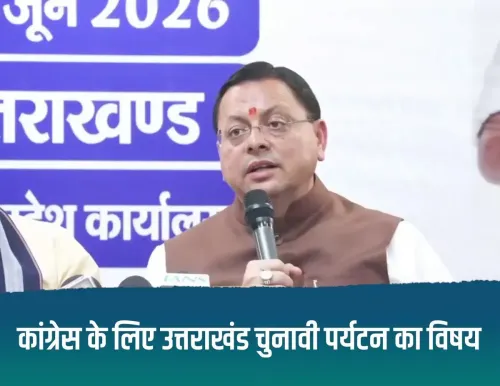
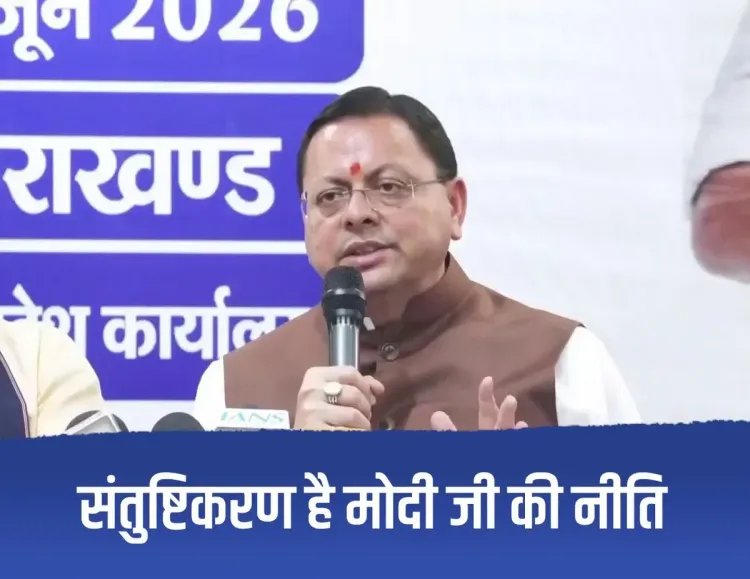
Uttarakhand Chief Minister Pushkar Singh Dhami on June 12, 2026 accused Congress of consistently prioritising appeasement of a particular community over national interest, reinforcing BJP's long-standing political narrative against Congress-era minority-focused policies and framing his state's Uniform Civil Code as a corrective measure.
Key Takeaways
CM Pushkar Singh Dhami posted on June 12, 2026 accusing Congress of prioritising appeasement over national interest.
Dhami charged that Congress favoured 'a particular section' at the expense of broader national welfare.
Uttarakhand became the first Indian state to implement a Uniform Civil Code in 2024 under Dhami's government.
The BJP has consistently used the appeasement narrative since 2014 , citing moves like the Article 370 abrogation as proof of its alternative model.
The Congress-era 2006 Sachar Committee report has been a recurring reference point in BJP's critique of Congress minority policy.
The remarks are expected to feed into broader political debates ahead of future state and national elections.
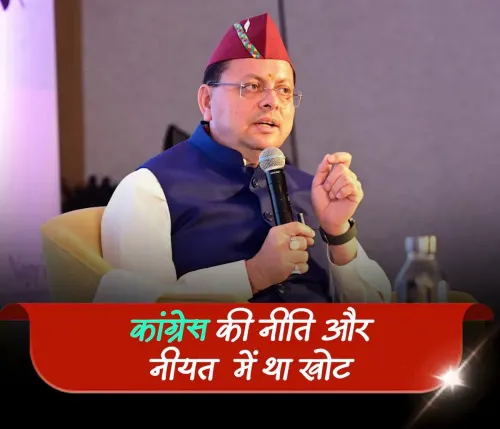
Uttarakhand Chief Minister Pushkar Singh Dhami on Friday, June 12, 2026, launched a sharp attack on the Indian National Congress, accusing the party of consistently prioritising appeasement politics over broader national interests. Dhami made the remarks via a post on X, charging that Congress had favoured a 'particular section' at the expense of the wider national good.
In his post, Dhami wrote: 'कांग्रेस ने देशहित की जगह तुष्टिकरण की राजनीति को प्राथमिकता दी और एक विशेष वर्ग को साधने के प्रयास में व्यापक राष्ट्रीय हितों की लगातार उपेक्षा की।' Translated, this reads: 'Congress gave priority to the politics of appeasement over national interest, and in its effort to appease a particular section, it consistently neglected broader national interests.'
Context
BJP leaders have long drawn a contrast between what they describe as Congress-era 'vote-bank politics' and their own governance model centred on uniform laws and infrastructure development. This line of attack has been a recurring feature of BJP political messaging since the party came to power at the Centre in 2014. Dhami's remarks fit squarely within that established rhetorical pattern.
The charge of 'tushtikarana' — appeasement — is frequently invoked by BJP leaders in reference to Congress-era policies perceived as offering community-specific concessions to religious minorities, particularly in areas of personal law and targeted welfare schemes.
Policy Backdrop
The BJP's governance record provides the backdrop against which Dhami frames his criticism. The 2019 abrogation of Article 370, which ended Jammu and Kashmir's special constitutional status, was presented by the party as a decisive rejection of decades of what it called Congress-driven appeasement. Similarly, the 2006 Sachar Committee report, commissioned under the UPA government, which examined Muslim socio-economic conditions and recommended targeted welfare measures, has often been cited by BJP as evidence of selective governance.
Closer to home, Uttarakhand under Dhami's leadership became the first Indian state to implement a Uniform Civil Code in 2024, replacing religion-specific personal laws with a common framework. The move was explicitly framed by Dhami's government as a correction of historical preferential treatment — a direct policy counter to the appeasement model he now criticises.
Stakeholders and Impact
The remarks carry significance for multiple stakeholders. For minority communities, the framing of welfare-oriented policies as 'appeasement' has been a sensitive and contested characterisation. Civil society groups and opposition leaders have consistently argued that targeted schemes address documented socio-economic disparities rather than conferring undue privilege.
For the national electorate, the BJP-Congress binary on appeasement versus uniform governance remains a central axis of political competition. Dhami's post, amplified through social media, contributes to a broader narrative-building exercise that BJP-ruled states have been conducting ahead of future electoral cycles.
What's Next
The political debate around appeasement and uniform laws is expected to intensify as discussions on extending the Uniform Civil Code model to other states continue, and as parliamentary debates on minority welfare schemes resurface. Congress is likely to respond by defending its legacy welfare programmes as constitutionally grounded measures addressing inequality. How both parties frame these issues will be a defining contest in the lead-up to the next round of state assembly elections.
Point of View
A state that has already enacted the Uniform Civil Code, Dhami is doing double duty: attacking the opposition while simultaneously positioning his own governance record as the antithesis of appeasement. This kind of social-media messaging is part of a coordinated, state-level amplification of central BJP talking points, particularly effective in consolidating the party's base ahead of electoral cycles. The absence of a specific policy trigger makes this a signal of ambient political temperature rather than a response to any single event.
NationPress
26 Oct 2026
Frequently Asked Questions
What did CM Dhami say about Congress on June 12 2026?
CM Pushkar Singh Dhami posted on X on June 12, 2026 accusing Congress of prioritising appeasement politics over national interest and neglecting broader public welfare in favour of a particular community.
What is tushtikarana politics in Indian context?
'Tushtikarana' is the Hindi word for appeasement. In Indian political discourse, it is used — primarily by BJP leaders — to describe policies they claim selectively benefit religious minority communities at the expense of uniform national development.
What is the Uniform Civil Code in Uttarakhand?
Uttarakhand enacted a Uniform Civil Code in 2024 under CM Dhami, replacing religion-specific personal laws with a common legal framework for all citizens of the state, making it the first Indian state to do so.
Why does BJP accuse Congress of appeasement?
BJP has argued since 2014 that Congress-era policies — including targeted minority welfare schemes and the retention of Article 370 in Jammu and Kashmir — amounted to vote-bank appeasement that ignored uniform national development.
What was the Sachar Committee report?
The Sachar Committee report, commissioned in 2006 by the UPA government, examined the socio-economic and educational status of Muslims in India and recommended targeted welfare measures, a move BJP has cited as an example of Congress's community-specific governance approach.