CM Dhami Slams Congress Era as Era of Despair and Drift
Synopsis
Uttarakhand Chief Minister Pushkar Singh Dhami attacked the Congress party on X on 25 June 2026, calling its rule an era of despair and failed policies. The post, tagged to PM Modi and senior BJP leaders, fits a sustained BJP pattern of contrasting post-2014 governance with the UPA decade ahead of state and national elections.
Key Takeaways
CM Pushkar Singh Dhami posted on X on 25 June 2026 criticising the Congress party's governance record.
He described the Congress era as one of 'despair,' with policies that were 'directionless and ineffective.' The post was tagged to PM Narendra Modi , Home Minister Amit Shah , and official BJP handles, indicating coordinated party messaging.
The critique targets the UPA government's 2004–2014 tenure, a recurring theme in BJP electoral strategy since 2014 .
Uttarakhand assembly elections are due by 2027 , making such messaging politically significant for the state electorate.
The BJP has governed Uttarakhand since 2017 and retained the state in the 2022 assembly elections .
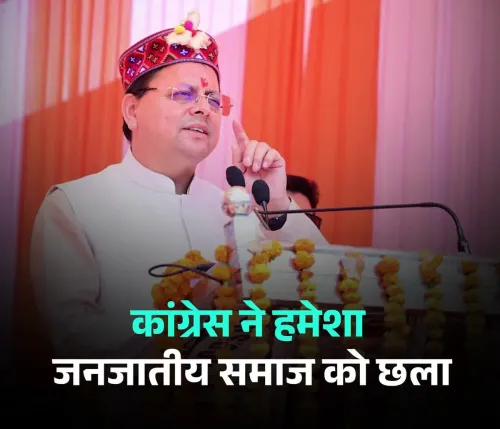
Uttarakhand Chief Minister Pushkar Singh Dhami on Thursday, 25 June 2026, took to X to deliver a sharp critique of the Indian National Congress, asserting that the party's years in power left the country mired in hopelessness and policy failure. The post, directed at Prime Minister Narendra Modi, Union Home Minister Amit Shah, and the BJP's official handles, frames the pre-2014 period as one of stalled development and eroded public trust.
Context
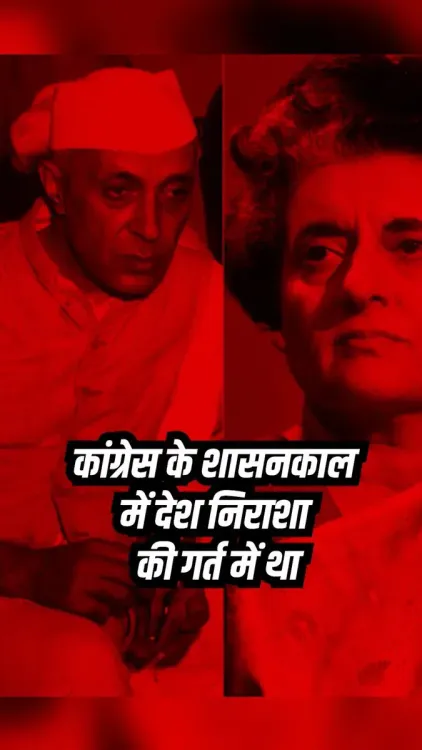
In his post, CM Dhami wrote in Hindi: 'कांग्रेस के शासनकाल में देश निराशा की गर्त में था' ('During Congress rule, the country was sunk in the depths of despair'). He added that Congress policies proved 'directionless and ineffective,' impeding the pace of development and weakening public confidence. The remarks are addressed to the Prime Minister's office and senior BJP leadership, signalling coordinated party messaging rather than a standalone statement.
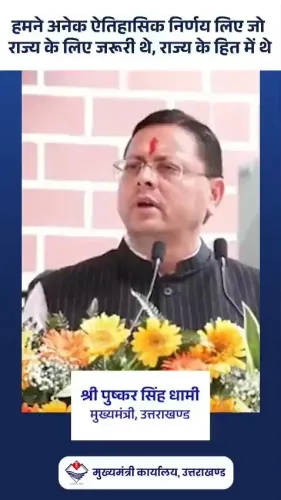
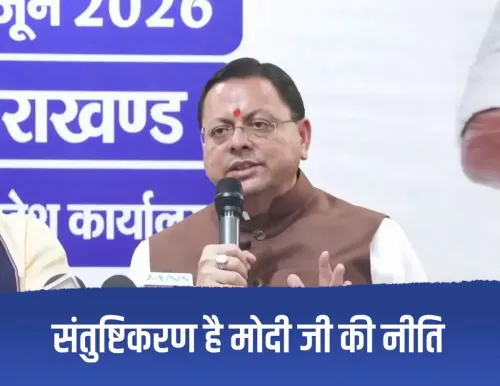
The post accompanies a video, the contents of which reinforce the written critique, though the specific visuals are not independently described here. Such multimedia posts are a standard format in contemporary political communication on social media platforms.
Policy Backdrop
The critique targets the Congress-led United Progressive Alliance (UPA) government that held power at the centre from 2004 to 2014. The BJP campaigned in the 2014 general election on themes of policy paralysis and high-profile corruption scandals associated with that decade, a framing that proved decisive in delivering a majority to the NDA under Prime Minister Narendra Modi. The 2019 general election returned the Modi government with an even larger mandate, further entrenching the contrast with the UPA record as a central plank of BJP electoral strategy.
At the state level, the BJP has governed Uttarakhand since 2017 and retained power in the 2022 assembly elections, with CM Dhami continuing to position the state's development trajectory against what the party describes as years of neglect under previous administrations. This pattern of invoking the Congress-era record is consistent across national and state-level BJP communications.
Stakeholders and Impact
The immediate audience for this messaging is the Uttarakhand electorate, with assembly elections due by 2027, as well as the broader national voter base ahead of the 2029 Lok Sabha polls. For the Congress, such public attacks reinforce the need to counter the governance-deficit narrative that has dogged the party since its 2014 defeat. Opposition parties have consistently disputed the characterisation of the UPA decade, pointing to economic growth metrics and social welfare programmes from that period.
Ordinary voters, particularly in Uttarakhand, are the ultimate stakeholders: the effectiveness of this messaging in shaping perceptions of development and governance will bear on electoral outcomes in the state and nationally.
What's Next
With the Uttarakhand assembly elections on the horizon and the 2029 Lok Sabha cycle beginning to take shape, BJP leaders at both the state and national level are expected to intensify this counter-Congress narrative. Any new central or state policy announcements are likely to be framed explicitly as corrections to governance gaps attributed to the UPA era. The Congress is equally likely to sharpen its rebuttal, setting the stage for a sustained battle over the legacy of the 2004–2014 decade in Indian public discourse.
Point of View
In which state-level leaders amplify the national party's anti-Congress narrative to keep the UPA decade alive as an electoral reference point. With Uttarakhand heading toward assembly polls by 2027, such messaging serves a dual purpose: reinforcing Modi government credentials nationally while anchoring local BJP identity against a Congress that has struggled to reclaim the hill state since 2017. The tagging of PM Modi, Amit Shah, and party handles suggests this is coordinated rather than spontaneous, reflecting a top-down communication strategy. If the Congress fails to mount a credible counter-narrative on development, the 'era of despair' framing could harden into the dominant lens through which swing voters evaluate the upcoming electoral contest.
NationPress
24 Sept 2026
Frequently Asked Questions
What did Uttarakhand CM Pushkar Singh Dhami say about Congress on X?
CM Dhami said that during Congress rule the country was 'sunk in the depths of despair,' with policies that were directionless and ineffective, stalling development and weakening public trust.
Why is CM Dhami criticising Congress in June 2026?
The criticism fits a long-running BJP strategy of contrasting its post-2014 governance record with the Congress-led UPA decade, and gains added relevance with Uttarakhand assembly elections due by 2027.
What was the Congress UPA government period that BJP criticises?
The BJP critique targets the Congress-led United Progressive Alliance government that held power at the centre from 2004 to 2014, a period the BJP has consistently described as marked by policy paralysis and corruption.
When are the next Uttarakhand assembly elections?
Uttarakhand assembly elections are due by 2027; the BJP, led by CM Dhami, has governed the state since 2017 and is seeking to retain power.
Who did CM Dhami tag in his anti-Congress post on X?
CM Dhami tagged Prime Minister Narendra Modi, Union Home Minister Amit Shah, the PMO India handle, and BJP's national and Uttarakhand handles in his post.