Ishqnama: Jai Randhhawa says truth in stories outlasts political agendas

Synopsis
Jai Randhhawa’s Ishqnama is a true-story period romance set along the India-Pakistan border between 1981 and 1988 — and the actor argues its four-decade survival is proof that political agendas can only suppress falsehoods, never truth. With Shehnaaz Gill co-starring and B Praak on music, the film releases worldwide on 24 July.
Key Takeaways
Jai Randhhawa stars in Ishqnama , a period drama releasing worldwide on 24 July across India, Canada, and the UK.
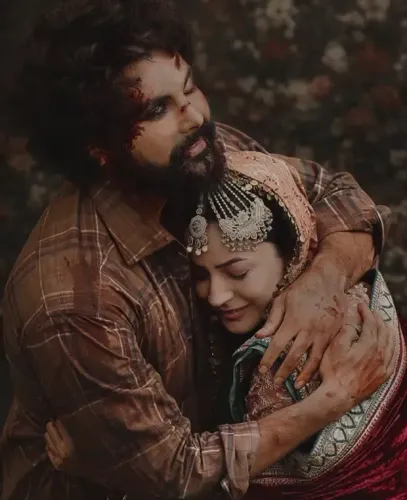
The film is based on a true story of real-life couple Nimma and Nasima , set between 1981 and 1988 along the India-Pakistan border .
It is adapted from the book Hind Pak Bordernama and directed by Arvvindr S.
The cast includes Shehnaaz Gill and Saurabh Sachdeva ; music is by B Praak , lyrics by Jaani .
Randhhawa said: “Agendas can suppress what is false.
What is based on the truth doesn’t get suppressed.”
Actor Jai Randhhawa has said that stories rooted in truth cannot be suppressed by political agendas, as he awaits the release of his upcoming film Ishqnama, set for a worldwide release on 24 July. Speaking ahead of the film's launch, Randhhawa argued that genuine human narratives endure regardless of the political climate surrounding them.
The Story Behind Ishqnama
Ishqnama is a period romantic drama inspired by a true story, adapted from the book Hind Pak Bordernama. The film chronicles the real-life journey of soulmates Nimma and Nasima, set between 1981 and 1988 along the India-Pakistan border. It explores love, sacrifice, and the psychological toll of forced separation — themes that the actor believes transcend political boundaries.
What Jai Randhhawa Said
Addressing concerns about whether cross-border love stories are now viewed as political statements rather than human ones, Randhhawa was direct. “No, it’s nothing like that,” he said. “I think the truth in the story doesn’t get suppressed. Our story is from 1982 to 1986. After 40 years, a film is being made on it. If it was supposed to get suppressed, it would have been suppressed. But it didn’t happen.”
He added: “I think agendas can suppress what is false. What is based on the truth doesn’t get suppressed.” The remark carries particular resonance at a time when India-Pakistan cultural exchanges remain politically sensitive.
Cast, Crew and Release Details
Directed by Arvvindr S. Khaira and produced by Sourabh Rana and Ravneet Kaur Chahal, the film stars Randhhawa alongside Shehnaaz Gill and Saurabh Sachdeva, with an ensemble supporting cast. Music has been composed by B Praak, with lyrics by Jaani — a pairing known for emotionally resonant Punjabi film soundtracks.
The film is slated for a worldwide release across India, Canada, and the UK on 24 July.
Why It Matters
Ishqnama arrives at a moment when India-Pakistan relations remain fraught, making films that humanise cross-border stories both culturally significant and commercially risky. The fact that this particular story — rooted in events from over four decades ago — has found its way to the screen now underscores Randhhawa’s point: human stories have a long shelf life that political climates cannot always override. Notably, the film’s source material, a published book, has existed in public domain, lending the narrative an additional layer of documented authenticity.
Point of View
Where cross-border narratives walk a tightrope between cultural empathy and political optics. The fact that Ishqnama is grounded in documented real events from the 1980s gives it some insulation, but the current India-Pakistan climate means its reception will be watched closely beyond multiplex numbers. Whether audiences separate the human story from the geopolitical backdrop will be the real test — and the film’s box-office performance in the UK and Canada diaspora markets may prove just as telling as its domestic run.
NationPress
21 Oct 2026
Frequently Asked Questions
What is Ishqnama about?
Ishqnama is a period romantic drama based on the true story of real-life couple Nimma and Nasima, set between 1981 and 1988 along the India-Pakistan border. It explores love, forced separation, and the resilience of the human spirit, adapted from the book Hind Pak Bordernama.
When does Ishqnama release?
Ishqnama is set for a worldwide release on 24 July, across India, Canada, and the UK.
Who stars in Ishqnama?
The film stars Jai Randhhawa and Shehnaaz Gill in the lead roles, alongside Saurabh Sachdeva and an ensemble cast. Music is composed by B Praak, with lyrics by Jaani.
Who directed Ishqnama?
Ishqnama is directed by Arvvindr S. Khaira and produced by Sourabh Rana and Ravneet Kaur Chahal.
What did Jai Randhhawa say about political suppression of stories?
Randhhawa said that truth-based stories cannot be suppressed by political agendas, pointing to the fact that Ishqnama’s story survived over 40 years before reaching the screen. He stated: ‘Agendas can suppress what is false. What is based on the truth doesn’t get suppressed.’